


Shamayim “Mama Shu” Harris, the nationally known founder of Avalon Village and one of Highland Park’s most recognizable community leaders, is preparing to run for mayor.
Her team is set to make the formal announcement at an event at Prayer Temple of Love Cathedral in Highland Park on Monday, May 11, from 11 a.m. to 1 p.m. This announcement sets up what could become one of the city’s most talked-about elections in recent years.
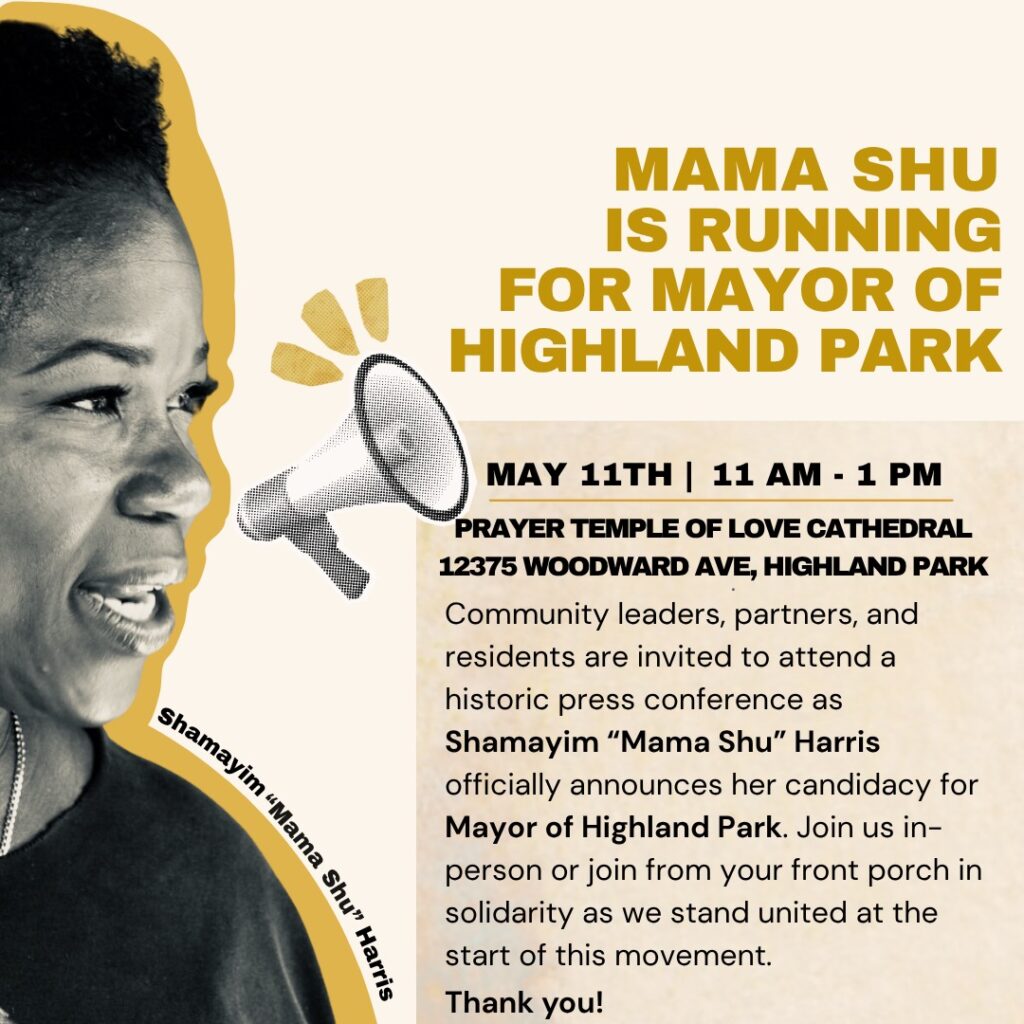
Harris joins incumbent Mayor Glenda McDonald and community activist Joshua LaMere in the race to lead the small city surrounded by Detroit that has spent years fighting through financial hardship, infrastructure issues, and the lingering effects of disinvestment.
Mama Shu – to Highland Park residents and many Detroiters, too – is already seen as someone who has helped reshape Highland Park without ever holding elected office.
Through Avalon Village, Harris turned vacant lots and abandoned spaces into a neighborhood-centered development that includes gardens, community gathering spaces, a marketplace, a basketball court, and the Homework House, a learning space designed to give children access to tutoring, technology, and a safe place to study. What started as a personal mission eventually became one of the best-known grassroots redevelopment efforts in the region and across the state.
Her work has put both her and Highland Park in the national spotlight several times over the years. In 2023, Harris was named one of “CNN’s Top 10 Heroes” in the country and became a finalist for “CNN Hero of the Year” because of her work rebuilding her neighborhood after the tragic deaths of two of her sons. Her story and Avalon Village have been featured nationally as examples of what community-driven investment can look like in Black neighborhoods that have long gone overlooked.
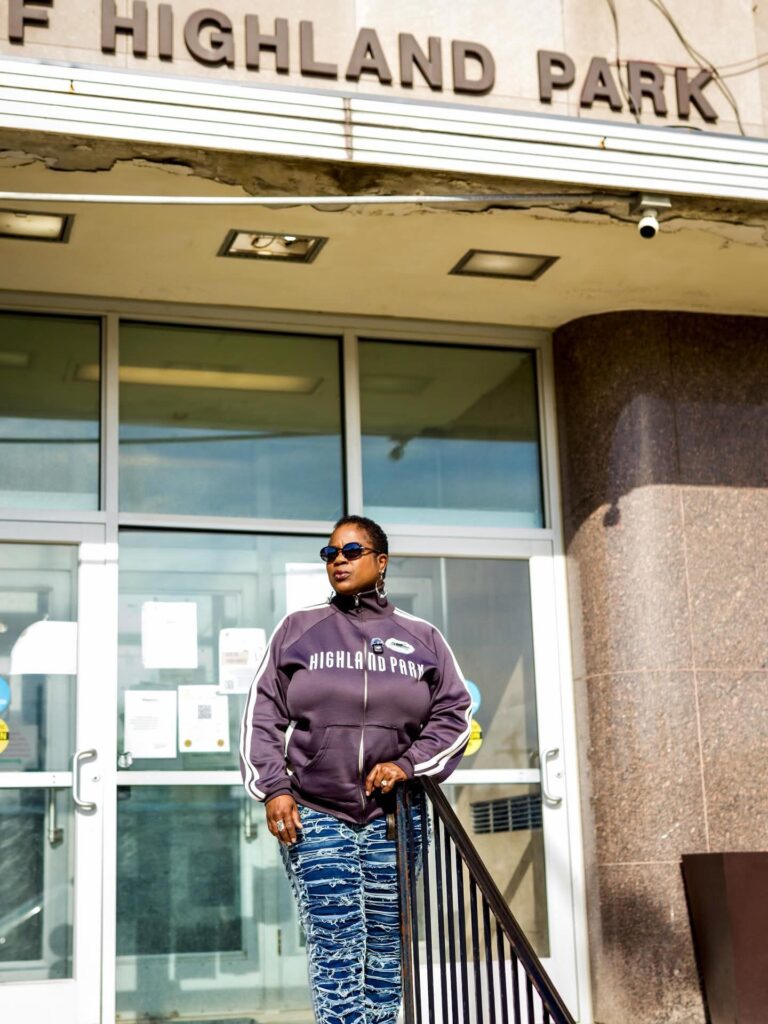
Now, Harris is looking to bring that same energy into City Hall and her campaign feels like a natural next step to her supporters. Avalon Village has become one of the few visible success stories in Highland Park over the last several years. It has created opportunities for children, small businesses, and neighborhood engagement in a city that has struggled with blight, population loss, and limited resources. Harris has often talked about turning pain into purpose, and many residents see her work as proof that real change can happen even without major outside investment.
At the same time, the race is also bringing renewed focus to McDonald’s time as mayor and the direction of the city overall.
McDonald is seeking another term after leading Highland Park through ongoing financial challenges and infrastructure struggles that have defined the city for decades. Supporters of the current mayor say she has helped keep city government operating during difficult times while continuing efforts to work with regional and state partners on redevelopment and city services.
But frustrations remain throughout the community. Residents have continued raising concerns about blight, neglected properties, slow economic growth, and the overall pace of improvement in the city. Like many older cities across Michigan, Highland Park continues dealing with aging infrastructure, public safety concerns, and years of economic decline that cannot be fixed overnight.
That frustration has created space for candidates like Harris, whose reputation has largely been built on action instead of politics.
One of Harris’ biggest strengths entering the race is that people can physically point to what she’s done. Avalon Village has gone from planning to implementation, piece by piece, and doesn’t simply serve as an idea or campaign promise. Residents can see the gardens, the programming, the community events, and the spaces created for children and families. In a city where redevelopment conversations have often stayed on paper, Harris brings a project that many people view as tangible progress.
Her national visibility could also become a major factor in the race. Over the years, Harris has appeared at conferences, community development events, and national media programs discussing neighborhood revitalization, trauma recovery, and grassroots organizing. Those appearances helped shine a light on Highland Park at a time when many small cities struggle to attract investment or attention.
LaMere, who is also running, enters the race as a community activist offering another alternative for voters who want change in city leadership. While Harris is expected to draw much of the public attention because of her profile and years of visibility, the growing field could still make for a competitive race as candidates lay out different visions for Highland Park’s future.
For many residents, the race will come down to what kind of leadership they believe Highland Park needs right now. Some voters may lean toward continuity and experience inside government, while others may be looking for someone with a more community-based, activist approach to solving problems.
The challenge for Harris will be turning years of goodwill and community recognition into a citywide political campaign. Running a nonprofit and running a city are two very different things, and voters will likely want to hear detailed plans on public safety, economic development, infrastructure, and city finances as the campaign continues.
Still, Harris enters the race with something few local candidates can claim: a visible record of work that residents can actually see and experience for themselves.