
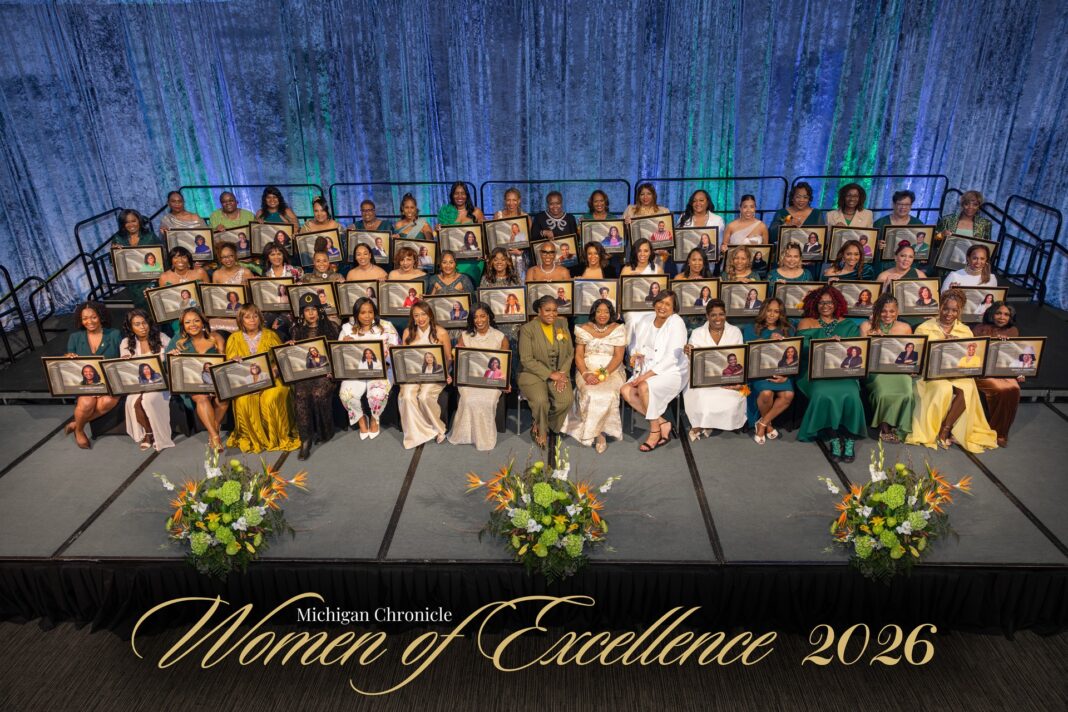


Photo credit: Monica Morgan Photography
A room full of Black women who have carried Detroit on their backs does not need exaggerated language. It needs truth, witness, and a publication that understands what it is looking at.
That is what filled Huntington Place during the Michigan Chronicle’s 2026 Women of Excellence celebration, where this year’s honorees joined a sisterhood that now stands 950 women strong. Fifty women were selected this year from 650 nominees, a number that made plain this recognition was never about popularity, access, or politics. It was about the work.
Real Times Media CEO and Michigan Chronicle publisher, Hiram E. Jackson said that clearly from the stage.
“You can’t be a Woman of Excellence without going through the hard work,” Jackson said. “These women just didn’t magically appear on a list. They got the scars to prove it.”
That line landed because everybody in the room knew it was true.
Black women are too often expected to perform excellence without acknowledgment, to solve problems without recognition, and to keep showing up even when somebody else gets the title, the check, or the public praise. Jackson named that too, reminding the audience that the women honored that evening had sacrificed time with family, worked long hours, and kept going through seasons when others received the credit.
“There ain’t no favor. Ain’t no pull-ups. None of that,” Jackson said. “You can’t pay to be on this list.”
That is part of why Women of Excellence continues to matter nearly two decades into its run. The event has become one of the Chronicle’s most meaningful public affirmations of Black women’s leadership across Detroit and beyond. This year’s ceremony also arrived during the Michigan Chronicle’s 90th year, giving the evening even more weight. Jackson placed that moment inside the legacy of the Black press, tracing the Chronicle’s roots to a publication built to call out racism, document opportunity, and tell Black stories with courage.
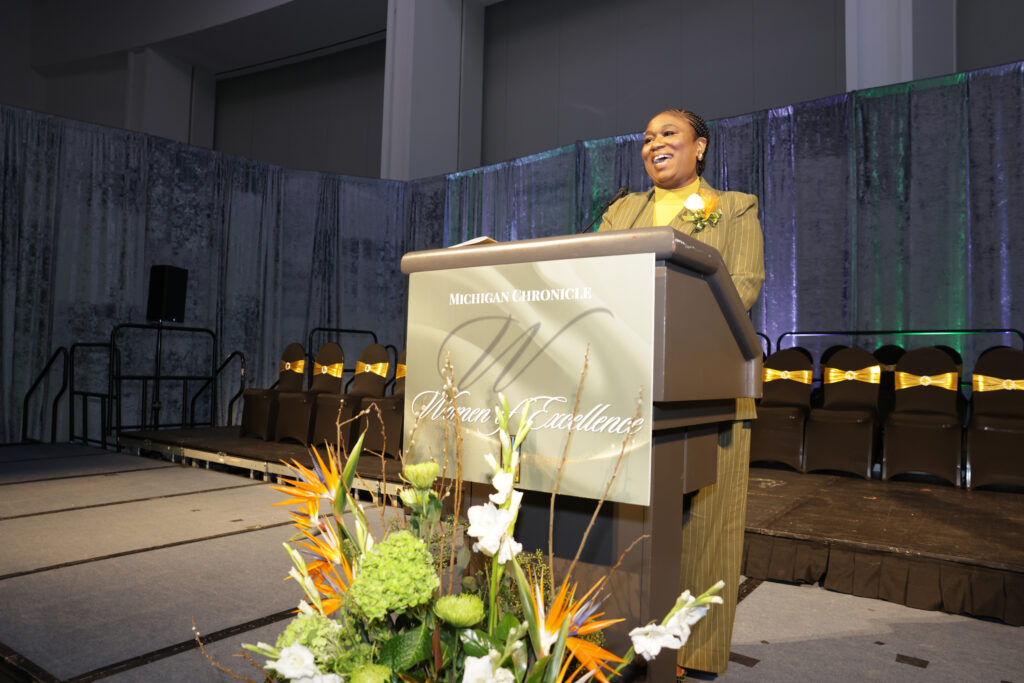
“That courage, that audacity, is why we so damn picky about this list today,” Jackson said.
That same spirit moved through the room all night.
Cathy Nedd and Jehan Crump-Gibson co-hosted the evening, guiding a program that honored the 2026 class and lifted up the women whose work has shaped Detroit in boardrooms, neighborhoods, public offices, labor halls, and community spaces. The crowd was there to celebrate, but it was also there to bear witness. These were not symbolic honors. These were receipts.
This year’s special honorees reflected the breadth of Black women’s leadership across southeast Michigan.
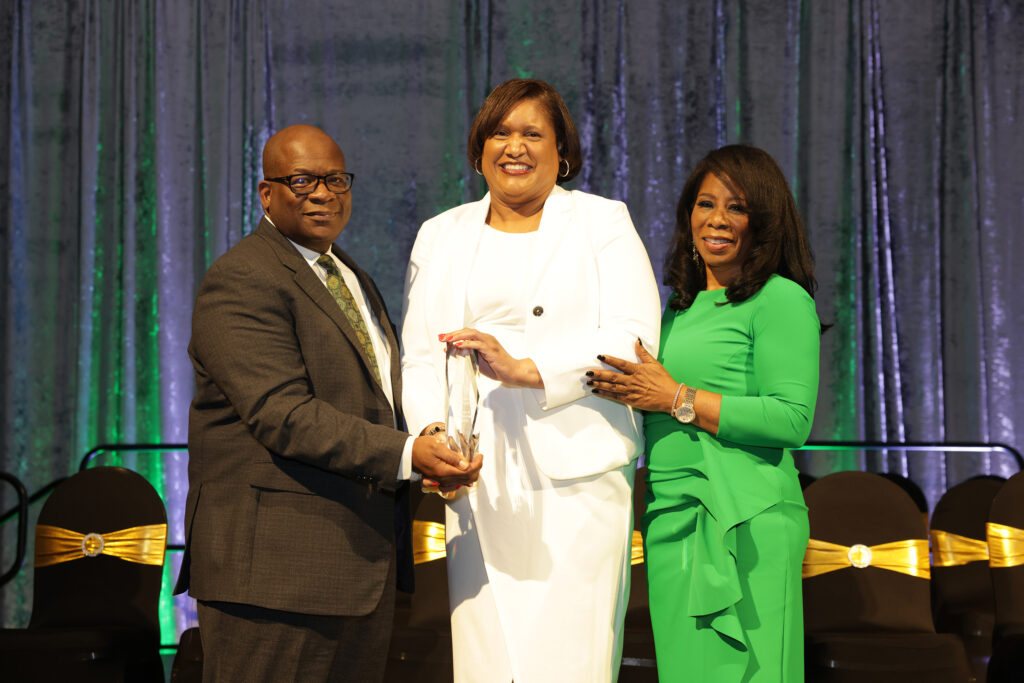
Georgella Muirhead received the Lifetime Achievement Award, recognized for a career that helped shape Detroit’s public narrative through communications and public relations. Laura Dickerson was honored as Woman of the Year for her trailblazing labor leadership and national impact through the UAW. Janice Winfrey received a Vanguard Award for her long-standing service as Detroit city clerk and chief elections officer, where her work has helped strengthen trust in the democratic process. Kylie Mitchell Wells also received a Vanguard Award for her leadership in philanthropy, economic mobility, and systems-level work on behalf of children and families. Together, those honors captured the range of influence Black women continue to hold across civic life, labor, public service, and community change.
“Tonight is about our opportunity to say, we see you,” Jackson said. “We see you, and we love you, and we appreciate you.”
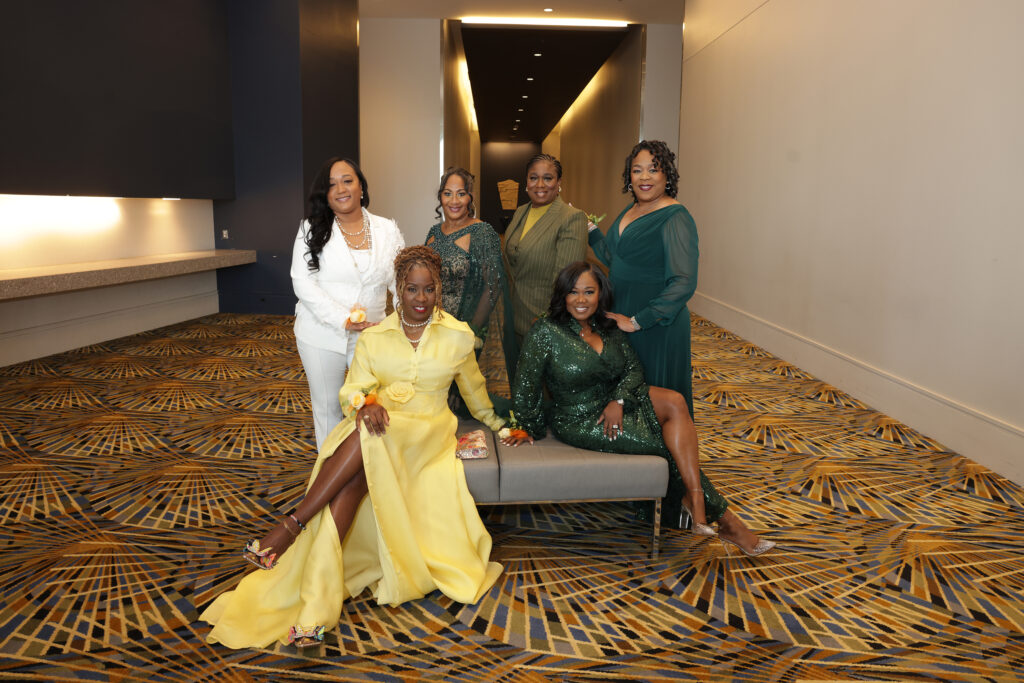
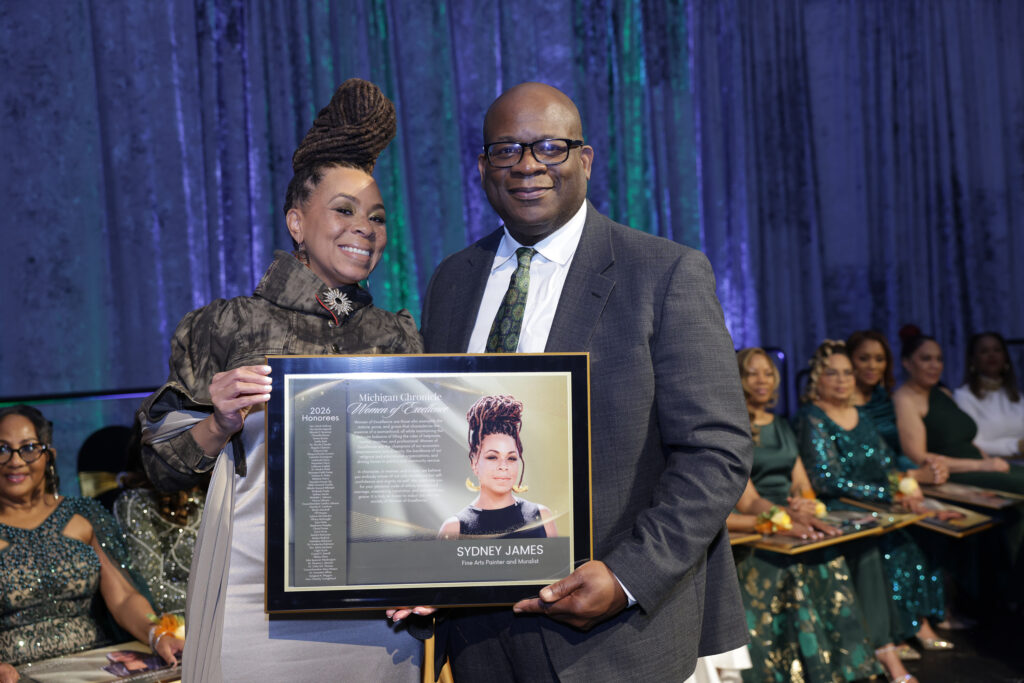
That appreciation stretched across generations of Black women’s labor. Jackson connected that legacy from the Housewives League of Detroit to today’s leaders, naming how Black women have continued to shape politics, culture, policy, and public life in ways that too often go undercounted.
By the time Latrice McClendon stepped forward as class president, the tone had already been set. Her remarks gave the night its emotional center.
McClendon opened with humor, sharing that Jackson had leaned over before she went onstage and told her not to mess it up because she was the class president. The room laughed, but what followed was a serious and heartfelt tribute to the institution honoring them.
“Let me just say this, nobody does it better in telling Black stories than the Michigan Chronicle,” McClendon said.
At a time when Black history is being challenged, distorted, and erased in public life, McClendon said the community still needs journalistic institutions that can “tell our stories” and “record our history.” Her words sharpened the meaning of the moment. Women of Excellence is not just an event. It is part of a Black record. It is part of how Detroit remembers who built what, who led where, and who kept the city moving.
McClendon also gave the audience something else that mattered: gratitude without performance. She thanked the women on the stage, the families in the audience, and the supporters who came to stand with them, noting that women need as much support as they can get right now. She spoke as somebody fully inside the room, not above it.
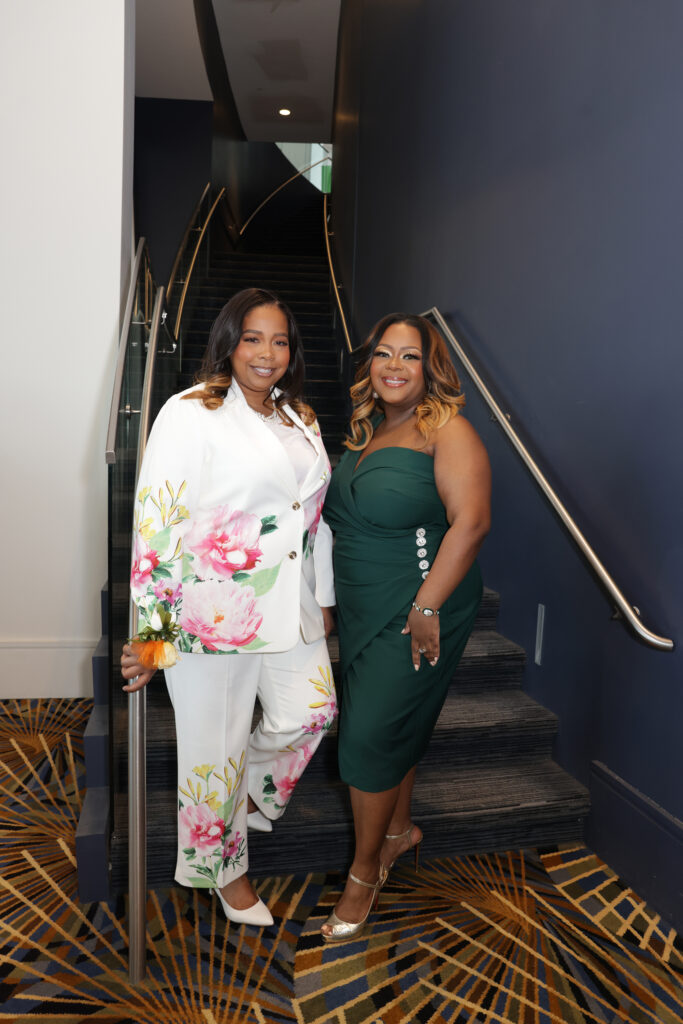
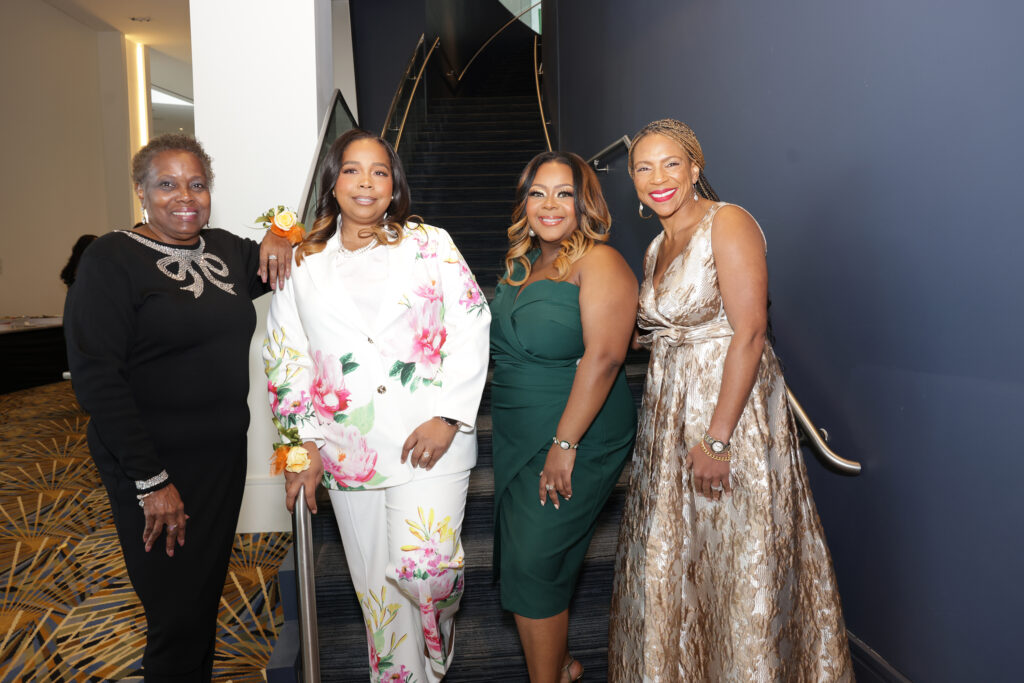
“The moment is not just about individual success,” McClendon said. “It’s about the legacy that we are building together. It’s about the doors we’ve opened, the doors we are opening, the barriers we’ve broken, and the voices we have lifted along the way.”
Because that is what the Women of Excellence program has become after 19 years: a living archive of Black women’s leadership. Nine hundred fifty honorees to date means 950 examples of vision, endurance, sacrifice, brilliance, and service. It means 950 women whose labor did not disappear into meeting notes, family obligations, election seasons, corporate memos, or community crises. It means somebody stopped to say their names and document their impact.
McClendon framed that legacy with a Maya Angelou quote that carried cleanly through the room: “Nothing will work unless you do.”
She used that quote to remind the audience that excellence is intentional. It is built through perseverance, courage, and the decision to keep moving even when the path ahead is uncertain. She brought it back to the next generation too, speaking about her 11-year-old daughter and other young girls watching women like those in the room and learning what is possible from their example.
“We are not just making history,” McClendon said. “We are the history of the future for young girls watching us right now.”
This was a celebration, yes. It was also a transfer of vision.
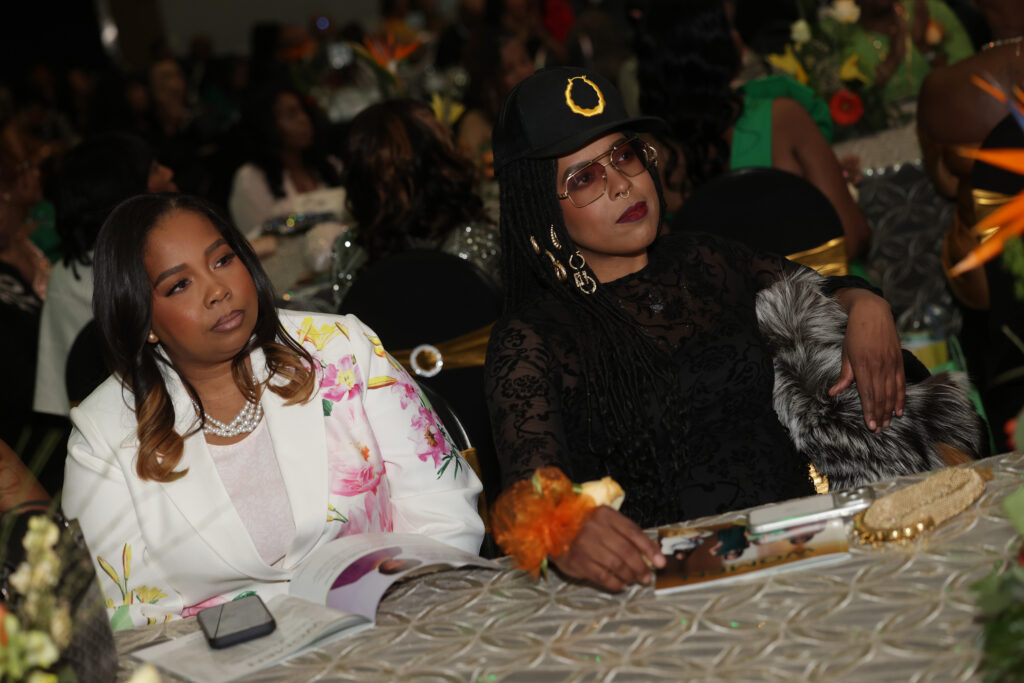
The women honored this year were welcomed into what McClendon called “a true sisterhood,” but that phrase held more weight than usual. Inside that ballroom, sisterhood looked like testimony, lineage, humor, reverence, and hard-earned mutual recognition. It looked like women who know what it costs to lead. It looked like a Black newspaper still doing what Black newspapers have always had to do: document us properly.
At Huntington Place, the Michigan Chronicle did more than host another awards ceremony. It marked a milestone. It honored 50 more women. It pushed the Women of Excellence legacy to 950 honorees to date. More importantly, it told the truth about what Black women’s excellence actually looks like.
It looks like scars.
It looks like sacrifice.
It looks like being overlooked and still showing up.
It looks like joy. It looks like unwavering faith. It looks like opening doors and reaching back.
It looks like Detroit.
And on that stage, with Cathy Nedd and Jehan Crump-Gibson guiding the evening and Latrice McClendon leading the 2026 class, it looked exactly like what the Michigan Chronicle has always known how to do best: see Black women clearly.