

Wayne County voters will see a public transportation funding question on the August 4 ballot. At its most basic level, the question asks voters to decide countywide funding for SMART, the Suburban Mobility Authority for Regional Transportation, and what public transportation service should look like across Wayne County over the next decade.
SMART is the regional bus system that connects communities across Southeast Michigan. It is not the same as DDOT, the City of Detroit’s own bus system. This ballot question is about SMART.
That distinction is especially important for Detroit residents. SMART and DDOT are separate systems. DDOT runs service within Detroit. SMART runs the regional network including Wayne, Oakland, and Macomb counties that connects Detroit to jobs, health care, school and services across Wayne County and beyond. While the question is about funding that regional connection, revenue collected in Detroit would stay in Detroit.
The issue may first appear as solely a property tax question as a millage is the rate used to calculate property taxes each year. And the cost is one of the most pressing question for property owners. The estimated cost is about $8 a month, roughly $98 a year, for a home with a market value near $200,000.
For many residents, the issue may sound technical, a millage, a regional transit authority, countywide service, local bus routes, on-demand rides and paratransit. But the question connects to everyday concerns many households understand clearly: getting to work, making a medical appointment, students getting to school, helping an older adult remain independent, or making sure workers can get to the businesses, hospitals, stores and care providers that depend on them.
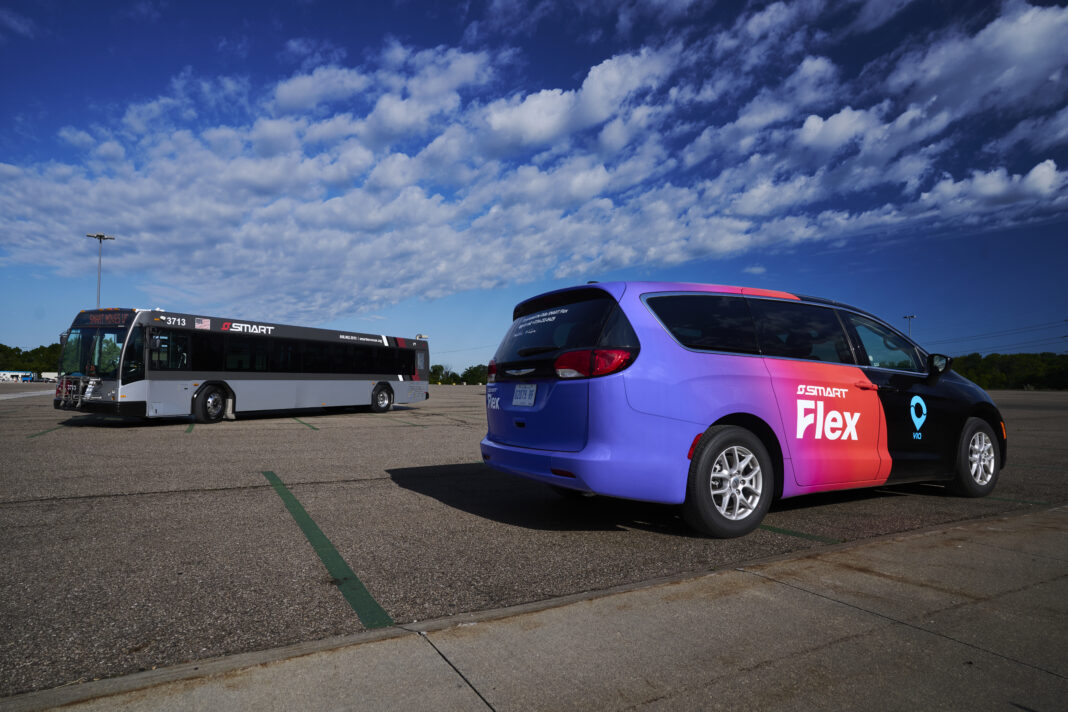
The funding would pay for day-to-day operations such as vehicles, drivers, maintenance and customer service for local bus routes, SMART Flex on-demand rideshare service, paratransit for riders with disabilities, and coordination with transit providers across Wayne, Oakland and Macomb counties.
The countywide nature of the vote is also part of what voters are being asked to understand. Because of a recent state law, communities can no longer opt out, meaning all registered voters in Wayne County will have their voices heard on this countywide tax. For the Aug. 4 election, the whole county votes as one block, and a simple countywide majority decides the result for everyone.
If it passes, it applies across all 43 Wayne County communities for 10 years. For the 26 communities already in SMART, it is a renewal and the rate does not go up. For the 17 communities that had opted out, such as Plymouth, Livonia and Canton, it is new funding.
If it does not pass, the same countywide rule works in reverse. Because one majority decides for the whole county, a single community cannot keep its own service if the countywide measure fails. SMART would lose the local Wayne County funding it runs on, and suburban routes, rideshare, and specialized service for seniors and people with disabilities would end across the county.
In short, the county decides together. It either funds one continuous countywide transit system, or the regional suburban network loses its local funding.
For residents who do not personally use public transportation, the implications of the issue may be less obvious. But public transportation often reaches beyond the person waiting at a stop or scheduling a ride. A region is only as strong as its ability to move. Employers need workers who can reach the job. Hospitals, stores, schools and care providers need staff and customers who can get to them. Most people who do not ride still know someone who depends on transit, a parent, a coworker, a caregiver or a student. Reliable regional transit is infrastructure that supports the whole county’s economy, not only the people on the bus.
Proposed new services include eight new routes, five extensions to existing or planned routes, and Flex on-demand service identified for lower-density areas. Final services would be shaped through future public input if funding is approved.
The Aug. 4 vote will not settle every question about public transportation in Wayne County. Route details, service changes and rollout timelines would still require planning, public input and implementation. But the ballot question does ask voters to make a countywide decision about whether dedicated public transportation funding should continue and expand for the next 10 years. The answer may look different in Detroit, Downriver, western Wayne, the airport corridor or the county’s suburban communities, but the decision will be made together.
Wayne County voters can learn more about the public transportation millage, proposed service concepts and public transportation planning at bit.ly/SMARTMovesUs.
The Ballot Language and Key Questions
Official ballot language
WAYNE COUNTY PUBLIC TRANSPORTATION MILLAGE
A proposal to authorize the Wayne County Transit Authority to levy a millage for the purpose of funding public transportation services in Wayne County, including operating, maintaining, improving, and expanding transit services; creating and expanding new fixed routes for bus service connecting local communities; expanding transportation services for seniors, veterans, people with disabilities, and the general public to access healthcare, education, and other daily needs.
The millage would be levied at a maximum rate of 0.9831 mills (98 cents per $1,000 of taxable value) for a period of 10 years beginning with the 2026 tax year levy and ending with the 2035 tax year levy.
This millage would replace an expiring millage levied by the Wayne County Transit Authority supporting the Suburban Mobility Authority for Regional Transportation (“SMART”).
If this new millage is approved and levied, revenue will be distributed to Wayne County, SMART, Detroit Department of Transportation (DDOT), and other community and regional transit providers. It is estimated that $57,616,329.00 will be collected in the first year.
Should this proposal be adopted?
Yes
No
KEY QUESTIONS (visit MichiganChronicle.com/VoterEd for a full FAQ)
What is SMART, and how is it different from DDOT?
SMART is the regional bus system that connects communities across Southeast Michigan. DDOT, the Detroit Department of Transportation, is the City of Detroit’s own bus system. They are separate operations that serve different routes. This ballot question is about SMART.
I live in Detroit and already pay for DDOT. Why is this on my ballot?
SMART and DDOT are separate systems. DDOT runs service within Detroit. SMART runs the regional network including Wayne, Oakland, and Macomb counties that connects Detroit to jobs, health care, school and services across Wayne County and beyond. Revenue collected in Detroit stays in Detroit. This question is about funding that regional connection.
What would it cost me?
About $8 a month for a home with a market value near $200,000, roughly $98 a year.
What would the funding pay for?
It supports regional bus service: day-to-day operations such as vehicles, drivers, maintenance and customer service for local bus routes, SMART Flex on-demand rideshare service, paratransit for riders with disabilities, and coordination with transit providers across Wayne, Oakland, and Macomb counties.
Where can I learn more?
Visit bit.ly/SMARTMovesUs.