
Detroit students entering high school this fall could walk away four years later with far more than a diploma. Under a new redesign unveiled by Detroit Public Schools Community District, students across the city’s neighborhood high schools will now have access to daily career advising, college credits, industry certifications, internships, and five distinct diploma pathways aimed at preparing them for life after graduation.
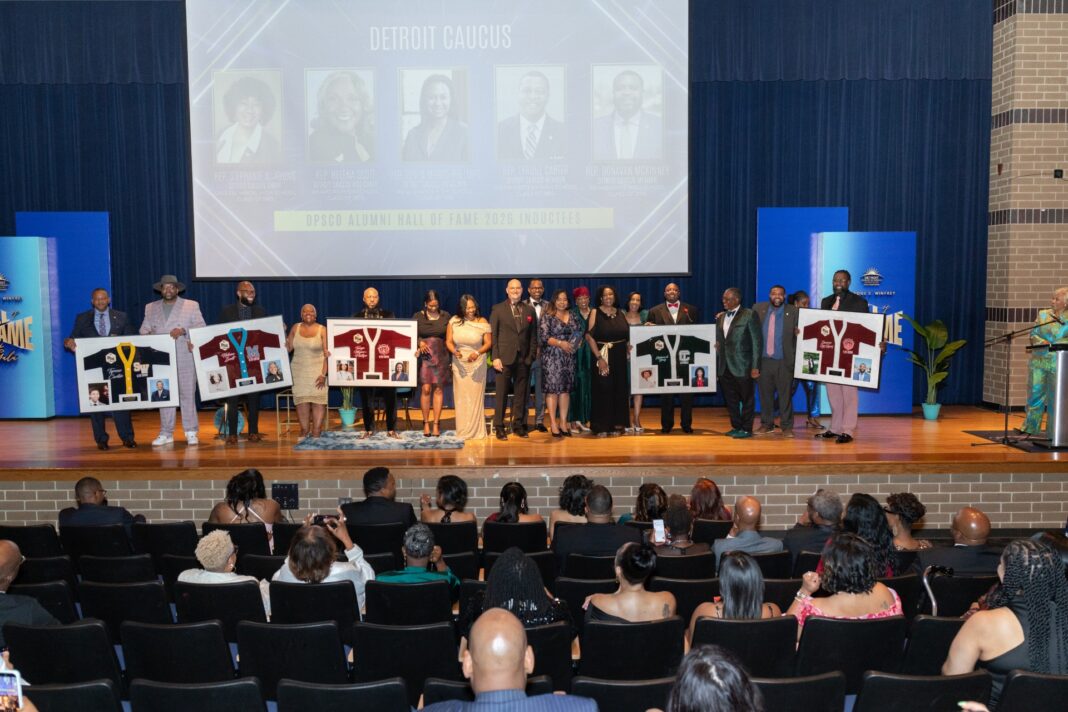
The initiative was announced in front of alumni, educators, business leaders, and longtime champions of Detroit students at the DPSCD Foundation Hall of Fame Alumni Gala in May, and district leaders say is the most significant transformation to the city’s neighborhood high schools in decades.
The redesign will roll out across all 11 DPSCD neighborhood high schools and aims to move students beyond simply earning a diploma. District leaders say the focus is now on making sure every graduate leaves high school with a plan, meaningful credentials, and direct exposure to college or career opportunities.
Beginning in 9th grade, students will receive daily advising and career navigation support that follows them through graduation. The district is also introducing five diploma pathways designed to better align students with their goals and interests. Those pathways include Honors, Dual Degree, Career Ready, Arts, and Michigan Merit.
Students pursuing the Honors diploma will take Advanced Placement courses intended to strengthen applications to four-year universities. The Dual Degree pathway will allow students to earn both an associate degree and a high school diploma simultaneously. Career Ready students will graduate with credentials needed to enter the workforce immediately after high school. Arts students will build competitive portfolios for continued artistic study, while the Michigan Merit diploma will signify completion of all state graduation requirements.
“In Detroit, we don’t have a talent gap — we have an opportunity gap. And this redesign fills that gap with great intentionality and more resources,” said Dr. Nikolai Vitti, DPSCD Superintendent. “We really want high school to be a springboard to life, college, and careers — not just a diploma you get on the way out the door.”
District officials say the redesign changes not only coursework, but also the structure of the school day itself. An eighth period will be added to create space for seminar-style learning and electives. During that period, students will either participate in a “design your life” course or take electives that satisfy graduation requirements.
By their junior and senior years, students are expected to spend more time outside traditional classrooms and inside college campuses, workplaces, and internship programs. Through dual enrollment partnerships and career-based opportunities, district leaders hope students will graduate with both experience and confidence about what comes next.
The redesign is built around four core pillars: advising and navigation, rigor and readiness, schedule and structure, and college and career aligned experiences. District officials say each piece is intended to work together to create more individualized support for students while also raising expectations academically.
“This is the kind of systemic change that doesn’t happen overnight — it takes vision, collaboration, and a willingness to rethink everything about how we serve students,” Dr.i Vitti added. “Our teachers, principals, counselors, board members, and families all had a hand in shaping this framework. High School Redesign ensures that a DPSCD diploma means something — that every graduate walks across the stage with a credential, a plan, and a real advantage in life.”
District and foundation leaders emphasized that the redesign was shaped through conversations with students, educators, principals, school board members, families, and community stakeholders. The goal, they say, was to build a model rooted in the realities Detroit students face while also responding to their ambitions for the future.
Under the plan, a ninth grader who may be struggling academically or uncertain about career goals will immediately receive targeted support. That includes daily advisory sessions, academic intervention, and opportunities to explore different career interests early in high school instead of waiting until senior year to begin planning for life after graduation.
“By 10th grade, that student selects a diploma pathway,” said Kerrie Mitchell Campbell-Mabins, CEO of the DPSCD Foundation. “By 11th and 12th grade, they are earning college credits or industry certifications through community college partnerships, participating in paid internships, and graduating with a clear next step — whether that is a high-wage job or continued education.”
The district’s recent graduation data helped drive urgency around the redesign effort. DPSCD’s on-time four-year graduation rate recently climbed to 83.2 percent, surpassing the district’s previous record of 78.3 percent and placing the district within less than one percentage point of the statewide average.
Still, district leaders say deeper challenges remain inside neighborhood schools. More than half of current 10th graders are behind on graduation credits, and only 24 percent of students attend college after graduation. Officials say the redesign is intended to close those gaps before students fall too far behind.
Two schools — Western International High School and East English Village Preparatory Academy — piloted aspects of the redesign during the current school year. District leaders say the early signs have been encouraging.
“I don’t think I’ve ever been more excited about anything as a principal,” said Western International High School Principal Angel Garcia. “Our ninth graders were significantly more on track after the pilot. The data is clear – we’re moving in the right direction.”
The redesign will expand this fall to East English Village Preparatory Academy, Central, Cody, Denby, Henry Ford, Mumford, Northwestern, Osborn, Pershing, Southeastern, and Western International Academy.
Implementing the plan across all schools comes with significant financial commitment. District leaders estimate the annual cost at $13.5 million. To help close the remaining funding gap, the DPSCD Foundation is launching what it calls the “1,100 Impact for High School Redesign” campaign.
The initiative encourages donors to contribute $1,100 annually, or roughly $92 per month, to support a student’s year of academic and mentorship services. Foundation leaders say the investment is meant to directly sustain advising, intervention, and career development opportunities that are central to the redesign.
“High School Redesign is personal to me. I’m a DPSCD grad. High school should not be the same experience now as it was for me 20-something years ago,” said Campbell-Mabins. “We’re ensuring a brighter future for all Detroit students. This will benefit the entire ecosystem – and the city as a whole.”
Foundation officials also announced that the first 100 donors will become part of the Founding 100 Circle, which includes permanent recognition, annual impact reports, and invitations to the Annual Impact Summit.
For DPSCD leaders, the redesign effort represents a shift in how Detroit students are prepared for adulthood, and the goal is to connect education directly to opportunity, economic mobility, and long-term success.