


By: Jasmine West
For the first time in nearly 15 years, Detroit’s west side once again has a permanent home for one of the city’s busiest public transit operations.
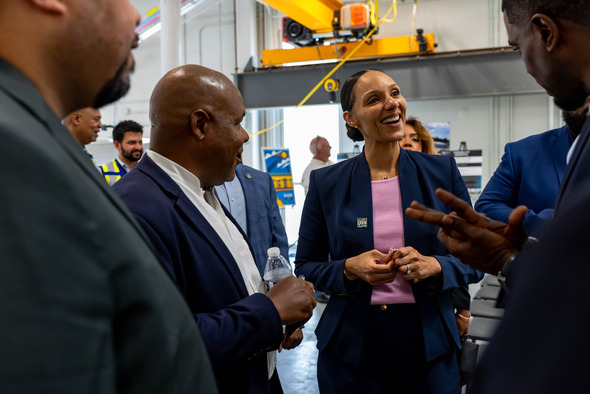
City officials, transit workers and community members gathered this week to celebrate the opening of the new $160 million DDOT Coolidge Terminal, a project expected to improve bus operations, support employees and strengthen service for the thousands of Detroiters who rely on public transportation each day.
The new campus replaces the original Coolidge Terminal, which operated from 1928 until a devastating fire destroyed much of the facility in 2011. Rebuilding plans stalled during Detroit’s bankruptcy before moving forward several years later.
Now complete, the 200,000-square-foot complex becomes the Detroit Department of Transportation’s primary west-side operations hub, replacing the aging Gilbert Terminal.
For riders, the investment may not immediately change bus routes or schedules, but officials say it lays the foundation for more reliable service by giving drivers, mechanics and dispatchers the space and equipment needed to keep buses on the road.
“Public transit is essential infrastructure,” Mayor Mary Sheffield said during the ribbon-cutting ceremony. “Our DDOT drivers and mechanics are critical to making sure our residents can get to work, to school, their doctor’s appointment or the grocery store. They deserve to have a first-class facility to support them.”
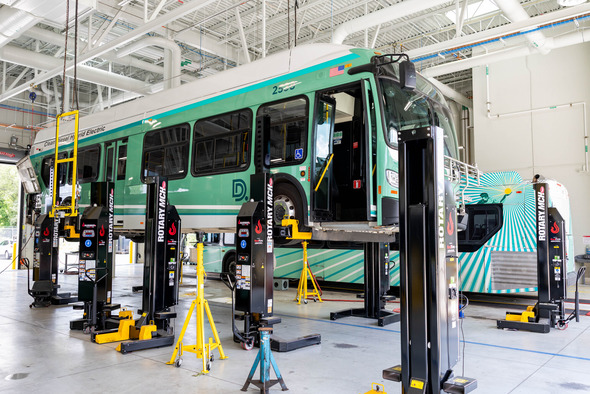
The new terminal includes three buildings designed to support every stage of daily bus operations.
A climate-controlled storage facility can house up to 120 buses overnight and includes indoor washing stations to help preserve the fleet. A separate maintenance building gives mechanics additional space for inspections and repairs, while a third administration building provides offices alongside employee amenities including a fitness room, lockers, showers, a kitchen and an indoor-outdoor lounge.
The facility also houses DDOT’s new citywide operations control center, where staff can monitor bus service and coordinate operations across Detroit.
Transit officials say those upgrades are designed to improve efficiency behind the scenes while supporting more dependable service across the system.
“The new Coolidge facility represents a major investment in transit for the city,” DDOT Executive Director Robert Cramer said. “The site includes new employee amenities and technology that will support operating safe, reliable service for decades to come.”
The project represents one of the city’s largest recent investments in public transportation infrastructure.
Construction was funded through a partnership between the Federal Transit Administration, the City of Detroit and the Michigan Department of Transportation. Federal funding accounted for approximately $102.5 million of the total cost, while the city invested $31.5 million and the state contributed $25.6 million. The overall project also included demolition of the former terminal.

The site was designed with future growth in mind. Each of the three buildings includes space for expansion should DDOT add buses or increase operations in the years ahead.
While much of the attention surrounding Detroit’s transportation system often focuses on new buses and route improvements, transit advocates have long noted that reliable service also depends on the facilities where buses are stored, maintained and dispatched.
The opening of the Coolidge Terminal marks the end of a chapter that began with the 2011 fire and signals a renewed investment in the infrastructure that keeps Detroit moving. For the bus operators, mechanics and dispatchers who begin and end their workdays there—and for the riders waiting at bus stops across the city—the new facility is expected to play a key role in supporting transit service for decades to come.