
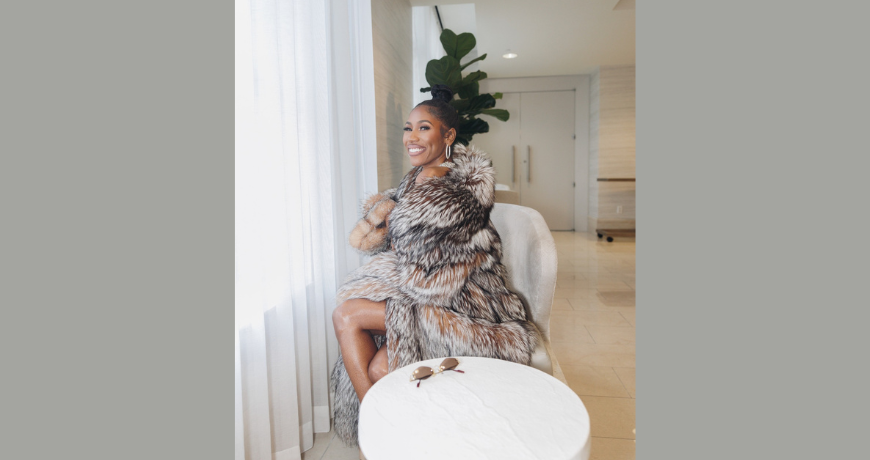


The pending closure of Dittrich Furs isn’t just the end of a family business that’s been in operation for more than a century. It’s one of the last gasps of a regional trade almost as old as Detroit itself.
Dittrich, Dittrich, since 1893; if you’re of a certain age, you probably sang that part.
“Since 1893,” however, means that the renowned furrier has been in business ten years before Henry Ford established his namesake car manufacturer and 15 years before the owner of Buick acquired Olds Motor Works under the newly established holding company known as General Motors. Detroit, incorporated in 1806, was fur city before the Motor City.
But say what you will about Detroiters and their love for fur; the industry that supports that infatuation is waning. Once a city bustling with multi-story furriers (and that’s before you add in multi-story department stores that also sold furs), the greater metropolitan area now only claims a handful of fur retailers.
An amateur historian could point to a number of factors as to why you can finally buy a MacBook downtown and not a Russan sable.
One, in 1893, much of Detroit – and much of Michigan, period – was still mostly unsettled, so fur trappers could still go to, say, where Great Lakes Crossing sits today, and capture a few minks, skin them, and fashion them into floor-length coats, stoles and gloves; Dittrich itself notes land development on its website.
Two, we know everything costs more, but everybody doesn’t have more wages to cover it, hence why perhaps for the first time in Dittrich’s history, lines were wrapped around the block because of deep discounts. And there could be more that the fur industry may not want to admit, like changing attitudes toward animal hunting and slaughter in the last few decades, layered with the fact that more religious and cultural practices that would prohibit the wearing of fur exist in the Detroit area more than it did a century ago.
Still, for the most fashionable among us, there’s nothing more prized than a real fur. Dittrich’s closing doesn’t undo a certain mindset among Detroiters: If you want to signal that you’ve “made it,” whatever your definition of, then you get yourself a fur coat.
For Black Detroiters specifically, the local fur industry plays a role in the growth of the Black middle class in this city. A tour through 90 years of archive reporting from this publication is evidence of such. (And it’s here that we note for transparency that for several of these years, Dittrich was a major advertiser in the Chronicle’s pages, and sometimes sponsor of Chronicle events.)
Going back to 1936, the fur business has been a supporting character in the retail, social and sometimes even religious habits of Black Detroiters, and one could argue the competition among then-numerous furriers for Black dollars peaked just as the city’s Black population did.
We’ve only got limited space here in this piece, so this won’t be a full account of the relationship of Black people and fur in the city. But we’ll go through some notable examples and highlights worth mentioning, both in and out of the Chronicle’s pages.
“The Fur Man,” and Detroit’s other Black furriers
In the wake of Dittrich’s closure, several Black people on social media sought to call attention to Elmars Furs, a Black-owned furrier in Oak Park that claims some of the Clark Sisters and other big-name customers among its clientele.
Long before Elmars, furriers owned by Black entrepreneurs dotted the city, building their names by advertising in the Chronicle’s pages, donating fashions to women’s clubs and church events, and making sure the who’s-who of the time were seen in their finery. George and Alma Byrd, the husband-and-wife team of Byrd’s Furs, was among the city’s leading Black furriers.
The pair opened up shop in Detroit in 1929 after arriving from Baltimore. Alma Byrd, described by the Chronicle in 1949 as “one of Detroit’s foremost feminine furriers,” was an expert of matching buyers with fur types, recommending mouton – sheepskin dyed to resemble beaver fur – for young customers starting off the trade. At the time, however, she said chinchilla, the most expensive fur, wasn’t popular in Detroit.
George Byrd, dubbed “The Fur Man” in a Chronicle obituary in 1968, was also a reverend – which could explain why so many churchwomen were some of the biggest patrons of fur retailers across the city. Ads for Byrd’s Furs, first located off East Warren Avenue before opening a second Dexter Avenue location, regularly touted that “good furs make warm friends.”
Cartledge Furriers was another notable Black furrier in Detroit that follows a traditional Great Migration journey. Its founder Ambrose Cartledge came to Detroit from South Carolina and worked in a Chrysler plant before opening up shop. While Cartledge and his wife Irene became regulars on the social circuit, so did their shop’s fashions throughout the 1950s and 1960s.
Cartledge’s offerings were likely the more fashion-forward as Detroit’s clientele grew by the mid-century and were more present in fashion shows throughout these decades. “An array of ooh’s and ahh’s when a cocoon shaped Norwegian blue fox stole was modeled by Avis Cornelius,” notes one Chronicle piece in 1961.
Fashion shows were a frequent form a fundraising at the time, with revenue from admission and couture purchases going toward charities and other goodwill efforts. Cartledge furs were part of a larger ecosystem of Detroit’s fashion scene, as Chronicle reporting notes that models in fur coats were trained by Maxine Powell – yes, the same Maxine Powell that went on to school Motown’s then-new talent in the art of etiquette and presentation. Custom designs by local Black designers were often highlighted as prized possessions; designer Mary Lou Robinson, described as creating “enviable artistry” in 1959, was one example of an independent designer who at times collaborated with Cartledge for one-of-a-kind designs.
Behind the counter, in front of the camera
As much as the Chronicle highlighted the Black owners of fur retailers, just as noteworthy were those who didn’t claim CEO status.
Throughout all of the publication’s 90 years, furriers owned by white retailers consistently placed advertising in the Chronicle, but some went further to ensure placement on the editorial side. From time to time, news of a white furrier employing “negro employees” would garner some spilled ink.
It was so serious that in 1961, for example, the Detroit branch of the NAACP presented Furs By Robert, a downtown retailer at 110 Madison, with a plaque for “setting a record for democratic hiring policies and practices that may be beyond comparison in the city and the country.
“Of the 33 craftmen employed by Furs by Robert, 11, exactly one-third, are Negroes. This highly commendable percentage is made remarkable by the fact that Negroes constitute one percent of Roberts’ top society, international clientele,” reported the Chronicle at the time.
One could question in 2026 why the Black paper in Detroit would call attention to a white retailer only having one percent of its customers be Black, but you’d have to keep in mind that in 1961, the fur industry was still cutthroat, with stores setting themselves apart with different skins, cuts and offerings.
Furs By Robert, a multi-floor store, were among the premium stores with top pricing; the clerks and other support staff were also paid more as a result, including Black employees. And, of course, the undeniable word-of-mouth factor if everyone in Black Detroit reads the Black paper and sees which fur stores are the ones that treat us right, one could infer.
Throughout the years, the Chronicle often noted Black employes at fur salons that were links between their employers and Black clientele, and who went on to either found their own boutiques or become notable names in their own right. Take Lenore Ports, for example, who was a regular in Chronicle society columns for 40 years, notching her own headline in a 1947 feature:
“Mrs. Ports, head of the important mailing department of Annis Furs, has charge of all the printing and, in addition, is assistant advertising director. About 10 to 12 persons work under her immediate supervision during normal times and seven during the show season,” the Chronicle wrote at the time.
But Ports – grandmother to Melvin “Butch” Hollowell, later noted by the Chronicle years after her death, and is currently leading Mayor Mary Sheffield’s transition team – had an important side gig as a director of publicity for Joe Louis’ many social events, particularly at the Brown Bomber’s horse farm located in what we now call Shelby Township. Louis himself was an admirer of furs; he was noted as not only wearing them frequently, but giving them away as gifts, among other pricey items, to his social circles.
Louis wouldn’t be the only fur influencer in Detroit history, though. The aforementioned Furs by Robert called on radio personality Martha Jean “The Queen” Steinberg as one its celebrity models. For years, Steinberg modeled in Chronicle photo shoots in minks, tourmalines, and $40,000 – in 1965, mind you – Russian sables.
“There are no women more fashionable than Negro women, and above all things, not only Negro women, but the Negro market wants only the best,” Steinberg told the Chronicle.
Furs from the newspaper
Long before Pancakes and Politics and other signature events, this publication regularly featured a number of contests and awards ceremonies for Detroiters. And if you needed an incentive to enter, look no further than the grand prizes – which for years always included at least one fur piece.
The earliest iteration of this was the Chronicle’s “Beautician Contest,” in which the paper would invite readers to choose the best beautician in Detroit from a list of nominees. The Chronicle’s first beautician contest was held in 1938 (which is also proof that hair and makeup in this town has never not been something to play with), then returned after a hiatus in 1947. The top prize in ’47 was a diamond ring; by 1948, the top prize was “a five-hundred-dollar mink-dyed, muskrat fur coat,” donated by Nadell Furs, a store across from the old Hudson’s building – oh wait, now the new Hudson’s building, sure.
It would begin a long tradition of the Chronicle giving away fur as a prize in its surveys and contests. For years, the Chronicle also put on the Annual Churchwomen’s Survey, in which an honor was given to an outstanding, well, woman of the church.
Churchwomen’s fashion shows, like the charity fashion shows mentioned earlier, also doubled as fundraisers, and furs were just as ever-present there, as Chronicle reporting showed at the time. That ecosystem birthed the Churchwomen’s Survey, which ran throughout the 1950s and into the 1990s.
A favorite prize throughout the 1960s was a mink stole from Mann’s Furs. By the close of the 1980s, the favored prize came from Dittrich’s – which began a long association with the newspaper throughout the 1990s. In 1994, Dittrich hired its first Black sales manager, a then-28-year-old Joe Spady, who noted in a Chronicle feature that “every customer must be as equally as important as the next. I make an effort to treat a customer who may just be coming to put something in storage with as much respect as the customer who purchases an $85,000 Russian sable.” Spady would go on to write an occasional column for the Chronicle called “Fur Your Information.”
Blacks and furs today
Turns out, the 1990s may have been the last great decade for Detroiters and fur. With Dittrich’s pending departure, Silver Fox Furs, “a Black furrier founded in 1985, will become the last fur store in New Center.
“The store’s clientele includes residents of ‘celebrity’ status: Marvin and Vickie Winans, CeCe Winans, Duke Fakir of the Four Tops, Earvin ‘Magic’ Johnson, and members of the Detroit Pistons (past and present) Isiah Thomas, Joe Dumars, James Edwards, William Bedford, and others,” the Chronicle reported on Silver Fox in 1992, when the store moved from the suburbs to its now-city location.
Dittrich would continue to have splashy moments throughout the 2000s; the Chronicle previewed a collaboration between the furrier and singer Ron Isley in 2003, that was borne from a 2001 visit to Detroit while Isley was performing at the Fox Theatre. But by then, many of the longtime furriers like Byrd’s, Caltredge and the rest mentioned had long been out of business.
But there was still new activity, particularly from Black designers – and famous clientele. In 2001, Dittrich collaborated with C. Granston Bullard, a Mumford High School alum then based in Chicago who had gone on to a successful fur design career, for a trunk show at its New Center store.
Bringing Bullard “home” as the Chronicle reported then was foreshadowing. In 2016, Bullard, the first Black designer to serve on the board of the Fur Information Council of America, opened a shop on the Avenue of Fashion, showcasing not only cutting-edge fur designs but other luxury items designed in-house.
“We’re the first internationally recognized African-American fur designers,” Bullard told the Chronicle in 2017. “We are not the first Black fur designers; that was John Baptiste du Sable in Chicago, but we are the first to be reproduced and distributed globally.”
If you think of the 2010s and Black Detroiters and fur, you’d probably not only recall Bullard’s arrival on Livernois, but the debut of rappers Kash Doll and Dej Loaf, both of whom had their iconic fur moments – Kash performing at seemingly every concert and reminding folks that “I flew my fur in from Russia,” or that viral photo of Dej in a floor-length white mink backstage prior to a BET performance.
And while there’s no shortage of iconic moments with the Queen of Soul, a particular highlight came when Aretha Franklin performed “(You Make Me Feel Like) A Natural Woman” in a floor-length Dittrich brown Russian sable during the Kennedy Center Honors for a Carole King tribute. At the song’s climax, Franklin dropped the coat to the floor of the stage, making for endless gifs on social media at the time. There’s that, and – in one of her final public performances – her 2016 performance of the national anthem on Thanksgiving when the Detroit Lions played the Minnesota Vikings, wearing a floor-length chinchilla that we’d learn later from the City of Detroit’s storytelling platform came straight from Silver Fox Furs.
That brings us back to Elmars Furs. It may be one of the last standing, but it may be the culmination of the all the fur tradition that came before it – right down to the strong association with the local faith community, the celebrity influencers, and the attention to customer service.
CEO Dorian Ellis purchased Elmars Furs in 2024 from its previous owner, Margie Shapiro, assuming control of a 60-year operation. “My wife and I had been customers there for over 25 years,” Ellis posted in a video on Elmars’ social media. “Making sure that everything runs smoothly – that’s the top priority.”