
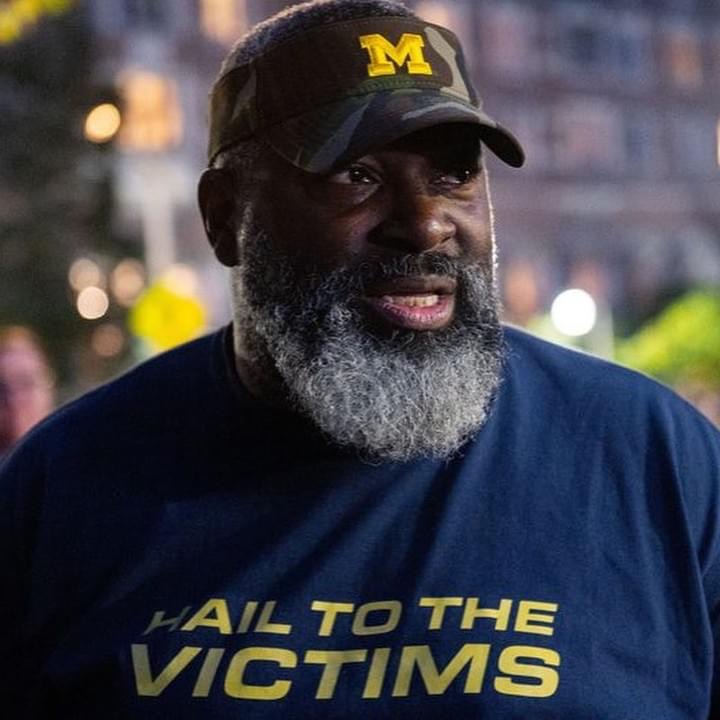


By Jon Vaughn, Contributor
I have been careful for three pieces. I am going to be careful in this one too. But I am not going to be calm about it, because I was not calm when it happened to me, and pretending otherwise would be its own kind of lie.
Read Pt. I here.
Read Pt. II here.
Read Pt. III here.
There is a difference between not being calm and not being in control, and I wrote that difference down for myself a long time ago and have lived by it since. The man who reacts controls nothing. The man who responds controls everything. What follows is a response.
Here is what I have learned. Privilege is not a thing some people have. In the rooms I am describing, it is a thing some people use. It has a sequence. It has a rhythm. And once you have felt it used against you, you can hear it coming from the first sentence.
It starts with who talks first.
Whoever tells the story first sets the frame. Everyone who speaks after them is answering. In the rooms I have sat in, the person with the most standing gets to the ear of the board, the funder, the reporter, the room, before the person with the evidence has finished finding the door.
By the time you arrive, you are not a witness. You are a response.
Then comes the two sets of rules.
One account is taken as given. The other needs documents. One person’s word is context. The other’s is an allegation. Nobody writes this down. Nobody has to. Everyone in the room already knows whose story gets the benefit of the doubt and whose gets a raised eyebrow.
I brought evidence. I watched it treated like an accusation. I watched the other side’s explanation treated like a fact. Same room. Same table. Two different sets of rules, and only one of us could feel it.
Then the words change.
Pay attention to the adjectives. They are doing more work than anything else in the room.
He is committed. You are obsessed. He is passionate. You are aggressive. He is protecting the mission. You are attacking it. He raised concerns. You made threats. Every word about him bends toward reasonable. Every word about you bends toward dangerous.
And if you are a Black man, and a big one, and you have raised your voice even once in your life, they do not need to say the word. The word is already in the room. It has been in the room since before you walked in.
Then the door closes quietly.
Nobody gets thrown out anymore. That would leave a mark. Instead, the invitations stop. The name comes off the list. A private conversation is offered, not to hear you, but to find out what it would take to make you quiet. And when you will not be made quiet, the stories start moving through the same channels the first story moved through, faster than you can answer them, told by people who were believed a little faster than you to people who wanted to believe them.
I have had a strange experience these past months. Watching people I know, and people I have never met, pick up pitchforks on behalf of a narrative they wanted to believe. Not strangers only. People who had sat at my table. People who had heard me tell the truth for thirty years and decided, in an afternoon, that this time I had not.
Thirty years of standing in front of strangers and telling them the worst thing that ever happened to me in prisons, in classrooms, in gymnasiums with peeling paint in eight states so that somebody else’s son or daughter might find the words sooner than I did, and it took one well-placed sentence and a single afternoon for people who had watched me do it to decide I had been lying the whole time.
You find out about it the way survivors always find out. Late. Sideways. From someone who was in the room and could not look you in the eye afterward.
Then they call it a misunderstanding.
This is the last move, and it is the one that tells you the whole thing was deliberate. When the evidence will not go away, the language softens. It was a disagreement. There were two sides. Everyone was hurt. Let us move forward.
There were not two sides. There was what happened, and there was who got to describe it.
What it costs
It costs the lawyer you did not budget for. It costs the introductions that stop coming and the rooms you are no longer invited into. It costs the friends who go quiet because staying close to you is now expensive. It costs the nights you spend rehearsing an answer to a story you have not even been told yet. It costs your name, which you spent a lifetime building and which someone else spent an afternoon rewriting.
And for a survivor it costs something else. It costs the second time. The first time, somebody decided your body was not yours. This time, somebody decided your account of it was not yours either. Same lesson. Different teacher. This teacher was wearing our colors.
The person on the other side pays for none of this. That is what privilege is. Not the advantage. The bill it never receives.
Why this belongs in this paper
I am writing this in the Michigan Chronicle and not somewhere else for a reason. The readers of this paper do not need this explained. You have watched it happen at work, at school, in church, in court, on the sidewalk, in the small silence that follows when you say the thing everybody in the room already knew and nobody wanted said out loud by you and you have watched what it costs the person who says it, and you have done the arithmetic yourself about whether today is a day you can afford to be that person. You know the exact feeling of realizing the decision was made before you opened your mouth.
What I need you to hear is that it happens inside the movement too. The movement that says “we believe you.” The movement that raises money on the promise that the powerless will finally be heard. When privilege decides who is believed in that room, the organization has not just failed one person. It has rebuilt, inside its own walls, the exact machine it asks you to fund it to fight.
I have a name for this. I have used it for years. Weaponized advocacy. The cause turned into cover, the survivors turned into currency, and the standing of the person holding the microphone turned against anyone who asks what they are doing with it. Privilege is the hand that swings it.
And it lands hardest on us. Because in our communities the advocacy organization is often the only door. Because we came to that door already carrying a lifetime of being believed second. Because when it happens there, we do not just lose a fight. We lose the last place we thought was ours.
What I want
I do not want sympathy. I have been a Black man in America for fifty-six years. I knew the rules before I walked in.
I want it named. I want every board, every funder, every advocate who reads this to run the tape back on the last time a concern came to them from someone with less standing than the person it concerned. Who talked first? Who needed proof? Which words did you use for each of them? How fast did you believe, and who did you believe faster?
I want survivors from our communities to stop apologizing for the volume. The volume is not the problem. The volume is what it takes to be heard through a wall built to hear someone else.
Why I waited
Some people have asked why I did not answer sooner. Why I let the stories run for the better part of a year without a word.
Because silence is not defeat. Sometimes it is the longest and most powerful move on the board. The people who used their standing against me expected a reaction. A reaction is easy to manage. It is loud, it is fast, and it hands the other side exactly the adjectives they were reaching for. So, I did not give them one. I gathered. I waited. I let the frame they built stand long enough for everyone to see whose hands built it.
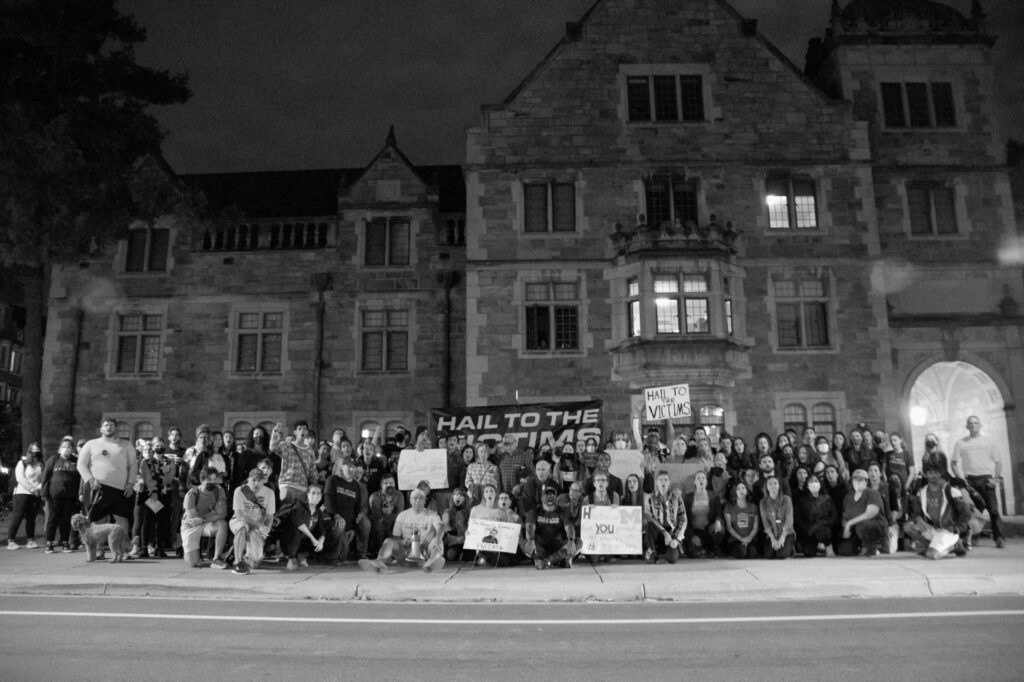
That is the last thing privilege never plans for. It assumes the person it is used against will burn out, lash out or go away. It has no answer for the one who simply stands there and keeps the receipts the way I stood on a lawn in Ann Arbor through October, November, December and January into a cold I had not dressed for, in a folding chair, outside a twenty-two-room house, while an institution with a century of practice at outlasting people waited for me to get tired.
Plumbing
I want the people who did this to know that being believed first is not the same as being right. It never was. It only ever bought time.
Karma does not move like lightning most days. It moves like plumbing. Silent. Inevitable. Specific.
I have time.
Jon Vaughn is a former NFL running back, a survivor advocate for more than thirty years, and co-author of Co-Pay (ABA Publishing, 2027). This is the fourth piece in the series Weaponized Advocacy.