
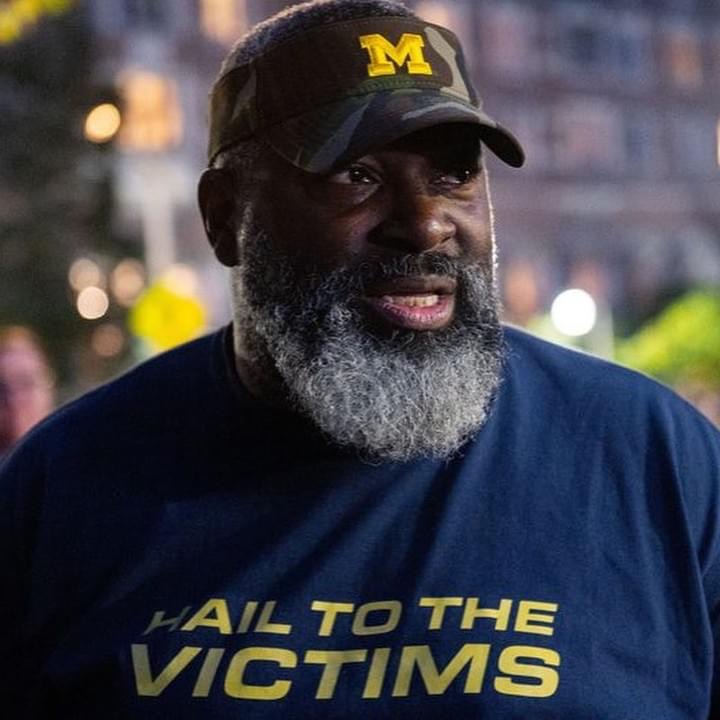


By Jon Vaughn, Contributor
I ended my last piece with a question, and I want to be honest about why I asked it. I did not pose it as a rhetorical flourish. I asked it because survivors have asked it of me, on the phone, late at night, after discovering what had been done with their names, their stories or their trust by people who said they were on their side. I asked it because I have had to ask it myself, about a room I walked into carrying evidence and walked out of as the problem. Who do I go to? Too often the true answer was: right now, nobody.
That is not an accident. It is a design.
We built our protectors the way the institutions built theirs.
Every institution I have ever fought had the same shape. Power sat with one office. The people around that office owed their positions to it. Complaints traveled through the very desk they were complaining about. When something went wrong, the first instinct was not to fix it but to contain it.
Look closely at much of the advocacy world and you will see the same architecture, drawn smaller. A founder who is the organization. A board assembled from the founder’s circle. A reporting process, if one exists at all, that begins and ends in the founder’s inbox. No one whose job it is to say no, and no one a survivor can reach who does not answer to the person they need to report.
We did not do this out of malice. We did it out of urgency. Governance is slow and the need is not. But the result is that the movement built to hold institutions accountable has, in too many places, exempted itself from the one thing it demands of everyone else.
The law is not coming.
A nonprofit answers to its board, and if the board is captured, it answers to no one. Funders rarely audit anything but the finances. Reporters treat advocates as sources, not subjects. The people with the most direct knowledge of harm inside an organization are the ones with the most to lose by speaking.
So, when a survivor asks who protects them from their protectors, the honest answer is that no one will unless we build it. Here is what I believe that looks like.
A door that does not run through the founder.
Every organization that serves survivors should have a way to report harm that the leadership cannot see first. An independent intake. An outside ombudsman. A board member whose only role is to receive concerns and whose seat does not depend on the founder’s goodwill. If the movement cannot manage what it has forced institutions to build, it should ask itself why.
A board that can actually say no.
A board of friends is not a board. It is an audience. Real oversight means people who did not arrive through the founder, who serve fixed terms, who have the standing and the independence to disagree in public and the authority to act on evidence rather than manage it. If the founder can remove the people meant to check the founder, there is no check.
Survivors own their names and their stories, in writing.
No survivor’s name, face or account should appear in any material a website, a grant application, a presentation, a film without their written consent, given for that use, and revocable. This should be policy, not courtesy. The account of what was done to a person is the one thing that was never taken from them. An organization that treats it as inventory has already told you what it thinks survivors are for.
Sunlight on the money.
Who is paid, how much, and for what. Who profits when a survivor’s story raises funds. What happens to a settlement, a speaking fee, a book advance that arrives because someone else was brave. These are not rude questions. They are the questions any donor would ask of a company. An organization with nothing to hide should welcome them, and an organization that does not welcome them has answered you.
Protection for the person who raises the alarm.
This is the one that matters most and gets built last. When someone inside an organization brings forward evidence of harm, the response tells you everything. A healthy organization investigates the evidence. A captured one investigates the messenger. Every organization in this space should commit, publicly and in writing,
that people who raise concerns in good faith will not be retaliated against, discredited or quietly pushed out and it should be able to point to at least one time it kept that promise.
I know what it costs to be that person. I know what arrives instead of an answer: the silence, the lawyers, the invitation to a private conversation, the stories that begin to circulate about your character and your motives. I know that when the person raising the alarm is Black, the cost is paid at a higher rate. None of that changed the evidence. It only changed who was willing to look at it.
Who Enforces This
The enforcement has to come from three places.
Funders, who should make governance a condition of money the way they make outcomes a condition of money. Ask to see the reporting line. Ask who sits on the board and how they got there. Ask what happened the last time someone raised a concern. If the answers are vague, the money should be too.
The press, and especially the Black press, which has always understood that the people who claim to speak for a community must be held to the community’s standard. Advocates should welcome scrutiny. The ones who do not are telling you something.
And us. Survivors, families, the communities that extend their trust because someone finally said “we believe you.” That trust is ours to give and ours to withhold. We are allowed to ask questions before we hand over our names. We are allowed to say no. And we are allowed to say, out loud, when the people who promised to protect us have not.
The Whole Answer
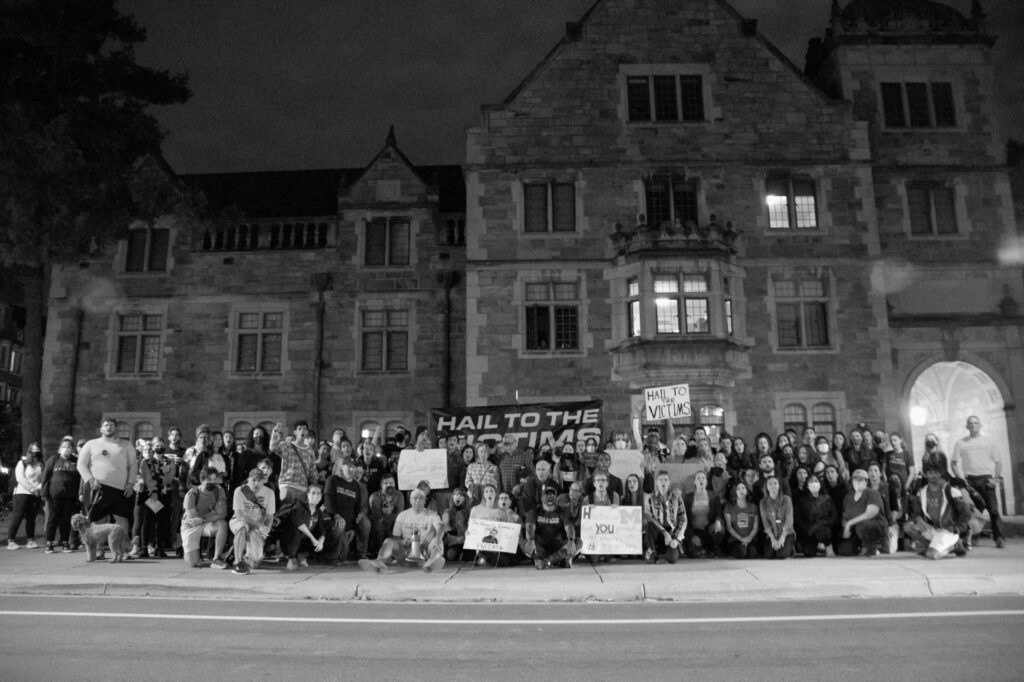
I stood outside a president’s house for more than a hundred days because an institution decided its reputation was worth more than the people it hurt. I did not do that so our own movement could quietly make the same bargain.
I have spent thirty years asking institutions to do the one thing institutions are built not to do, which is to look squarely at the harm they caused and name the people who allowed it, and I have watched what it takes to move them even an inch, the years, the lawyers, the reporters who stopped returning calls, the survivors who did not live long enough to hear the apology.
Who protects us from our protectors? We do. That is the whole answer. It is an uncomfortable one, because it means the work does not end when the institution finally admits what it did. It means we hold ourselves to the standard we spent decades demanding of everyone else.
It is the only standard that was ever going to keep anyone safe.
Jon Vaughn is a former NFL running back, a survivor advocate for more than thirty years, and co-author of Co-Pay (ABA Publishing, 2027). This is the third piece in the series Weaponized Advocacy.
On Sunday, November 1, at 8 p.m. Eastern, campuses across the country and overseas will hold Take Back the Night in the same hour. If you have a loved one on a campus anywhere, send them this. One student standing alone counts the same as a rally. takebackthenight.org/national-campus-tbtn-rally/