
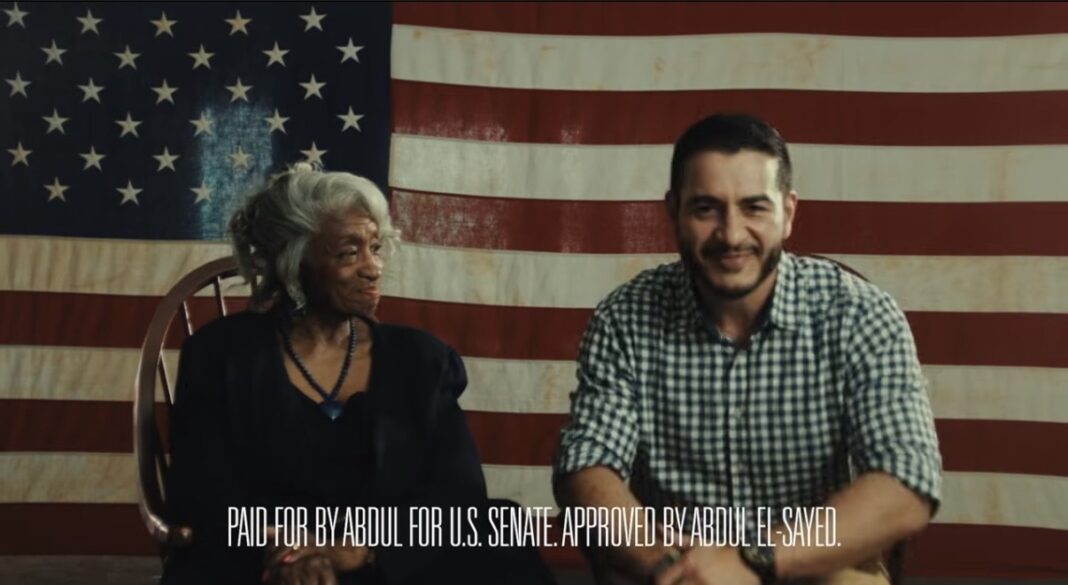


Democratic U.S. Senate candidate Abdul El-Sayed is targeting Black voters in Detroit in a new ad that will play in the local media market pointing to his support of former Vice President Kamala Harris’ presidential campaign.
The 30-second spot paid for by El-Sayed’s campaign highlights his endorsement of Harris’ presidential campaign in 2024 and his experience as a public health official.
Whether or not candidates were supportive of the Democratic ticket throughout the party’s presidential campaigns in 2024 has become a sharp point of criticism from some Black leaders.
El-Sayed was one of the first prominent Muslim Americans to do so, according to a press statement to the Michigan Chronicle Tuesday morning.
He’s running against U.S. Rep. Haley Stevens in the Democratic primary race for U.S. Senate on Aug. 4. The race illustrates the power dynamics playing out within the party nationally.
The state’s coveted Senate seat is opening because U.S. Sen. Gary Peters is retiring.
Stevens and El-Sayed are set to debate Tuesday night in Grand Rapids on WOODTV at 7pm.
The ad released on Tuesday features Wayne County Commissioner Martha G. Scott, who endorsed El-Sayed, is airing exclusively in the Detroit media market.
“I know Abdul and Abdul knows what’s at stake. He was one of the first
Muslim-American leaders to endorse Kamala Harris for president,” Scott said in the ad.
Scott was elected mayor of Highland Park in 1988 and later served for over a decade in the state House and sate Senate. She currently serves parts of Highland Park, Hamtramck, and Detroit as a county commissioner.
El-Sayed is attempting to build support across Wayne County, where he’s been backed by longtime endorsement groups like the Black Slate, the Wayne County Democratic Black Caucus and the Council of Baptist Pastors of Detroit and Vicinity Inc. He’s also got the support of the UAW and Wayne County Executive Warren Evans.
Stevens is backed by regional labor unions, former Sen. Debbie Stabenow, former U.S. Rep. Brenda Lawrence, the Michigan Democratic Black Caucus and dozens of Black pastors. Her supporters have spent tens of millions of dollars buying television commercials championing her time in Congress. Stevens has also appeared in ads with former President Barack Obama, who she worked with during the auto industry bailout.
El-Sayed’s campaign, which was endorsed by U.S. Sen. Bernie Sanders upon its launch, was last week endorsed by U.S. Rep. Alexandria Ocasio-Cortez.
The ad addresses criticism El-Sayed faces for joining many Muslim and Arab leaders in voting “Uncommitted in the Feb. 2024 presidential primary. Many other Democratic voters joined in criticizing Democratic leadership and Harris’ presidential campaign over their support of Israel during the war in Gaza.
While El-Sayed supported the Feb. 2024 Uncommitted movement, a protest during the Democratic primary against former President Joe Biden’s presidential campaign, he did support Harris during her presidential campaign. That fact is a frequent criticism facing El-Sayed’s campaign from political operatives who say the February primary Uncommitted movement played a role in Harris’ loss.
The same line of attack came against Darializa Avila Chevalier, a Congressional candidate in New York, who won her primary race despite being criticized for posting an expletive attacking Harris.
El-Sayed also criticized Harris’ policy positions, but said President Donald Trump would be a bigger threat.
Democratic voters in Wayne County and across the country have expressed frustration over the amount of money AIPAC, the largest pro-Israel lobby, donates to pro-Israel candidates, including Stevens. The issue culminated in Dearborn, where Democratic voters largely sat out or voted third party in Nov. 2024, allowing President Trump to win the usually-Democratic voting city.
Now that state Sen. Mallory McMorrow is no longer in the race, El-Sayed and Stevens are in a two-way competition between a progressive outsider and an establishment backed member of Congress. McMorrow’s name will still appear on ballots, but her campaign didn’t have the support of Stevens or El-Sayed, according to polls showing McMorrow in third place, with El-Sayed leading Stevens.
Stevens’ campaign has touted what she calls her “Michigan Hope Agenda,” a policy document and “promise to Black and brown communities.”
The webpage for the Hope Agenda on her campaign site expresses support for expanding access to capital and training for underserved communities, lowering costs and increasing housing supply for low-income families.
El-Sayed’s campaign has promised to advocate in the U.S. Senate for new leadership, legislation to provide universal healthcare to every American and to curb corporate participation in politics.
El-Sayed, from Ann Arbor, is a former health director of the Detroit and Wayne County health departments. He ran for governor in 2018 losing to Gov. Gretchen Whitmer, which has helped build his statewide base during his run for U.S. Senate.
The presumptive Republican nominee former U.S. Rep. Mike Rogers awaits the winner of the Democratic primary in November.