
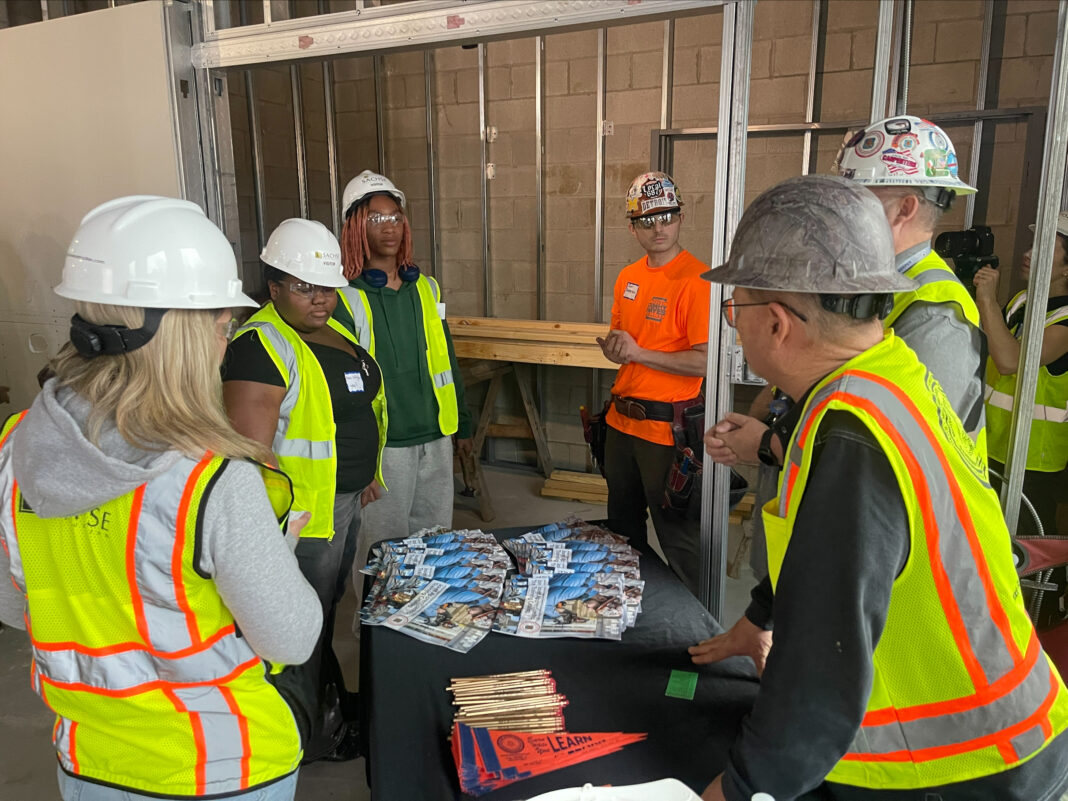

More than 100 Detroit high school students were invited by one of the region’s most prominent construction firms to a live construction site for a hands-on exploration of various skilled trades. It was a demonstration billed to promote “AI-proof careers” and one that lands amid larger conversations around adding to Detroit’s workforce and opportunities for youth in the city.
Sachse Construction, in collaboration with Junior Achievement of Southeastern Michigan, held the event at the future American Indian Health & Family Services (AIHFS) Headquarters, which is under construction in Southwest Detroit. Donning hard hats and fluorescent safety vests, students learned the ins and outs of carpentry, electrical, plumbing and masonry trades with actual laborers working on the site.
“We believe that if there’s a path somebody’s interested in, we want to show them that opportunity,” said Todd Sachse, CEO of Sachse Construction. “We just really believe that many young men and women don’t even know all the opportunities that they have, and we just want to expose this to them.”
Detroit Mayor Mary Sheffield, who has introduced a number of initiatives centering the city’s youth during her first month in office, noted the significance of training future skilled tradesmen from Detroit schools early to ensure they can boost the city’s workforce as adults – particularly as some construction mandates require a majority of contractors to reside within the city limits.
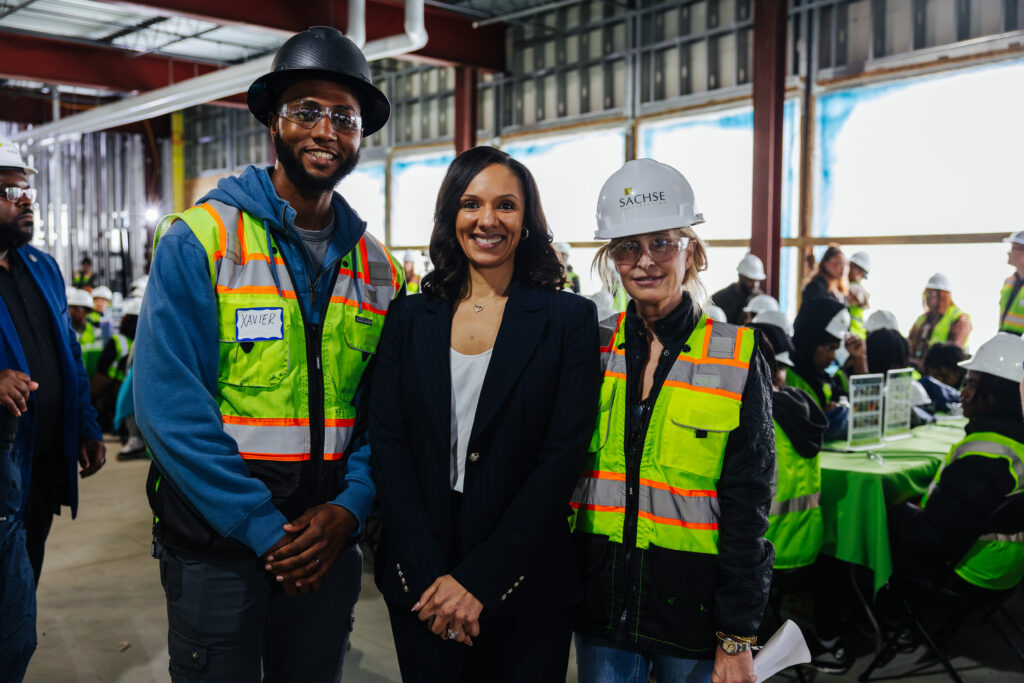
“Education is a huge focus of this administration, and one thing that always comes up is access to opportunities for employing our young people, and skilled trades is just one of those areas where there’s always opportunity available — especially right now in Detroit with the amount of development that’s taking place,” Sheffield told reporters.
“Whenever you have the opportunity to have the young people leave the classroom, come on site, and actually have a hands-on experience. I think it really sparks a different type of interest that we need with our young people.”
Sachse said that despite an uptick of new building projects,
“We struggle with that today. There’s not enough local Detroiters to fulfill all of the opportunities on our jobs. We need more,” he said. “There’s just not a lot of training, not a lot of people going through the training.”
Making people – at any age, but especially young people – aware of the training is a missing link, Sachse notes, saying that there’s a lack of direct communication to people on how to find work and training in skilled trades, or what skilled trades even are.
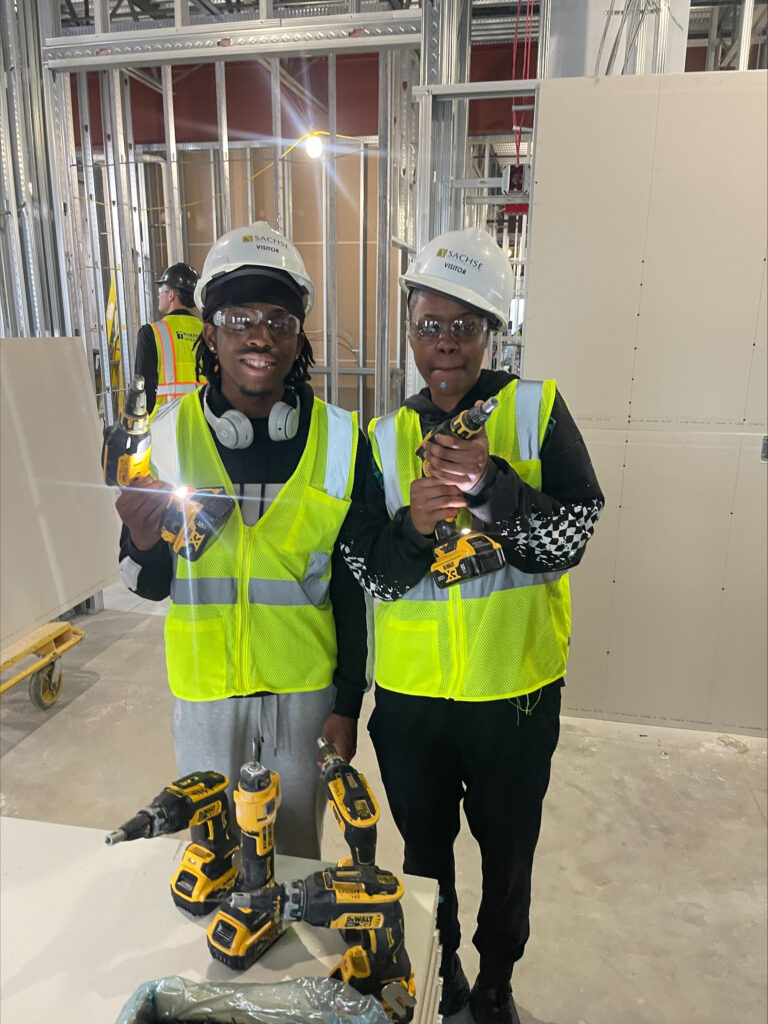
“It’s not like you have to go to some university to learn that. That’s what’s so great about it, is that you can learn the skill and get paid while you’re learning,” he says. “You don’t have to go and spend tens or hundreds of thousands of dollars in some education that hope one day to get a job. You’re gonna get that education while you’re working and making money in the long run.”
The Sachse firm’s expo isn’t the first nor the last effort to encourage young people to get into the trades, but every successive generation has been pushed more into white-collar work than the previous one, with more technology advancing along the way. That in mind, getting Gen Alpha, who have been surrounded by iPads their entire lives, into the field isn’t as challenging as it sounds, Sachse says.
“From a technology standpoint, technology is heavily used in construction,” Sachse says. “Everything that we do is on iPads, and you’re following all the drawings electronically. You have to learn how to do all that. We use lasers and really cool, high-tech equipment that’s used on the job site — all of which is trainable. It’s all stuff that we can teach, right there on the job.”
Notable during the day’s demonstrations were a 50/50 gender balance among students, something Sachse noted was reflective of how the industry has evolved in the region.
“There’s more women in construction and in the field now than there ever has been…in Detroit and in southeastern Michigan,” Sachse said. “And in many of the trades, women are really, really good in some cases — even better than men — because they’re very detailed-oriented; some of the finished trades they’re really, really good at.”
“If you go to our job site, you’ll see more women now than I saw 30 years ago. Which is so cool,” Sachse added.