
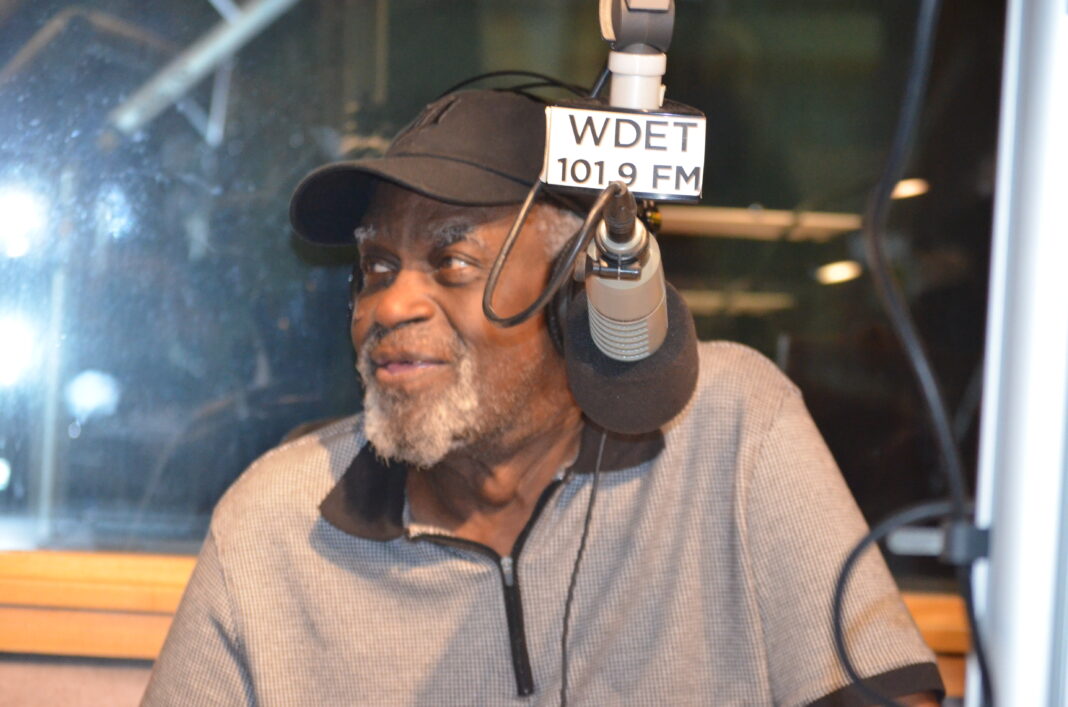

More than 60 years after he became a leading voice in the Detroit radio market, Jay Butler retired from WDET 101.9 FM radio on Aug. 2.
“This is it,” Butler declared toward the end of his final broadcast. “Before I go, I need to say thank you to the people of Detroit. Thank you for accepting me… I was just a small-time country boy from Jackson, Tennessee. You took me into your homes with open arms. I took me into your kitchens, your living rooms, your cars on the way to work, and on the way to school… You made me family.”
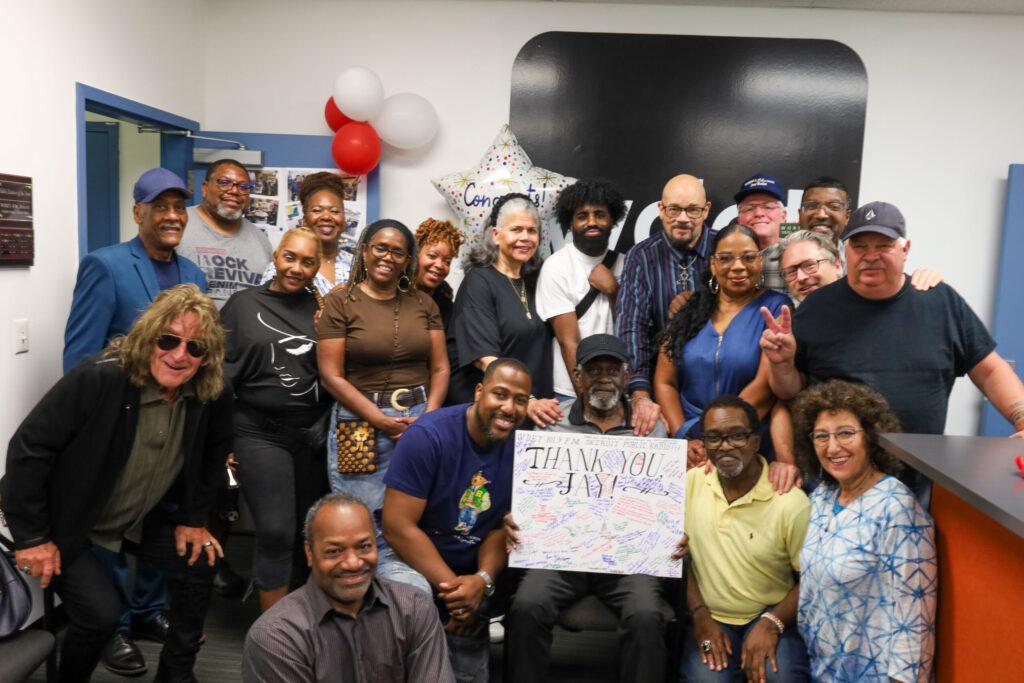
Butler concluded two weeks of broadcasting on the National Public Radio affiliate with well-wishes from former and current colleagues as well as family and friends. His blues music broadcast had been heard on WDET for 20 years. Station general manager Mary Zatina, program director Adam Fox, WDET development director Carmen Garcia, and on-air talent such as Robert Jones, Ann Delisi as well as iconic host of WGPR-TV’s “The Scene” Nat Morris saluted Butler with on-air tributes. John Mason, another radio legend, offered a written tribute on WDET’s “Jay’s Place” guest page. The City of Detroit saluted Butler with a proclamation. His son, Jeffrey, who produced the WDET broadcast, fought back tears as he offered a heart-felt tribute to his father.
“Jay Butler is a radio legend, and one of the most influential and important figures in Detroit media history,” said Fox. “He brought extraordinary knowledge, warmth, and authenticity to every broadcast. Through his music, his stories, and his connection with listeners, Jay created a true community. His impact on WDET and on Detroit radio is immeasurable, and we’re honored that he’s shared this chapter of his remarkable career with us.”
Radio station management offered Butler the opportunity to sign off during his last three broadcasts, which is rare in commercial radio.
His radio career began at just 15 years old when he accompanied a friend to a job interview at local station WJAK. After the station manager heard Jay’s rich baritone voice, he asked him to read as well — and hired him on the spot. That first job launched a career spanning more than five decades.
Jay attended Lane College before marrying Julia Haynes in 1963. That same year, he joined WVOL radio in Nashville. While there, he also became the play-by-play announcer for Tennessee State University football, showcasing his versatility behind the mic.
In 1966, Detroit called. Jay was hired at WJLB-1400 AM, one of the city’s most influential urban stations. He later spent a year at WCHB before returning to WJLB as both air personality and Program Director. Under his leadership, WJLB climbed from No. 14 to No. 2 in the Detroit market, second only to powerhouse CKLW AM 800. During this era, Jay worked alongside Detroit radio icons including Martha Jean “The Queen” Steinberg, Donnie Simpson, Al Allen, Claude Young, and Al Perkins. The WJLB staff was deeply rooted in the community, with Jay regularly speaking in schools and at public events.
Jay’s commitment to Detroit was never clearer than during the 1967 riots, when he stayed on the air for 24 hours straight, broadcasting live and speaking directly to the people of the city — just as Martha Jean Steinberg did. His calm, trusted voice became a lifeline for listeners.
In 1975, Jay moved to California to join United Artists Records, a division of Atlantic Records. There he worked with legendary artists including Aretha Franklin, The Spinners, and the group Change, which featured a young Luther Vandross on lead vocals. Jay’s voice was also featured in the classic 1976 film “Car Wash,” starring Richard Pryor. While on radio, Jay and his staff at WJLB were instrumental in breaking hit records for Motown and other major labels.
Jay later accepted a position at Playboy Records before returning to Detroit in 1982 to join WQBH 1400 AM, owned by his longtime colleague Martha Jean “The Queen” Steinberg. At WQBH, Jay hosted two shows: from 1–3 pm playing urban contemporary music, and from 4–8 pm as “Jay The Blues Man Butler,” spinning the best in blues and oldies. It was at WQBH that he created his signature “Motor City Roll Call,” reading listener names on air and celebrating birthdays and anniversaries — a tradition that built deep listener loyalty.
Following Martha Jean Steinberg’s death, Jay continued at WQBH for several more years. When the station was sold and became WLQV radio, he remained on as a voiceover artist. On Sept. 16, 2006, Jay returned to the Detroit airwaves on WDET with “Jay’s Place.” He brought the Motor City Roll Call with him, keeping generations of Detroit listeners connected.
In an Aug. 9 social media post, the USA Radio Museum wrote the following about Butler:
“For generations of listeners, Butler was more than a voice on the air. He was a cultural architect, a storyteller, a curator of Detroit’s musical heritage, and a trusted companion whose warmth and authenticity made him one of the most respected figures in urban radio.”