
By Dr. Jumanne R. Sledge, Cass Tech Alum
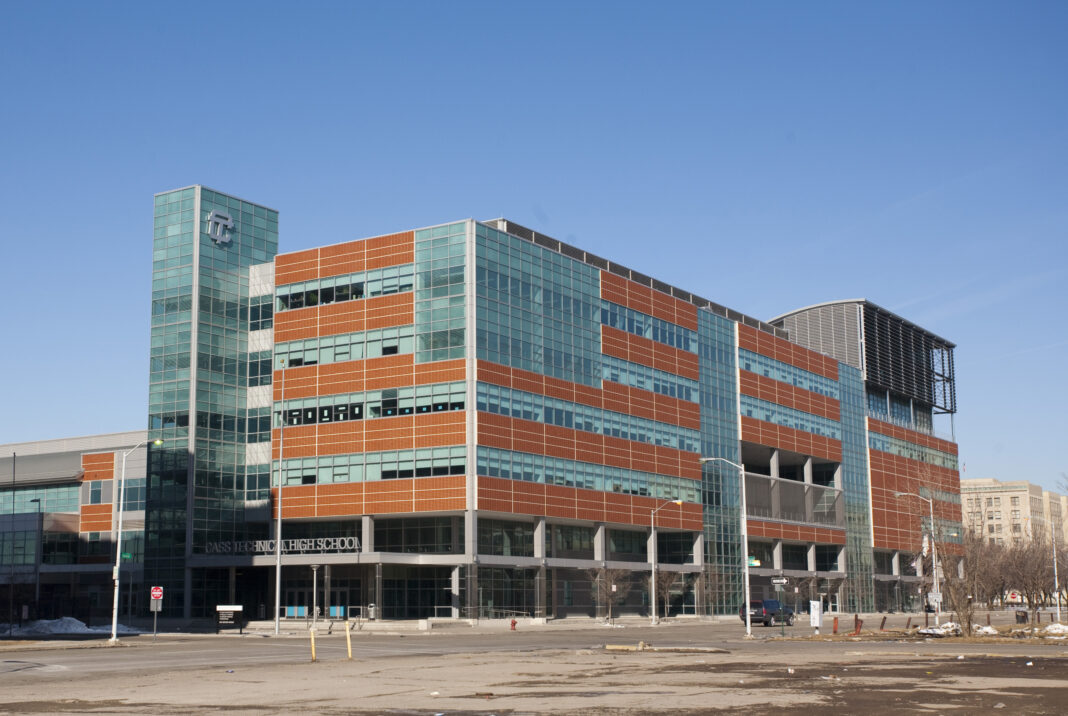
At a moment when public education systems across America are bracing for uncertainty, Detroit’s legendary Cass Technical High School has delivered a reminder of what is still possible when academic rigor, community investment, and student resilience converge. The school’s graduating class securing approximately $98 million in scholarships and grants is not merely an impressive statistic. It is a profound economic and social achievement that arrives during one of the most politically volatile periods for educational funding in recent history.
Across the nation, conversations surrounding reductions within the federal Department of Education, attacks on Diversity, Equity, and Inclusion initiatives, and shrinking institutional support for marginalized student populations have created anxiety for families attempting to navigate the already expensive pathway to higher education. Programs designed to close opportunity gaps for low-income, first-generation, and historically underrepresented students have increasingly become targets of budgetary and ideological scrutiny. The consequences of those cuts are not abstract. They are immediate, measurable, and deeply personal.
For incoming college freshmen, federal educational reductions can affect nearly every aspect of affordability and access. Pell Grants, TRIO programs, work-study opportunities, college readiness initiatives, academic support pipelines, and DEI-based recruitment and retention programs all function as stabilizing mechanisms for students who may otherwise struggle to persist through college. When funding contracts, universities frequently respond by reducing support staff, limiting mentorship initiatives, shrinking bridge programs, and reallocating scholarship resources. Students from urban districts often feel the effects first and hardest.
Families in cities like Detroit understand this reality intimately. The cost of tuition, housing, transportation, books, meal plans, and technology continues to rise while many households remain economically vulnerable from inflation, housing instability, healthcare costs, and wage stagnation. For many parents, the dream of sending a child to college increasingly feels financially impossible without substantial aid.
That is precisely why Cass Tech’s accomplishment carries extraordinary significance.
Principal Lisa Phillips shared that, “it is my desire to make sure that my students have every opportunity to experience the very best that society offers. Their dreams must become a reality so I network with like-minded individuals who see, embrace and believe in the realities of the vision.”
Principal Phillips’ leadership has been driven by this north star for 16 years.
The nearly $98 million secured by its students represents more than ceremonial scholarship announcements at graduation. It represents debt prevention. It represents household stabilization. It representseconomic mobility. Every dollar awarded to a student is potentially a dollar a Detroit family does not need to borrow, refinance, or sacrifice elsewhere in the household budget.
The positive net gain to parents is enormous. Families who avoid crushing student loan burdens can redirect income toward homeownership, transportation, healthcare, entrepreneurship, retirement savings, and neighborhood reinvestment. Parents are less likely to deplete emergency savings or incur high-interest debt to support their children’s education. In many cases, scholarship awards preserve generational wealth that would otherwise evaporate under tuition pressure.
The economic impact extends well beyond individual households.
When Detroit students attend college with stronger financial support, persistence and completion rates tend to improve. Degree attainment fuels long-term earning potential, which in turn increases tax contributions, consumer spending, and professional talent retention within the region. College graduates are more likely to purchase homes, start businesses, contribute to civic institutions, and reinvest in local economies. In this sense, the scholarship success at Cass Tech functions as an economic development story as much as an educational one.
Detroit’s economy has spent decades fighting narratives of decline. Yet institutions like Cass Tech continue producing evidence that the city’s greatest resource has always been its human capital. These students are future engineers, physicians, educators, attorneys, entrepreneurs, data scientists, public administrators, and innovators. Their success creates a multiplier effect that radiates across neighborhoods, businesses, and community institutions.
Equally important is what this achievement says about the enduring necessity of equity-centered educational investment.
Critics of DEI initiatives often frame such programs as expendable political luxuries. Reality tells a different story. Urban schools serving diverse populations frequently rely upon targeted outreach programs, mentorship pipelines, culturally responsive counseling, and scholarship access initiatives to help students compete in systems historically shaped by unequal access. Eliminating or weakening those structures does not create fairness. It widens existing disparities.
Cass Tech’s scholarship total demonstrates what happens when students are given support systems robust enough to unlock their potential. It is evidence that investment works. It is evidence that talent exists everywhere, even when opportunity does not. And it is evidence that Detroit students can outperform expectations despite structural headwinds.
There is also an important psychological dimension to this accomplishment. In an era dominated by stories about educational decline, school violence, staffing shortages, and political polarization, Cass Tech offers a counternarrative rooted in excellence. The achievement sends a powerful message to younger students throughout Detroit Public Schools that elite academic outcomes are attainable regardless of zip code.
The school’s success should not become an excuse for policymakers to continue disinvestment. In fact, it should produce the opposite response. If one urban high school can help students secure nearly $98 million amid federal uncertainty and shrinking DEI support, imagine what could happen if schools across Detroit and the nation were fully resourced rather than continually forced to operate in scarcity.
Cass Tech has done more than produce scholarship winners. It has delivered an economic stimulus package powered by education. It has reduced future debt burdens, strengthened family financial outlooks, elevated Detroit’s talent pipeline, and reinforced the city’s belief in its young people.
At a time when many educational institutions are fighting simply to preserve opportunity, Cass Technical High School has expanded it.
Detroit should celebrate accordingly!
Dr. Jumanne R. Sledge
Coaching You UP
Principal Consultant