
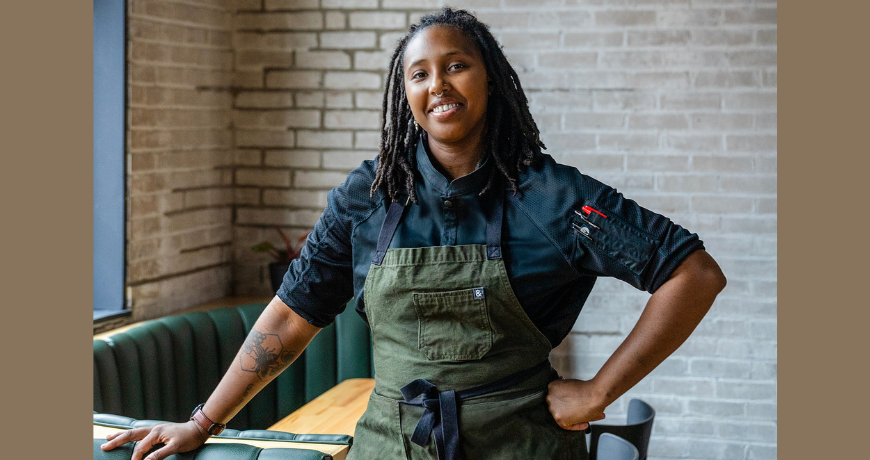

Detroit has always had talented chefs, but something new is happening now. All over the city, a new wave of chefs is changing what fine dining means. It feels less like a performance and more personal, with a strong focus on culture, storytelling, and authenticity. Chef Noelle Prater is helping lead this change.
Prater is now helping guide Marrow in the Market into its next chapter. Her style is shaped by Detroit hospitality, Southern roots, classic cooking skills, and a real love for feeding people. She creates food that is both refined and soulful, making sure her dishes feel thoughtful but still warm and familiar.
“Detroit’s food scene feels like it’s finally comfortable being itself,” said Prater. “For a long time, people looked at cities like New York, Chicago or LA as the standard for what ‘great food’ was supposed to look like, but Detroit has its own voice now.”
She says that voice is now shaped more and more by Black chefs, creatives, and innovators who are changing fine dining but still honoring culture and personality through their food. She describes Detroit’s restaurant scene as collaborative, grounded, and real—a place where chefs share ideas, help each other, and stay close to local producers and farms.
Prater’s cooking style shows that same spirit. She calls it “refined comfort food with a little bit of chaos and curiosity mixed in.” Often, she starts with a single ingredient or flavor she’s obsessed with, then builds it into something complex and memorable.
“A lot of my dishes start because I become obsessed with one ingredient or flavor whether it’s Urfa chili, rhubarb, smoke, char, acid, or some random thing I can’t stop thinking about during prep,” she said. “Then it becomes, ‘Alright… how far can I push this before my cooks tell me I’m doing too much?’”
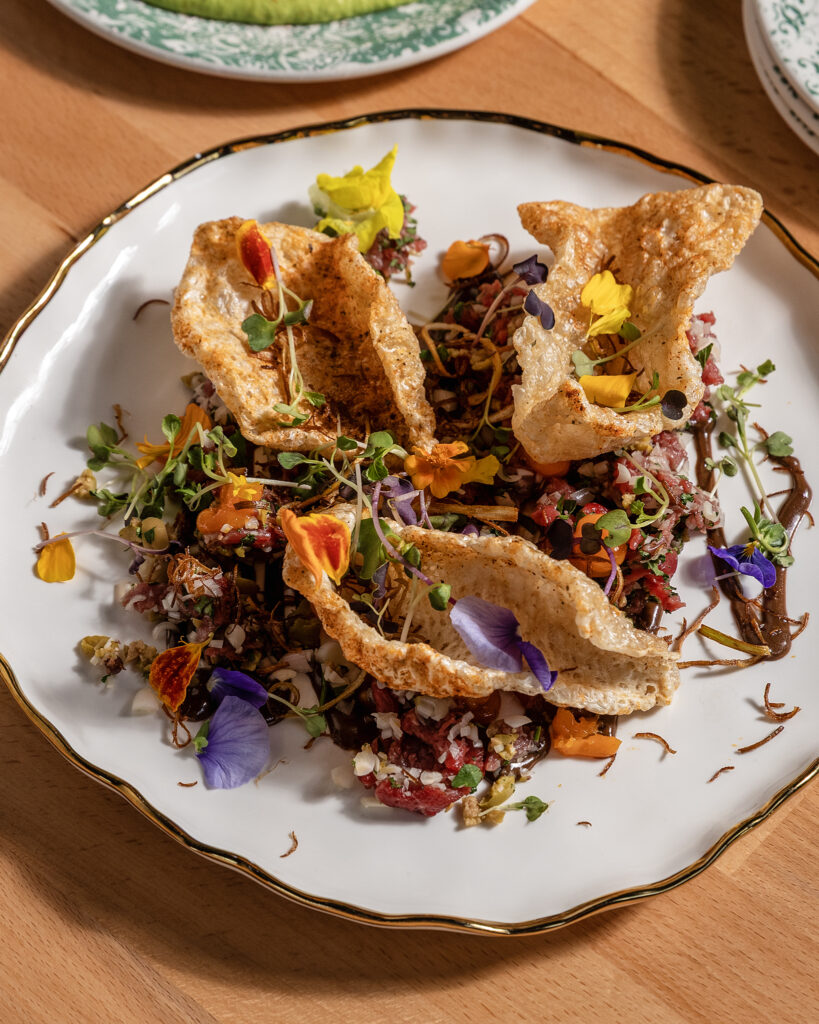
Her influences include classic cooking methods, whole-animal butchery, Southern traditions, Detroit culture, and lessons from working in busy kitchens night after night. Still, for Prater, food is really about making an emotional connection.
“Guests don’t care how fancy your description sounds if the dish doesn’t make them feel something,” she said.
That emotional connection goes back to her childhood, with memories of family gatherings, holidays, and kitchens full of music, conversation, and shared moments. She says those times shaped how she thinks about hospitality now.
“It was never just about eating,” Prater said. “It was about connection, love, and bringing people together in the dining room, or in the kitchen.”
That same sense of purpose is what attracted her to Marrow in the Market. The restaurant is known for careful sourcing and a farm-focused approach. Its identity is built on transparency, storytelling, and caring for both the food and the people who produce it. Prater says she connected with this mission right away because it felt genuine and intentional.
“At Marrow, that connection starts long before the food reaches the kitchen,” she said, referencing partnerships with Michigan farms including Prairie View Farms, Backus Farms, Modreske Farms, Albright Farms, and Moraine Park Farms. “That changes the way you cook because you feel a responsibility to honor the product and the people behind it.”
Prater also credits Ping Ho and the Marrow team for trusting her vision and giving her room to grow creatively in this new role.
Looking ahead, Prater says she is excited to help continue evolving Marrow’s story while bringing more of her own perspective and experiences into the food. She hopes to create dishes that feel refined but still soulful and approachable — food that reflects Detroit, Michigan seasons, and the people behind the ingredients.
“And honestly,” she said, “if guests leave feeling like they had something thoughtful, welcoming, and real while hearing a little Stevie Wonder playing from the kitchen, then I feel like we did our job.”