

People will always be curious about what makes their leaders tick. For those who are in power, be they elected officials, thought leaders, activists or terrorists, there’s something humanizing about knowing the media they consume – the music they listen to, their favorite films, what’s on their bookshelf.
Until recently, the cultural and consumer tastes of the most influential among us weren’t revealed until near or after the end of their lives. Now, it’s commodity and currency. Long after leaving the White House, former President Obama still releases an annual playlist of his favorite songs and favorite books from that year. Long after all four of their deaths, historians and TikTokers alike are revisiting the aesthetics of an assassinated president, his fashionable book editor wife, their son who once was the Sexiest Man Alive and his equally fashionable wife – that’s JFK, Jackie O, JFK Jr., and “CBK,” all of whom brought back into the zeitgeist by the hit FX show “Love Story.”
On campaign trails, hopefuls and incumbents are frequently asked what they’re reading and who they’re listening to, and they gladly answer because it makes them relatable. For example, native Detroiters know and love Jeezy – this is his adopted hometown outside of Atlanta, after all – so it’s no wonder that the mayoral candidate who featured him in concerts (and accepted complimentary tickets to one of his) was able to flip fans into voters.
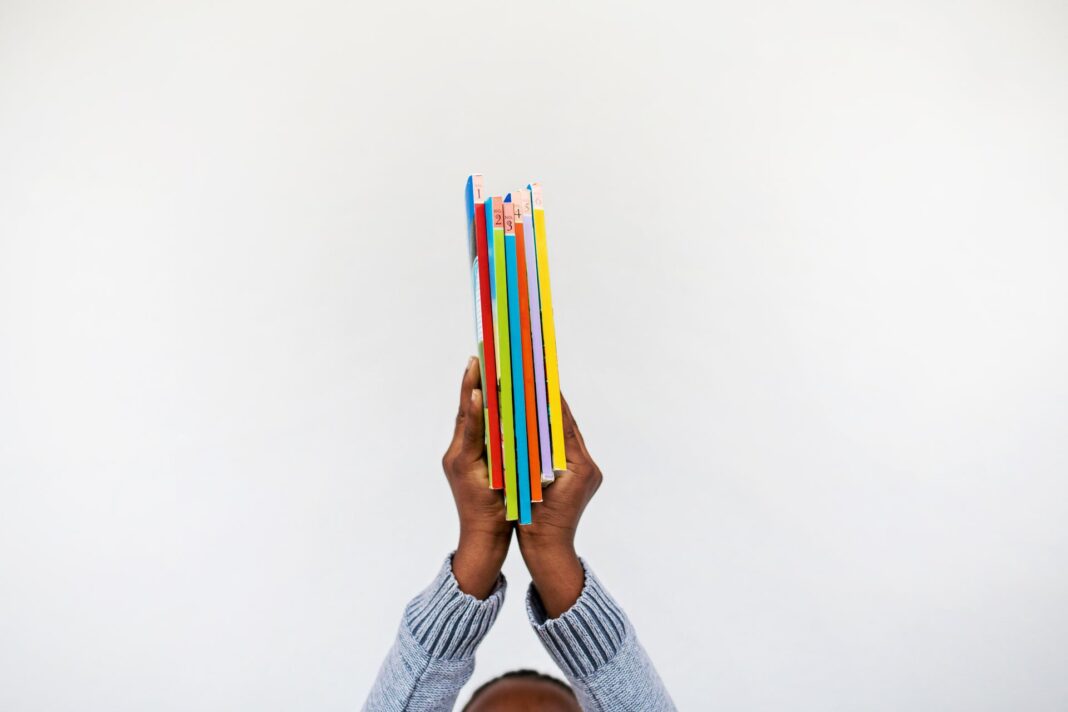
It’s this context as to why when Detroit Mayor Mary Sheffield posted a video to the City of Detroit’s social accounts observing National Reading Month, a closer look at the books she had on display raised an eyebrow. While encouraging Detroiters to read, Sheffield held up a copy of “Hard Stuff,” the autobiography of former Detroit Mayor Coleman Young, alongside “True Gretch,” Gov. Whitmer’s autobiography; “Go Higher: Five Practices for Purposes, Success and Inner Peace” by Big Sean; “The 5 AM Club” by Robin Sharma; “As a Man Thinketh” by James Allen; “The Let-Them Theory” by Mel Robbins; “Wishes Fulfilled: Mastering the Art of Manifesting” by Wayne Dyer; and an eighth volume whose title couldn’t be made out.
Just one question for Detroit’s first Black woman mayor: Where are the Black women from Detroit on your bookshelf? Where are the Black women authors, period?
Now, this isn’t to assume that Sheffield doesn’t read works by Black women. The few books shown in the video may or may not be indicative of what Sheffield might keep in her office on the Coleman A. Young Municipal Center’s 11th floor or at the mayoral residence in the Berry Sub. But for a mayor who’s taken full charge of her optics and visual presentation in a way that her predecessor hasn’t, the lack of Black women authors is glaring.
Since taking office, there’s been an uptick of front-facing vertical video on social platforms featuring the mayor; in layman’s terms, that means these interactions with the city’s top-ranking official are designed to feel less like a press conference and more like a FaceTime call, since Detroit residents’ phones are increasingly the first point of contact we have with the mayor’s office. There’s also been an increase in still photography of the mayor around town posted to the City’s official platforms. Neither of these approaches started with the Sheffield administration, but more attention to visuals is confirmation that this administration knows the significance of optics.
Considering Sheffield’s growing influence and stature, there was both a missed opportunity to gesture to one of the many reasons why she was elected in the first place, and now an open invitation to question what message the mayor is trying to send. With five self-help books mostly by white men and the only woman author being a white woman (who, as Chronicle editor Jeremy Allen noted last week, barely mentioned Black Detroiters in her farewell address as governor – just so readers are reminded that all elected officials are fair game when it comes to these critiques), you mean to tell us that nothing from Iyanla Vanzant, Sarah Jakes Roberts or bell hooks would carry the same weight, or that Big Sean is the only (living) local worth reading?
(Speaking of Cass Tech’s Most Eligible Bachelor, didn’t Sean very publicly say that he’s still got a long way to go before wifing the mother of his child that’s he’s been with for about a decade now? Not sure why any newly married person would be co-signing anyone with this kind of approach to relationships, but that’s neither here nor there.)
If the mayor is looking for motivation, an inspiring life story, some more hip-hop, or some combination of the aforementioned, there’s Renaissance High School alumna Robin Givhan’s “Make It Ours,” which follows how Virgil Abloh was able to bypass gatekeepers to establish a groundbreaking Black fashion brand; Mumford High School alumna Jemele Hill’s “Uphill,” another account of a woman from Michigan once targeted by President Trump; or “Decoded” by Jay-Z, the memoir from the Brooklyn rapper inviting readers to take lessons from his lyrics, fleshed out with careful detail from Cass Tech alumna dream hampton.
If it’s Black history or Detroit history Sheffield is looking for, perhaps Tiya Miles’ “The Dawn of Detroit” that lays out the hidden history of slavery in the city is worth checking out; followed by “The Burden” from now-departing Director of Arts, Culture and Entrepreneurship Rochelle Riley, who explores how Black people still live with the effects of slavery; “The World According to Fannie Davis,” a retrospective from Bridgett Davis on how her numbers-runner mother provided her family with a solid, middle-class upbringing in Russell Woods during the Young years; or the fictional “The Turner House” from Angela Flournoy, which traces a Black family’s history that begins around the same real-life timeline as Sheffield’s grandfather integrating the UAW and ends around the same time as Sheffield’s first term on City Council.
One could possibly purchase or order these books from the Black woman-owned Source Booksellers in Midtown, the Black woman-owned Sip ‘n Read in Corktown (just a hop, skip and a jump down Michigan Avenue from The Godfrey, where Sheffield exchanged vows late last year), or the Black woman-owned gift shop Spectacles.
One could also keep in mind that when putting together a reading list, the last time Detroit city government publicly acknowledged a Black woman’s book was in 2021, when former Mayor Mike Duggan interviewed author and native Detroiter Alice Randall about her then-new novel, “Black Bottom Saints.” Or if you look at it from our point of view, the last mayor to tell us to read a Black woman’s work was the white male one – the inverse of what just happened in Sheffield’s Reading Month video, which can be corrected while there’s still time left in said month.
You can reach Aaron at afoley@michronicle.com.