
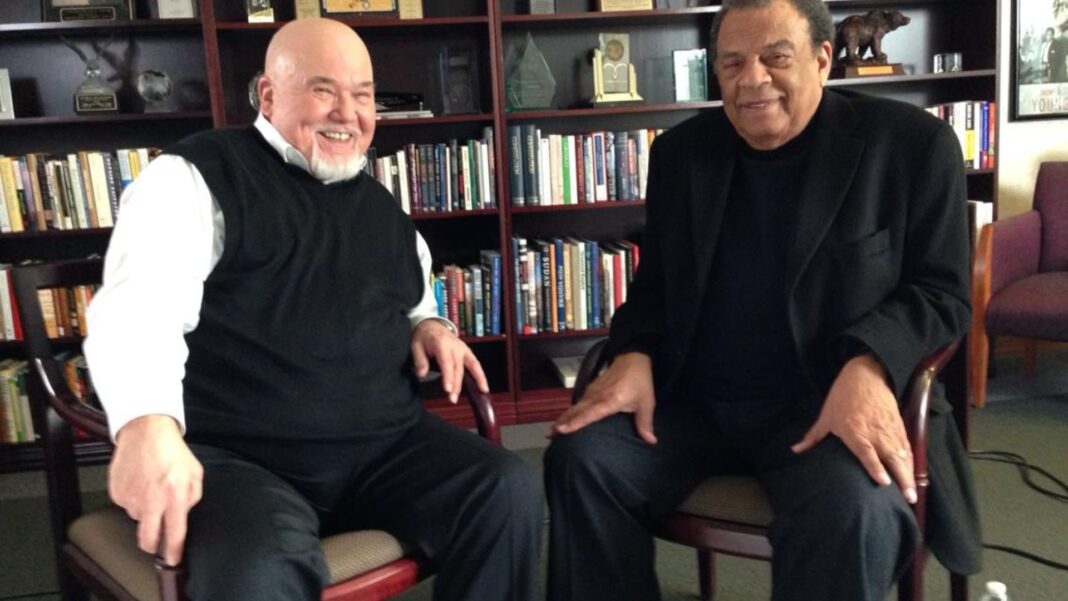


Tom Houck, a longtime civil rights activist who worked alongside Dr. Martin Luther King Jr. and spent more than six decades shaping Atlanta’s political landscape and preserving its civil rights history, has died at 79.
Houck died Thursday, October 22, from pneumonia, according to a close friend who spoke with The Atlanta Journal-Constitution. His passing marks the loss of another firsthand witness to the civil rights movement and a familiar voice in Atlanta politics.
Born in Cambridge, Massachusetts, Houck became involved in the struggle for racial equality as a teenager. In 1965, he participated in the historic Selma-to-Montgomery voting rights march, an experience that helped define his lifelong commitment to activism.
He moved to Atlanta in 1966 and joined the Southern Christian Leadership Conference, becoming one of the youngest members of its executive staff. During that period, he developed a close relationship with King and his family, serving as a driver and personal assistant until King’s assassination in 1968.
His work extended far beyond those early years.
Houck helped organize voter registration initiatives throughout the South and served as field director for the Voter Education Project. He later became deputy director of the Youth Citizenship Fund, advocating for expanded voting rights for young Americans following the passage of the 26th Amendment.
As Atlanta emerged as a center of Black political leadership, Houck worked on campaigns involving Andrew Young, Maynard Jackson and John Lewis, helping advance a generation of leaders who would transform the city’s political landscape.
He eventually became a prominent media personality, hosting political talk radio programs and appearing as a regular panelist on The Georgia Gang. Known for his outspoken commentary and extensive political relationships, Houck remained an influential observer of Georgia politics for decades.
In his later years, he turned his attention toward preserving the history he had helped create.
Through Civil Rights Tours Atlanta, Houck guided visitors through historically significant neighborhoods and landmarks, sharing personal accounts of the movement and the people who shaped it.
His tours connected generations of visitors with Atlanta’s civil rights legacy, including King’s former home, Ebenezer Baptist Church and other historic locations.
Following his death, Atlanta City Council recognized Houck’s decades of service to voting rights, political organizing and historical preservation.
The council announced plans to honor him with a moment of silence at its November 2 meeting.
Houck’s legacy extends beyond his proximity to some of America’s most influential civil rights leaders. Through organizing, journalism and education, he helped preserve their work while contributing to Atlanta’s evolution as a center of Black political power.
His death represents the passing of another important voice from the civil rights generation, but the history he dedicated his life to protecting remains part of Atlanta’s enduring story.