
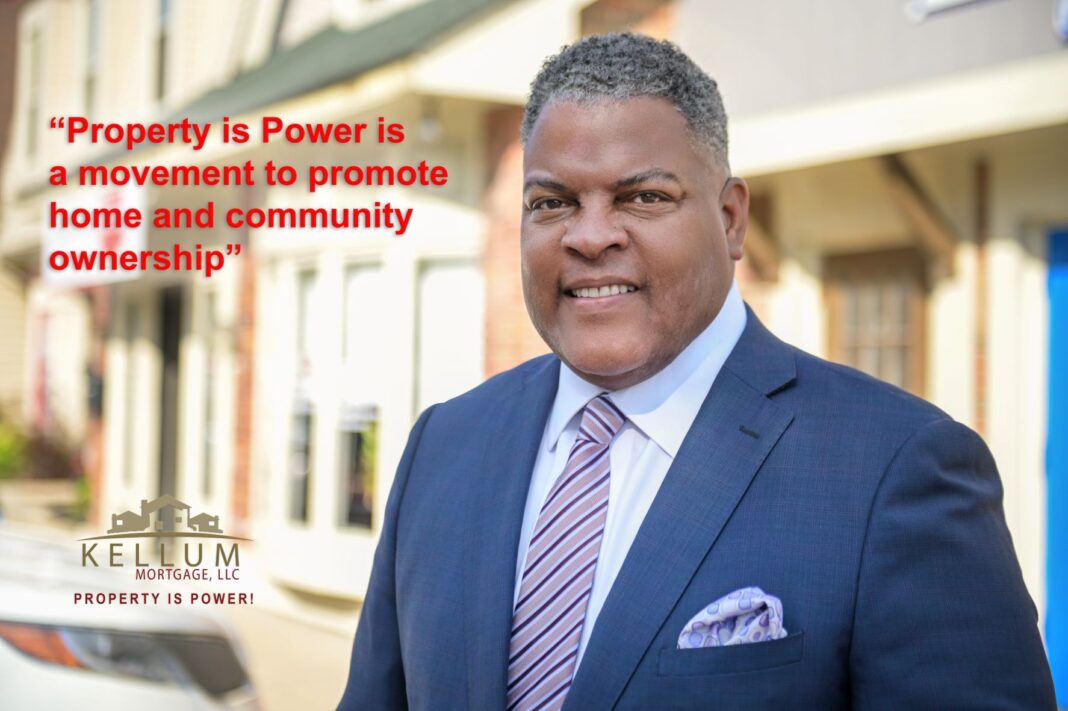


By Dr. Anthony O. Kellum, Contributing Columnist
After more than 30 years in business, I have come to believe that success is rarely the result of one extraordinary decision. More often, it is the product of ordinary decisions repeated consistently over time. It is what we do when nobody is watching, how we prepare for the day ahead, the people we choose to surround ourselves with, the knowledge we pursue and, perhaps most importantly, what we believe is possible for our own lives. We spend considerable time talking about success as though it were an event, a moment when everything finally comes together. In my experience, success is much more often a process, one that begins long before the results become visible.
For nearly three decades, I have maintained a morning routine that helps me approach each day with intention. I plan my day and write down the ten things I most need to accomplish. I do not always complete every item, and the priorities sometimes change, but writing them down forces me to distinguish between what is important and what is merely demanding my attention. Without a plan, it is easy to spend an entire day responding to other people’s priorities while making little progress on your own. The simple act of putting your goals on paper gives them structure and makes you accountable for what you intend to accomplish.
I also spend time in quiet reflection, closing my eyes and visualizing the life I want to build. I think about where I want to go, what I want my business to become, what I want for my family and what kind of future I am working to create. Some people may dismiss visualization as wishful thinking, but that misses the point. Imagining a better future does not make it happen by itself. What it can do is help you clarify what you want, remind you why you are working and influence the decisions you make throughout the day. You have to see the possibility before you can begin working toward it. But once you have that vision, you must be willing to get up, pick up the phone and do the work.
That is where real discipline begins.
One of the most important lessons I have learned in business is that opportunity rarely comes simply because we are waiting for it. We have to put ourselves in a position to encounter it. I make calls, reach out to people, build relationships and look for opportunities to meet people I would not otherwise know. There is a tendency to believe that networking means attending an event populated by people in your particular industry, exchanging business cards and hoping someone will eventually need your services. That is one approach, but I have found that some of the most valuable connections come from places I never expected.
I cannot tell you how many times I have attended networking events that had little or nothing to do with real estate or mortgage lending and walked away with a business opportunity, a valuable relationship or an introduction that eventually led somewhere meaningful. You never know what another person knows, whom they know or what opportunities may emerge from a conversation. Sometimes the person who changes your professional trajectory is not the person who works in your industry. It is the person who introduces you to someone else, challenges your thinking or opens your eyes to a possibility you had not considered.
That is why I encourage people to get uncomfortable and change their circles. If you attend the same events, talk to the same people and have the same conversations year after year, you may become very comfortable, but you may also limit your exposure to new ideas. There are dynamic, ambitious and interesting people everywhere, and they do not all work in the field you happen to know best. Attend the business luncheon. Go to the community event. Meet the entrepreneur whose business has nothing to do with yours. Talk to the person who has a different background, a different perspective or a different vision of what is possible. You do not have to abandon your existing relationships to expand your world. You simply have to be willing to enter rooms where you are not already the most familiar person.
But there is another part of this equation that I believe is just as important: you have to be intentional about what you allow into your mind. For years, I made a conscious effort to surround myself with positive messages and people who encouraged me to think bigger. I listened to motivational speakers such as Zig Ziglar and Les Brown, and I played motivational tapes every day. I joined networking and personal-development groups, including Yes, It’s a Positive Network, and I was willing to pay to attend seminars and hear speakers who could motivate me, challenge my thinking and help me see possibilities beyond my immediate circumstances. I wasn’t doing these things because I had everything figured out. I was doing them because I understood that I needed to keep developing myself if I wanted to grow my business and my life.
Looking back, I realize that I was investing in something that did not appear on a balance sheet. I was investing in my mindset. I wanted to hear messages that reminded me to keep going, to remain disciplined, to take action and to believe that my circumstances did not have to determine my destination. The people we listen to and the conversations we participate in can influence how we see the world. If we consistently expose ourselves to ideas that encourage us to learn, build, take responsibility and pursue opportunities, those ideas can become part of the way we approach our lives. The reverse can also be true.
Today, many of us are surrounded by negativity. We wake up to news about economic uncertainty, political conflict, racism, job losses, crime and all the things that seem to be going wrong. We scroll through social media and encounter arguments, criticism and people explaining why something cannot be done. Some of these concerns are real and deserve our attention. I am not suggesting that we ignore injustice, pretend that hardship does not exist or replace serious thought with empty slogans. But there is a difference between being informed about the world and allowing its most discouraging messages to occupy our minds all day.
When negativity becomes the dominant voice in our lives, it can affect what we believe is possible. We can become so accustomed to hearing about barriers that we begin to anticipate failure before trying. We can spend so much time discussing the reasons people struggle that we give too little attention to the habits, knowledge and relationships that help people move forward. Eventually, what we repeatedly hear can influence what we expect, and what we expect can influence what we are willing to attempt.
That is why I believe we must deliberately seek positive influences. Listen to a motivational speaker on the way to work. Read something that challenges you to think differently. Spend time with people who are building businesses, developing ideas and working toward meaningful goals. Attend a seminar. Join a group that encourages personal growth. Find mentors whose experience can help you avoid mistakes and recognize opportunities. You do not have to agree with every speaker or adopt every philosophy. The point is to keep exposing yourself to ideas that expand your thinking rather than allowing discouragement to become your default setting.
I have also come to appreciate the power of personal affirmation. I know this may sound unusual to some people, but I still look in the mirror and remind myself of what I believe about my life and my potential. I tell myself, “I’m great. I’m wealthy. I’m powerful. I’m on this earth for a reason.” I still do it today. These are not declarations that I have achieved everything I want or that I am exempt from difficulties. They are reminders of the person I am working to become and the responsibility I have to use the abilities, opportunities and time I have been given.
There is a difference between telling yourself that you are wealthy and actually building wealth. Affirmation will not pay your mortgage, establish a business or create an investment portfolio. But it can remind you to think beyond your current circumstances and act in accordance with the future you want to create. When I say that I am powerful, I am reminding myself that I have the capacity to make decisions, learn, work, build relationships and influence the direction of my life. When I say that I am here for a reason, I am reminding myself that my life should be about more than simply getting through another day. I have responsibilities to my family, my business, my community and the generations that will follow me.
The words alone are not the accomplishment. The actions that follow are what matter. But sometimes we need to hear ourselves say something positive before we can begin behaving as though the possibility is real. We should be as intentional about reinforcing our potential as we are about recognizing our problems.
Of course, meeting people and developing the right mindset are only part of the equation. We also have to become people who have something to contribute when opportunities arise. For me, one of the most valuable ways to do that has always been reading.
I have long believed that we should make a habit of reading, regardless of the subject. My goal has been to read at least one book a month. I will be honest: I have not always maintained that pace. Business responsibilities, family obligations and the ordinary demands of life can make it difficult to follow a perfect schedule. But I still try to keep a book in my hands and make reading a regular part of my life. The important thing is not whether you read exactly twelve books a year. It is whether you continue to expose your mind to ideas that challenge you, teach you something new and make you think more deeply about the world around you.
My own reading has evolved over the years. I started with African American history, moved more deeply into business and entrepreneurship, and have increasingly explored philosophy. Each stage has given me something different. Business books have helped me think about strategy, opportunity and the mechanics of building an enterprise. History has helped me understand the circumstances that shaped the world I inherited. Philosophy has encouraged me to examine my own assumptions, question my reactions and think more deliberately about how I live.
The common thread is not the subject matter. It is the act of thinking. Reading requires you to slow down, consider an argument, weigh evidence and sometimes confront an idea that challenges what you previously believed. It can strengthen your ability to analyze situations rather than simply react to them. It gives you more perspectives to draw upon when making decisions and reminds you that the problem occupying your attention today may have been examined by someone else a hundred years ago. You may not agree with everything you read, and you do not have to. The value often lies in the process of engaging with an idea and deciding what you believe for yourself.
One book, in particular, changed the way I thought about my own life. Years ago, when I was reading African American history, I picked up the autobiography of Frederick Douglass. I became so engrossed in his story that the experience went far beyond learning about a historical figure. By the time I finished the book, something had shifted in the way I saw myself and my own possibilities. I remember putting it down and feeling something that is difficult to describe unless you have experienced it yourself. I felt free.
I do not mean that I had suddenly acquired some new legal rights or that every obstacle in my life had disappeared. I mean that I felt liberated in my thinking. After reading about a man born into slavery, denied the opportunity to learn and forced to fight for freedoms that many of us take for granted, I looked at my own circumstances differently. Douglass pursued knowledge in a world designed to deny it to him. He developed his intellect, found his voice and became one of the most influential figures in American history. His story forced me to examine the opportunities available to me and ask myself a simple question: What was I going to do with my freedom?
When I put that book down, I felt there was no excuse for me not to try. I could build a company. I could walk into a bank and make a case for financing. I could meet people, develop relationships, pursue business and create something of my own. I could walk into rooms where important decisions were being made and make my voice heard. I could learn what I did not know, develop the skills I needed and keep moving forward. I understood that success would not be guaranteed, that I would encounter rejection and that there would be challenges I could not control. But I no longer wanted to confuse the existence of obstacles with the absence of opportunity. I felt that I had been given the freedom to try, and I had a responsibility to make the most of it.
That feeling has stayed with me for years. Sometimes, you must get away from the noise of everyday life and spend time in the quiet, reading and thinking, to understand where you are, what you have and what is possible. You must give yourself the opportunity to look beyond the immediate frustrations of your circumstances. We hear so much about what is wrong in America, and many of those concerns are legitimate. People struggle to find jobs. Discrimination exists. Economic inequality is real. There are barriers that make the path to success more difficult for some people than for others. None of that should be dismissed, and nobody should be told that determination alone will solve every problem.
But there is a difference between acknowledging a difficult reality and allowing that reality to define the boundaries of your ambition. When every conversation centers on what cannot be done, who will not give you a chance or why the system is working against you, it can become difficult to see the opportunities that remain. If we are not careful, the constant repetition of discouraging messages can become paralyzing. We can begin to anticipate rejection before making the call, assume the bank will say no before submitting the application or convince ourselves that a door is closed before we even try to open it. The circumstances may be difficult, but we should be careful not to turn those circumstances into a permanent verdict on our future.
Traveling outside the United States can offer another important perspective. When you spend time in other parts of the world and see how people live, the resources they have available and the opportunities they may lack, you can return home with a deeper appreciation for the advantages that exist here. America has serious problems, and its opportunities are not distributed equally. But it also has an enormous economy, educational institutions, access to capital, established property rights and the possibility of building a business, acquiring real estate and creating wealth. Those opportunities are not equally accessible to everyone, and they are never guaranteed. Yet they are real, and we should not lose sight of them.
For me, Frederick Douglass’s autobiography brought those possibilities into sharper focus. It did not make me believe that the world was fair. It made me recognize that I had opportunities that previous generations could scarcely imagine, and that I needed to use them. I could spend my life cataloging every obstacle, or I could acknowledge the obstacles and still move forward. I could allow the disappointments of the day to consume me, or I could get up the next morning, write down my goals, make my calls, listen to something uplifting, meet people, read, learn and continue building. I chose to focus on what I could do.
That is why I recommend the autobiography of Frederick Douglass to anyone who wants to understand the relationship between knowledge, freedom and personal responsibility. For Black readers in particular, it offers a powerful opportunity to reflect on the sacrifices that preceded us and the possibilities that are now within reach. But its message extends to anyone who has ever felt limited by their circumstances. It reminds us that we should never underestimate what a determined mind can accomplish when it has the opportunity to learn and the freedom to act.
This is also why I believe reading is about much more than accumulating information. It is about developing the capacity to think independently, assess circumstances and make decisions based on something deeper than the prevailing mood around us. A book can challenge your assumptions, change your perspective and make you reconsider what you thought was possible. Sometimes, one idea can stay with you for the rest of your life. That is what Douglass’s story did for me. It reminded me that I was responsible for doing something with the opportunities available to me.
I cannot control every decision a lender makes, every person I meet or every economic condition that affects my business. I cannot eliminate every injustice or guarantee that hard work will always be rewarded. But I can prepare myself. I can develop relationships. I can keep learning. I can make the call, walk into the room, submit the proposal and pursue the opportunity. And when one approach does not work, I can look for another.
That, to me, is the beginning of self-determination. It is also where the idea behind Property Is Power becomes personal. Before you acquire property, build a business or accumulate wealth, you have to believe that your actions can help shape your future. You have to be willing to learn the rules, understand the opportunities and take the first step. Ownership begins with an asset, but the journey toward ownership often begins much earlier, with a change in how you see yourself and what you believe you can achieve.
These habits planning the day, visualizing the future, making calls, meeting people beyond familiar circles, surrounding yourself with positive influences, reinforcing your beliefs and reading consistently may not sound revolutionary. That is precisely the point. We sometimes look for a secret to success when the more useful answer is sitting in front of us. We want the breakthrough, the big contract, the investment that changes everything or the opportunity that finally puts us on the map. Those things can happen, but we cannot build a dependable life around waiting for them. We can, however, build routines that increase the likelihood that we will recognize an opportunity when it appears and be prepared to act on it.
This is especially important when we talk about property ownership and building generational wealth. Owning a home, acquiring an investment property or starting a business requires more than desire. It requires preparation, knowledge, relationships and a willingness to take deliberate action. You must understand your finances, learn how credit works, ask questions, meet the right professionals and be willing to take the first step even when the entire journey is not yet clear. You may need to make ten phone calls before one conversation leads somewhere. You may attend five events before meeting the person who becomes an important business contact. You may read several books before a single idea changes the way you approach a financial decision.
But those efforts accumulate. The person who plans carefully, keeps learning, maintains a constructive mindset and consistently puts themselves in the path of opportunity is developing an advantage that is difficult to measure on any single day.
That is the connection between personal discipline and property ownership. Before we can build lasting wealth, we must build the habits that make us better prepared to create, acquire and preserve it. A property may eventually become an asset that we pass to our children, but the knowledge, discipline and relationships that helped us acquire it are also part of the inheritance. We should want our children to receive more than a house or a bank account. We should want them to understand how those things were built, how they can be protected and how they can become the foundation for something greater.
After all these years, I still begin my mornings by thinking about what needs to get done, considering the future I want and preparing myself to move toward it. I still believe in picking up the phone, shaking hands, meeting new people, listening to positive messages, reminding myself of what I am capable of and keeping a book nearby. None of these habits guarantees success, and I would never suggest otherwise. Life is too complicated, and circumstances differ too greatly, for anyone to promise that a particular routine will produce a particular result. But these practices have helped me remain engaged, curious and focused on the possibilities in front of me.
You do not need to change your entire life tomorrow. Start by writing down the five or ten things that matter most. Spend a few minutes thinking about where you want to be in five years. Call someone you have been meaning to contact. Attend an event where you do not know everyone in the room. Listen to something that inspires you. Look in the mirror and remind yourself that your circumstances do not define the limits of your potential. Pick up a book that challenges you to think differently. Then do it again the following day.
The goal is not perfection. It is progress, sustained by habits that make progress possible.
We spend a great deal of time talking about the wealth we want to accumulate and the legacy we hope to leave. But the foundation of that future is being laid in the decisions we make today, often in the quiet hours before the rest of the world has begun its day. We may not be able to control every circumstance, but we can become more intentional about how we prepare, how we learn, whom we meet, what we listen to and what we do with the opportunities that come our way.
I learned something important from Frederick Douglass all those years ago. Freedom is not merely the absence of restrictions. It is also recognition that we have choices to make, knowledge to acquire and work to do. The opportunity to shape our lives is a responsibility, and we should not take it lightly. I put down that autobiography feeling free, and I want more people to experience that feeling not because the road ahead will be easy, but because understanding the freedom and opportunities we do possess can change the way we approach the road.
Your future does not begin when the perfect opportunity arrives. It begins with what you do today, what you put into your mind, the people you allow to influence you and the decisions you make when nobody else is watching.
Property is Power!
Property is Power! is a movement to promote home and community ownership. Studies indicate homeownership leads to higher graduation rates, family wealth, and community involvement.