
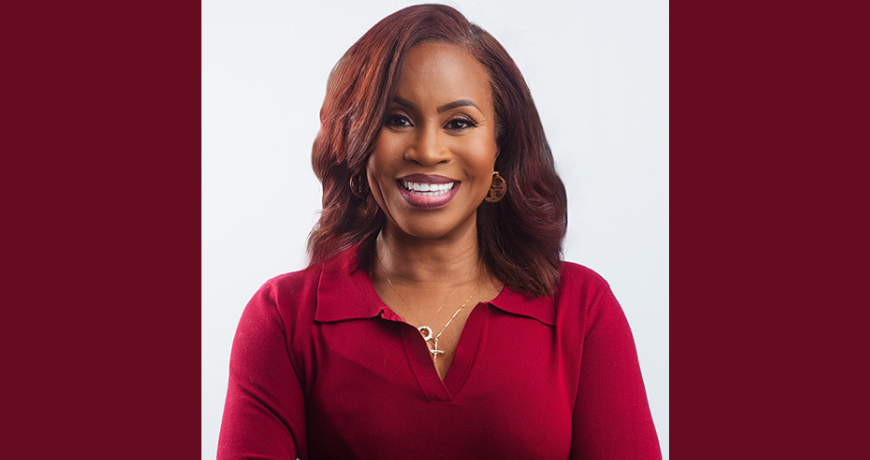

By Janice M. Winfrey, Detroit City Clerk
On this past August 4th Primary, 13 Detroit electors returned their absentee ballots to the Detroit City Clerk’s Office in the Coleman A. Young Municipal Center before the legal 8:00 p.m. deadline.
Their ballot envelopes were properly endorsed with the voters’ signatures and documented with the date and time they were received. Those voters had done their part. However, city clerk employees secured and,following strict chain of custody, delivered the ballots o the Detroit Department of Elections on Wednesday, after the Election Day tabulation was submitted to the county.
The matter was brought to the attention of the Wayne County Bureau of Elections, and ultimately the question of whether these 13 ballots could be tabulated was placed before the Wayne County Board of Canvassers.
That is where this story becomes deeply troubling and personal to me.
There is an important principle behind Michigan’s election canvass: the purpose of the canvass is, in a very real sense, the perfection of the election returns.
Election Night results are unofficial for a reason. The canvass provides an opportunity to examine the returns, reconcile discrepancies, address errors as permitted by law and ultimately certify an accurate accounting of the votes lawfully cast by the people.
Following the August 4, 2026, Primary Election, the Wayne County Board of Canvassers certified the votes of nearly 400,000 citizens.
But 13 Detroit voters were left behind.
The canvass is not supposed to be a ceremonial exercise in simply accepting numbers produced on Election Night. It exists to examine the election returns and, where the law permits, correct and perfect them.
Michigan election procedures specifically contemplate situations in which ballots are discovered that have not been tabulated. The canvassing process provides a mechanism for addressing such circumstances.
Further, Michigan electors in 2022 bolstered the right to cast an absentee ballot by amending the constitution to prohibit any person from using any means, which has the intent or effect of denying or interfering with the fundamental right to vote. Canvassing boards must now follow this constitutional provision when canvassing elections.
These 13 ballots were not late. The 13 voters’ rights were not protected. The voters were not late. They were received by the City Clerk before the polls closed. The voters signed their ballots. They returned them on Election Day within the legally prescribed time.
Whatever administrative failure occurred afterward was not the fault of those 13 citizens. Yet they are the ones who paid the price.
A motion was made by the Democratic chair of the Wayne County Board of Canvassers to allow the ballots to be tabulated. The other Democratic member supported the motion.
Neither of the Board’s two Republican members supported it. The motion failed on a 2-2 vote. And 13 Detroit citizens who followed the rules were denied the most fundamental promise we make to a voter:
If you lawfully cast your ballot, your vote will be counted. These 13 votes would not have changed the outcome of the election. That does not make them any less important.
The right to vote has never depended upon whether one person’s ballot will determine who wins or loses an election. We do not stop counting ballots once the mathematical outcome becomes apparent. We count them because every lawful vote represents the voice of a citizen.
There is another point that cannot be ignored.
Nobody looking at those 13 sealed ballot envelopes knew how those citizens voted. We did not know whether they voted for Democrats or Republicans. We did not know their ideology, their politics or their preferences.
And none of that should have mattered.
A ballot does not have a political party until it is opened and counted. A voter’s right to have it counted should not have one either.
There will always be partisan disagreements in American politics. That is the nature of democracy. Candidates fight hard. Parties disagree. Elections have consequences.
But there must be a line.
And that line should be drawn around the voter.
When citizens follow the law, meet the deadline and entrust their ballots to election officials, they should never lose their voices because Democrats and Republicans cannot agree to count them.
People must come before partisanship.
As Detroit City Clerk, I take seriously my responsibility for the administration of elections. When something goes wrong, government has a responsibility to acknowledge it and, whenever the law provides a remedy, correct it.
We should never compound an administrative error by knowingly allowing a lawful voter’s voice to go unheard.
Nearly 400,000 Wayne County voters had their voices reflected in the certified election returns.
Thirteen Detroiters did not. Some will say, “It’s only 13 votes.”
I reject that thinking. If your ballot were one of the 13, it would not be “only” a ballot.
It would be your ballot. Your voice. Your constitutional right.
Your faith that when government tells you to return your ballot by 8:00 p.m., and you do exactly that, government will keep its end of the bargain.
Those 13 citizens trusted us. They fulfilled their responsibility. We failed to fulfill ours.
The strength of our democracy is not measured only by how we treat hundreds of thousands of voters. It is measured by whether we are willing to stand up for one voter whose voice might otherwise be lost.
This time there were 13. Their votes would not have changed who won. But counting them would have demonstrated something far more important: That in our democracy, people come before politics, voters come before parties, and every lawful vote matters.
Detroit City Clerk, Janice M. Winfrey is a native Detroiter who has dedicated the last 20 years of her life to tirelessly and carefully servicing her community. When sworn into office in 2005, Clerk Winfrey accepted the responsibility to govern three charter-mandated roles: City Clerk, Official Record Keeper and Chief Elections Officer.