
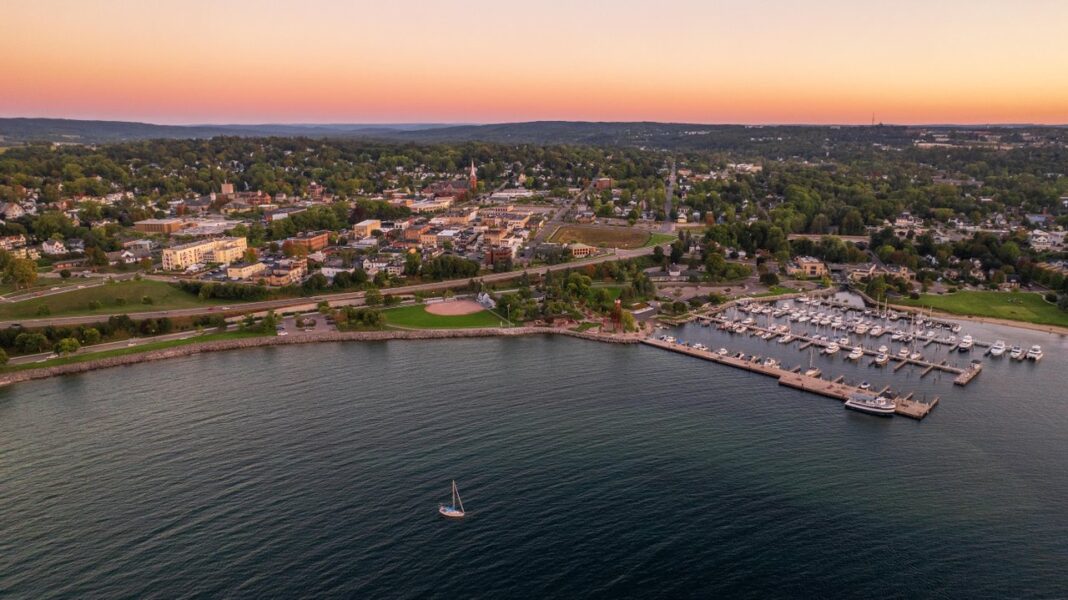

From vineyard coffee flights and lavender-infused treats to a memorable farmstand smashburger, Petoskey’s food scene is shaped by families who work the land and welcome visitors to enjoy what they’ve grown.
Traverse City might be Northern Michigan’s best-known food and wine destination, but Petoskey gives you a good reason to keep driving a bit farther north.
Here, the food story goes beyond fancy restaurants or tasting rooms. It reaches into lavender fields, organic gardens, and family vineyards. You’ll find it in a basket of fresh garlic, a glass of local wine, or a burger topped with produce grown right nearby.
Even more, Petoskey’s flavors are tied to the people behind them. Farmers, winemakers, and chefs do more than serve food—they help visitors see where it all comes from.
You can feel that connection right away at Petoskey Farms, where the tasting room overlooks rows of lavender and grapevines. Music floats through the air as the farm’s little baby doll sheep wander around, looking more like tiny, woolly backup dancers than livestock.
I had two flights in front of me, a set of lattes and four wines arranged in a neat vertical display. This moment captured what makes Petoskey Farms special. It’s not just a winery that also serves coffee. It’s a vineyard, coffeehouse, lavender farm, and a place where everyone feels welcome, whether you drink or not.
My favorite was the Petoskey White, which was light and refreshing—perfect for a sunny afternoon. The LOVE Sangria was the opposite: rich, bold, and ideal for sharing with friends.
The Roush family started building the property in 2012 after buying what used to be a hayfield. They planted 1,600 vines at first and later grew to about 11 acres of vineyard. As time went on, they added patios, wood-fired pizza, lavender, the coffeehouse, and the sheep.
Alaina Roush, the owners’ daughter, said that each new feature has made the farm experience richer and more sustainable. The sheep are cute, but they also have jobs. They eat the grass, fertilize the soil, and help aerate it with their hooves. Their wool might even be turned into pellets that hold water and slowly release it into the sandy soil.
This is a real example of how the farm tries to make its grapes, lavender, animals, and soil all work together.
The coffeehouse has its own family story. Alaina’s sister, Natalie, came up with the idea after college, using her barista experience. The family turned their former home into a café, giving visitors another way to enjoy the farm and helping the property become more than just a place for wine.
That idea of agriculture as an experience continued at Lavender Hill Farm in Boyne City. Owner Bill Mansfield quickly showed that lavender isn’t just one kind of purple plant.
The 33-acre farm grows about 13,000 plants from 30 different varieties, all chosen to survive Northern Michigan winters. Since these types bloom at different times, Mansfield says the peak season isn’t just one perfect day—it’s a journey that lasts several weeks.
Some plants have sweet buds that are great for cookies and ice cream. Others have scents perfect for eye pillows and candles. Some types are best in gin or sparkling drinks, while the darkest blossoms are used as cocktail garnishes or dried decorations.
The takeaway was clear — lavender can do a lot.
You could see that variety in the farm’s shop. I was drawn to the Lavender Moon candle, lavender-sandalwood lotion, fresh lavender bundles, homemade lavender oil, and a special lavender tonic. The beeswax lotion, made with help from the farm’s bees, was another reminder that nearly everything on the property has a purpose.
Lavender Hill is also a venue, a shop, and a place for the community to gather. Its restored barn hosts weddings, dinners, and live shows, bringing together farming and entertainment. Walking through the barn, I could easily imagine a summer night there, with music inside and lavender fields just outside.
Mansfield believes education is a key part of agritourism. People might come for the photos, the scent, or the shopping, but they leave knowing that each type of lavender has its own uses in food, scent, and business. The farm’s labyrinth adds a wellness aspect—a hilltop maze for slow walks, reflection, and meditation.
Of course, not every great taste on this trip came from a wine glass.
At Bear Creek Organic Farm, the highlight was a grass-fed smashburger that might have been my best burger all summer. It started with a one-third-pound patty from Lakeside Farm, topped with Bear Creek’s organic caramelized onions, ripe tomato, and mixed greens. Cheddar, a potato bun, and Great Lakes potato chips rounded out the meal, but the real star was the farm’s Black Garlic Everything Sauce. This rich, garlicky aioli brought the whole burger together.
The food truck lets owners Brian Bates and Anne Morningstar show farm-to-table eating as it happens. Visitors don’t have to guess what fresh produce could become—they can taste it for lunch. The on-site market takes that connection further, offering produce for people to bring home to their own kitchens.
I left with big, fresh garlic bulbs and Bates’ words stuck in my mind: “We’re changing the world one tomato at a time.”
It’s a charming phrase, but it also shows how serious Bear Creek is about their work. Changing how people think about food doesn’t always start with a lesson on farming. Sometimes, it starts with a great burger.
At Boyne Valley Vineyards, which is family-owned, the Alpine Blanc surprised me and could easily compete with my usual sauvignon blanc. The winery’s treehouse tasting area is a cozy spot to relax alone or share a bottle with someone special, and their burnt ends add a smoky, rich touch to the visit.
The family’s story makes the vineyard stand out. Each person handles a different part of the business, from hospitality to other jobs, but everyone, as I was told, “touches the vine.” That saying sums up Petoskey’s food community. People may have different roles, but the land connects them all.
Local restaurants keep those flavors going into the evening. At Chandler’s Restaurant & Wine Cellar, the scallops with seasonal ramp sauce were worth savoring. At the Gypsy Spirits Tasting Room, the Strawberry Rhubarb Gin was a tart, botanical treat. The pork breakfast sausage at Hotel Perry’s Rose Room was one of the best I’ve had, and the duck confit at the 1911 Restaurant at The Terrace Inn deserves a spot on any Northern Michigan tasting list. The trip’s food journey tied together markets, vineyards, restaurants, and producers all around Petoskey.
Petoskey doesn’t have to copy Traverse City to get noticed for its food. Its real strength is in the personal touches—the owner talking about the plants, the daughter pouring the wine, the farmer serving vegetables grown right nearby.
The meals matter. The wine matters. But it’s the people behind them—the families who care for the vines, work the soil, and change the world one tomato at a time—who give Petoskey its lasting flavor.