



By: Jasmine West
For thousands of Detroiters, the condition of a rental home can determine far more than whether a ceiling leaks or a furnace works. It can shape whether a child is exposed to lead, whether a senior feels safe climbing the front steps and whether a family has any real leverage when a landlord refuses to make repairs.
Yet only 14% of Detroit’s estimated 85,000 rental properties currently have a valid certificate showing they meet the city’s compliance requirements, according to the Sheffield administration.
Mayor Mary Sheffield wants to change that.
Sheffield announced a five-part rental housing enforcement plan Wednesday aimed largely at Detroit’s one- and two-family rental properties, the houses and duplexes woven throughout neighborhoods across the city and accounting for the largest share of its rental stock.
The administration’s first benchmark is ambitious: raise rental compliance from 14% to 25% within the next 12 months.
If the city’s estimate of 85,000 rental properties holds, that would mean moving from roughly 11,900 compliant properties today to more than 21,000, potentially bringing about 9,000 additional rental properties into compliance within a year.
For Detroit, the stakes are particularly high. The city is almost evenly divided between homeowners and renters. Census estimates show an owner-occupancy rate of 50.3% from 2020 through 2024, meaning rental housing is home for roughly half of Detroit households. Median gross rent has reached $1,074.
In a city where thousands of families are paying rent each month, whether those properties meet basic health and safety standards is not a small administrative question.
“All Detroiters deserve to live in safe, quality housing,” Sheffield said. “Our senior building compliance effort shows that with a good strategy and follow up, we can significantly increase compliance and improve the quality of housing for thousands of Detroiters.”

The new effort follows Sheffield’s January push to bring more of Detroit’s senior apartment buildings into compliance. Her administration originally set a goal of getting 65 of the city’s 111 senior buildings compliant by August. City records earlier this year identified 65 compliant senior buildings as the administration’s August 2026 target.
Sheffield said Wednesday that 86 senior buildings now have certificates of compliance, exceeding the original goal by 21 buildings while work continues on the remainder.
The administration is now turning to a more difficult piece of Detroit’s rental market: smaller rental homes scattered block by block throughout the city.
That distinction matters. A large apartment building may have dozens or hundreds of residents under one roof and a professional management operation. Detroit’s small rental market can include an individual landlord renting out one inherited house, an investor with several properties or a rental operating without ever being registered with the city.
The city says some of those properties have effectively remained below the radar.
Under the first part of Sheffield’s plan, the Buildings, Safety Engineering and Environmental Department, or BSEED, will build what the administration is calling a master enforcement list. Officials plan to compare rental registrations with information from 36th District Court, property complaints, utility and postal occupancy records and assessor data to identify homes that appear to be rentals but are not registered as such.
Those owners would then face city outreach and, when necessary, enforcement.
Detroit already requires rental properties to be registered and obtain a certificate of compliance. For one- and two-unit properties, owners must pass a property inspection before BSEED issues the certificate. The city streamlined that process after City Council approved changes to Detroit’s rental ordinance in 2024, replacing the previous system with a 15-point property condition inspection.
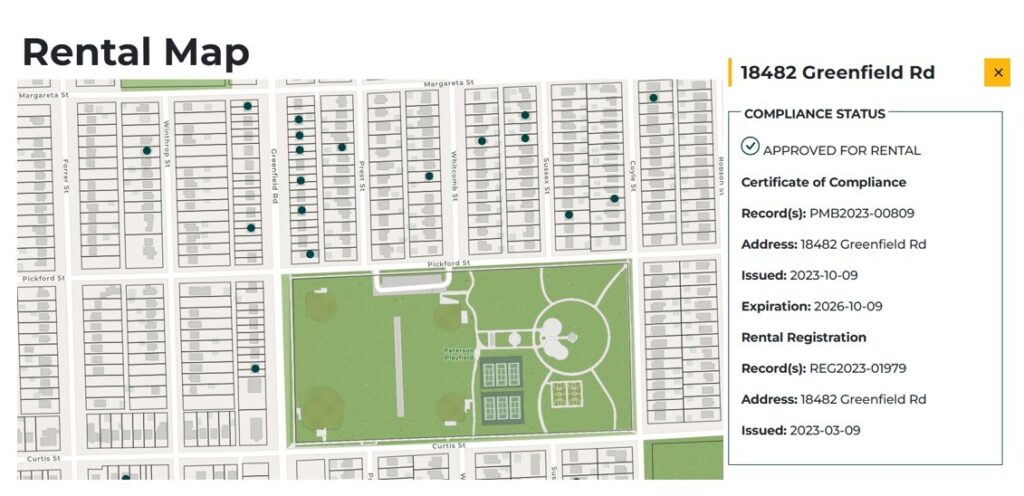
The overhaul came after years of low participation. In July 2024, city officials estimated only 10% of roughly 82,000 rental properties were compliant. The administration’s current 14% figure indicates improvement, but it also leaves the overwhelming majority of estimated rental properties outside full compliance.
Sheffield’s plan also attempts to stop properties that have already cleared the process from falling back out of compliance.
BSEED says thousands of certificates expire each year without being renewed. Instead of allowing those properties to disappear from the compliance rolls, landlords will now receive notices 90, 60, 30, seven and one day before expiration. An inspector will also be assigned to follow up.
The department plans to contact landlords whose certificates expired during the past three years and push to return those properties to compliance within 90 days.
Inspectors will also be assigned to defined geographic areas, making individual inspectors responsible for compliance within particular sections of Detroit. The administration says the model is intended to give residents and landlords a consistent point of contact while making it clearer who is accountable when compliance remains low.
For smaller landlords who may not have professional property managers or staff navigating city requirements, BSEED is promising additional hands-on assistance. The city plans to divide landlords into categories based on the size and type of their portfolios and offer what officials describe as “concierge” support to help owners complete the process.
But the plan is not centered only on landlords.
Detroit tenants will also have a new way to report serious housing conditions around the clock through the city’s Tenant Support website. Complaints will be entered into a tracking system and prioritized based on severity.
That could become one of the most consequential parts of the effort for residents. Detroit’s rental rules allow the city to inspect properties following tenant complaints, and a certificate can be suspended when an inspection finds conditions threatening a tenant’s health or safety. Landlords who fail to register or maintain compliance can also face blight violations.
The city has also created a rental escrow system intended to give tenants dealing with unsafe conditions, needed repairs or landlords without certificates of compliance another avenue to address disputes while keeping rent payments documented.
“Detroit’s rental compliance strategy is about giving residents more stability, more choices, and a clearer path to long-term housing security,” BSEED Director David Bell said.
The true test will be whether those new systems translate into repairs behind front doors.
A certificate can be counted. An inspection can be logged. A notice can be mailed. But for Detroit renters, success will ultimately look much simpler: heat that works in winter, homes free from dangerous hazards, repairs that do not require months of pleading and landlords who are held to the same standards regardless of what neighborhood their tenants call home.
Moving Detroit from 14% to 25% compliance would still leave most rental properties outside the city’s compliance system. But for an administration trying to close a housing enforcement gap built over years, the next 12 months will show whether a new strategy can turn thousands of properties on a spreadsheet into safer homes for the Detroiters living inside them.