


Mayor Mary Sheffield is moving to put more city dollars behind affordable housing at a time when Detroit residents across income levels are still trying to hold on in a market where rent continues to rise and too many families remain one emergency away from displacement.
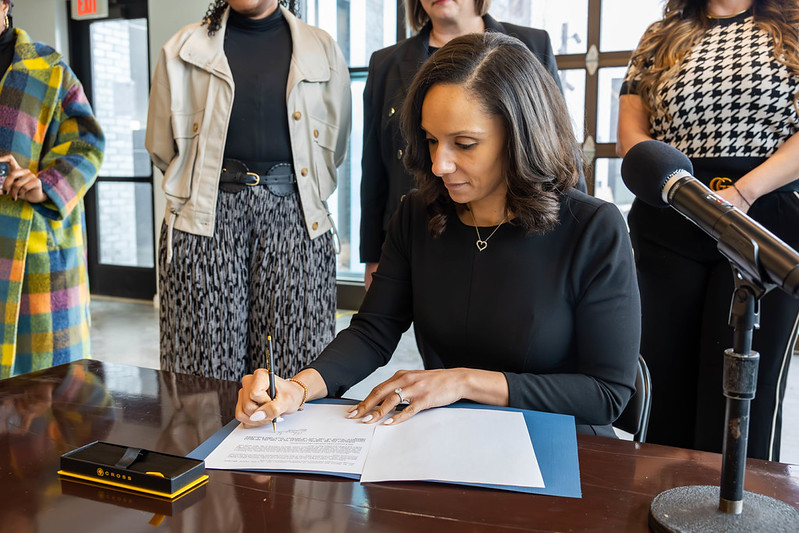
Through a new executive order signed this week, Sheffield directed that 100% of proceeds from the sale of city-owned commercial property be deposited into Detroit’s Affordable Housing Development and Preservation Trust Fund.
That marks a major shift from the city’s current policy, which requires 40% of those proceeds to go into the fund under the Inclusionary Housing Ordinance Sheffield spearheaded in 2014 while serving on Detroit City Council.
With that change, the Trust Fund is expected to generate about $4 million annually, more than double the slightly less than $2 million the city has contributed each year in recent years to support affordable housing development.
“The Affordable Housing Trust Fund has been a great tool that has helped several important projects get past the planning stage and eventually built to provide deeply affordable and permanent supportive housing for our most vulnerable residents,” Sheffield said in the announcement. “The need for affordable housing in Detroit is greater and so is the potential of the Trust Fund. Directing 100% of commercial property sale proceeds to the Trust Fund is one of the many ways my administration is going to increase our capacity to build more affordable housing.”
Housing affordability continues to sit at the center of Detroit’s future. For longtime residents, working families, seniors on fixed incomes, and Detroiters navigating homelessness or housing insecurity, access to stable and affordable housing shapes whether they can remain rooted in the city as development expands around them.
The Detroit Affordable Housing Development and Preservation Trust Fund provides gap financing, low-interest loans, and grants to developers to help keep units affordable and prevent displacement. The fund supports construction, rehabilitation, and preservation of affordable housing units, with a major focus on protecting residents from rising housing costs.
Sheffield signed the executive order at LaJoya Gardens, a Southwest Detroit development that received a $1.1 million investment from the Trust Fund.
That support helped move the project forward. LaJoya Gardens opened in January 2025 and includes 42 newly constructed affordable housing units on West Vernor, with rents reserved for households earning at or below 30% to 80% of Area Median Income. Rents there start at $540 per month.
LaJoya Gardens is one of several housing developments backed by the fund that city officials point to as proof of what sustained public investment can do.
The Residences at St. Matthews, a former Catholic school on Detroit’s far east side, was adaptively reused to create 25 units of permanent supportive housing for individuals struggling with homelessness, with no income requirement, along with 21 additional affordable units for households earning at or below 30% to 80% of AMI.
The Hive, now under construction across Gratiot from Eastern Market, will bring 78 new affordable housing units to the area, with rents based on incomes at or below 30% to 60% of AMI.
Those projects reflect the range of housing needs the city is trying to meet, from permanent supportive housing for residents facing homelessness to long-term affordability for working Detroiters being priced out of neighborhoods they helped sustain.
Under the existing ordinance, at least 70% of expenditures from the Trust Fund over any three-year period must go toward projects serving households making 30% or less of Area Median Income. The remaining expenditures support projects serving households making 50% or below AMI.
That structure places the city’s deepest investment where the need is often greatest.
Households living at 30% of AMI or below are often among the most vulnerable to housing instability, particularly in a city where economic inequality and the long shadow of disinvestment still shape who gets to stay, who gets pushed, and who gets left behind.
Units that receive support from the Trust Fund must remain affordable for at least 30 years after construction is completed. Priority is given to proposals likely to remain affordable in perpetuity, either through deed restrictions or because of the nature of the developer.
“To have a healthy city that is affordable to people of all income levels, affordability must be sustainable, and long-term rent commitments in the Affordable Housing Trust Fund help with that sustainability,” Sheffield said.
The executive order takes effect July 1, 2026, aligning with the start of the city’s new fiscal year.
For Detroit, that date marks a policy decision about what kind of growth the city wants to finance and who that growth is supposed to serve. As land continues to hold value and development pressures continue to rise, Sheffield’s order puts the proceeds from city-owned commercial property sales directly into a fund designed to preserve affordability for the people who call Detroit home.