


Darnell Currie Jr. was 9. A’millah Currie was 2. They died in their family van inside the Hollywood Casino at Greektown parking garage after their mother, Tateona Williams, ran out of options for a safe, warm place to sleep. Detroit watched that loss unfold and recognized the part nobody wants to say out loud: children can die from poverty here, not because their parents didn’t love them, but because the systems built to catch families before the crisis did not move fast enough.
Detroiters know the maze.
A mother trying to keep DTE from shutting the lights off. A senior juggling insulin, rent, and bus fare. A young person couch-surfing who gets told to call three different numbers depending on what door they walked through first. Poverty in this city has never been a single problem with a single fix. It shows up as an overdue bill, a missed appointment, a landlord’s threat, a child’s asthma, a mother’s postpartum depression, a family’s eviction notice.
Sheffield’s reorg is built around a simple premise: the city should not require residents in crisis to navigate a fragmented system in order to get basic help.
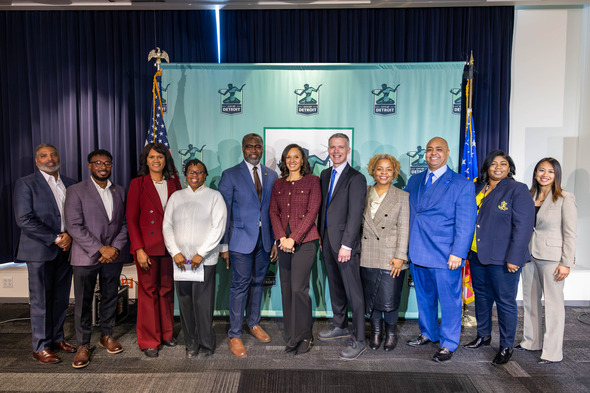
On Tuesday, Jan. 13, Sheffield announced a reorganization that centralizes the city’s health, social, and supportive services under a single new leadership structure, anchored by the appointment of Luke Shaefer, Ph.D., founding director of the University of Michigan’s Poverty Solutions initiative, as Detroit’s first Chief Executive of Health, Human Services and Poverty Solutions.
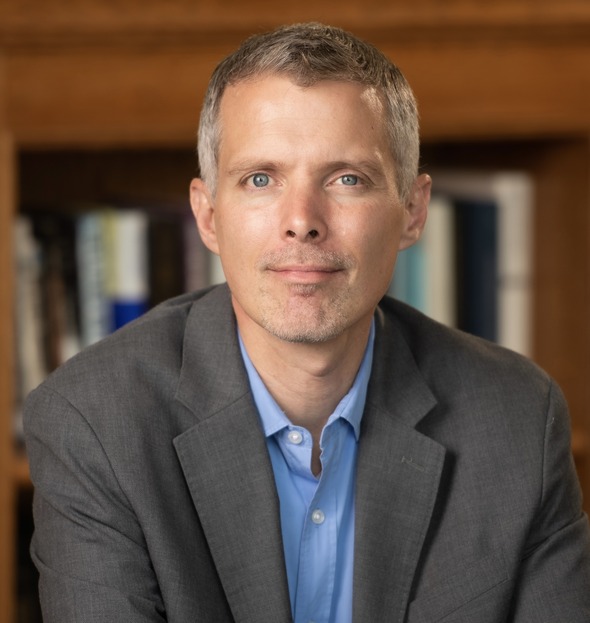
“Focusing on people and on poverty are the main goals of our administration and a promise we made to Detroiters throughout our campaign,” Sheffield said. “Detroit can’t reach its full potential if families are struggling just to meet their basic needs. This new structure allows us to confront poverty directly—by aligning health, human services and homelessness prevention around a single, coordinated strategy that puts residents first.”
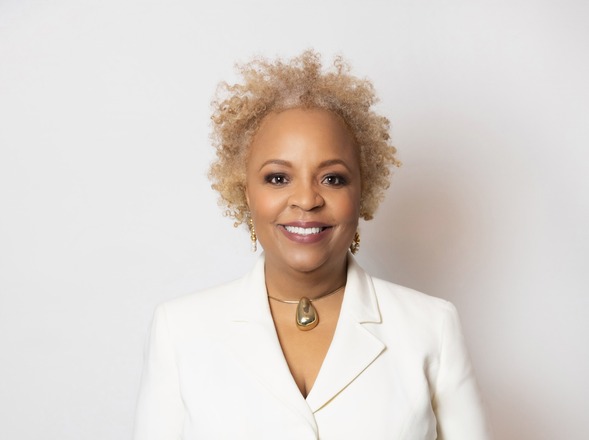
Shaefer will oversee the Detroit Health Department, the Office of Immigrant Affairs and Economic Inclusion, and a newly created Department of Human, Homeless and Family Services led by Benita R. Miller, a Detroit native and longtime child welfare and maternal health leader.
Census data puts Detroit’s poverty rate at 31.5 percent — about one in three residents—and Detroit remains a predominantly Black city, with 76.8 percent of residents identifying as Black alone. That context matters because poverty in Detroit has never been race-neutral. It has been shaped by housing discrimination, job loss tied to regional and national economic shifts, health inequities, school instability, and the long shadow of policies that treated Black neighborhoods like disposable infrastructure.
The new department’s stated focus includes housing services, utility assistance, transportation, income supports, and a simplified navigation system that connects basic needs to longer-term stability efforts like home repair and homeownership support.
When government is fragmented, people with the least time, the least transportation, and the least flexibility pay the highest cost.
A centralized system can reduce duplication, speed up referrals, and stop forcing families to “prove” their struggle at multiple desks. If the “no wrong door” concept becomes real practice —not a slogan — it can mean fewer evictions triggered by paperwork delays, fewer utility shutoffs that snowball into health crises, and fewer missed opportunities for families already navigating instability.
Simply, we need people who care about other people.
Linda Little, president and CEO of the Neighborhood Service Organization and a co-chair of the city’s Health, Human Services, Homelessness & Poverty Solutions Committee, framed the change as a move from recommendation to action.
“From the beginning of the transition, our committee emphasized the need for a coordinated, resident-centered approach to health, human services, homelessness, and poverty reduction,” Little said. “The creation of this new department and leadership role reflects the Mayor’s commitment to acting on those recommendations quickly. Addressing poverty and its impact on health and housing is essential to improving outcomes for Detroit families, and this structure positions the city to do that work more effectively.”
Still, the appointment lands inside a bigger Michigan conversation about whose expertise gets elevated, whose communities get experimented on, and what accountability looks like when universities and institutions retreat from equity language while continuing to profit from proximity to Black life.
The University of Michigan announced in late March 2025 that it was closing its central DEI office and ending its campuswide DEI strategic plan, changes that leaders tied to shifting federal pressure and policy direction. In other words, UM stepped back from the formal infrastructure many Black students, staff, and community partners relied on as proof that equity was more than branding. That decision has consequences for trust — especially in Detroit, where institutions have a long history of studying the city while leaving residents to live with the outcomes.
That is why Sheffield’s choice to place a UofM leader at the helm of Detroit’s poverty-response apparatus carries dual meaning.
On paper, Shaefer brings national policy credibility and deep research experience. In the street-level reality of Detroit, he will also be tested by whether “data” is used to deepen resident power or to rationalize cuts, consolidations, and slow-moving reforms that never reach the block.
Shaefer is widely known for research on extreme poverty and social policy, including the 2015 book $2.00 a Day: Living on Almost Nothing in America, named among the New York Times Book Review’s 100 Notable Books of 2015. The city also points to national recognition of his work and the role poverty research played in shaping debates like the 2021 expanded Child Tax Credit, which drove a major decline in child poverty during its brief run. He previously served as a special counselor on anti-poverty policy at the Michigan Department of Health and Human Services from 2019 to 2021, with the city citing his contributions to the Energy Direct program that reduced utility shutoffs and Michigan’s COVID-era eviction prevention effort.
Utility shutoffs and housing instability hit Black households hardest because Black households are more likely to have lower wealth, higher rent burdens, and more exposure to the compounding costs of missed work, health emergencies, and transportation gaps. The question residents will ask is whether this new structure changes the daily math.
Shaefer says the city’s model is meant to tackle systems, not just symptoms.
“Poverty is the result of systems that fail to serve families as they should–but that means these systems can be reimagined and rebuilt to empower families to lead healthy and full lives,” he said. “This role is about leveraging data, analysis, lived experience, and harnessing meaningful connections across city departments, universities, and every level of government to break down barriers and help Detroiters thrive. By aligning health, human services and homelessness prevention, Detroit is poised to set a national standard for cities striving to combat poverty and improve quality of life.”
Detroit’s lived experience includes a deep and justified skepticism of systems that arrive with credentials but leave without consequences when harm is done.
If this reorganization is going to work for Black Detroit, success has to be measurable in outcomes that residents can feel: fewer people getting lost between agencies, fewer shutoff notices turning into crises, fewer families bouncing between shelters and temporary housing, and faster stabilization for parents with newborns.
One test is already on the calendar: Rx Kids.
The city says the new department will direct Detroit’s largest expansion of Rx Kids to date when it launches in the coming months. The program, started in Flint in 2024, provides cash support during pregnancy and early infancy, and Detroit is preparing to adopt it under Sheffield’s administration. If implemented well, Rx Kids could be a direct intervention for Black maternal and infant health disparities by easing financial stress during the most vulnerable months — when rent, food, diapers, and transportation collide with medical appointments and recovery.
“Families should not have to navigate a maze to get help,” Miller said. “This new department is about building a system that centers dignity, trust and access. We can address real barriers Detroit families face and create pathways to stability, health and opportunity by listening to our communities and coordinating services more effectively.”
Detroit does not need another plan that sounds good in a press conference and disappears inside a fiscal year. It needs a public-facing system that tells residents where to go, what to expect, how quickly help will move, and who is responsible when it doesn’t.
If Sheffield’s new structure delivers on its promise, the payoff for Black Detroit could be tangible: fewer families falling through cracks that were designed into the system, faster crisis response, stronger prevention, and a clearer path from survival to stability.
If it fails, it will deepen the city’s institutional trust gap and reinforce the belief that Detroit remains a proving ground for ideas that never fully commit to the people living them.