

By: Jasmine West
A former northwest Detroit golf course that sat closed for more than a decade has reopened as a 98-acre public nature park, giving residents new access to walking trails, wetlands and green space.
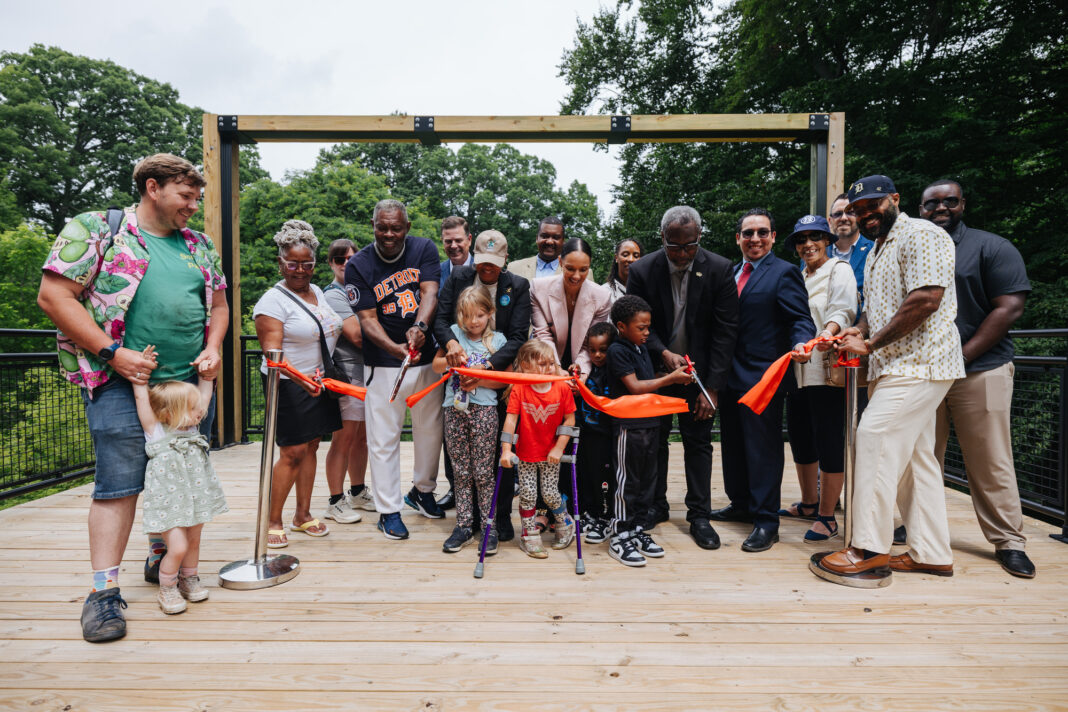
City officials, community leaders and funding partners gathered for a ribbon-cutting ceremony at Rogell Park, located on the site of the former Rogell Golf Course, which closed in 2013.
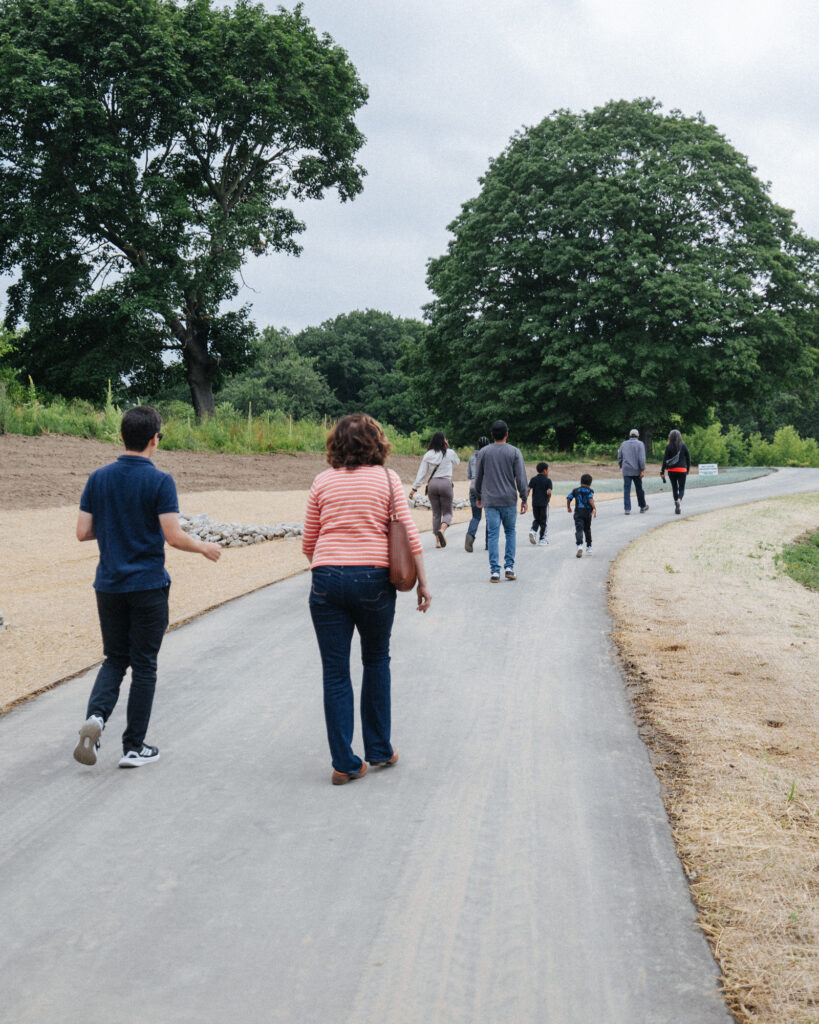
The renovated park includes a nearly one-mile paved trail, four scenic overlooks, multiple boardwalks and areas where visitors can view the property’s meadows, wildlife and wetlands.
The $4 million project was funded with $3.5 million from the federal American Rescue Plan Act and $500,000 from the Strategic Neighborhood Fund. Invest Detroit, Huntington Bank and Flagstar Bank contributed through the neighborhood fund.
Mayor Mary Sheffield said the park expands outdoor recreation options for residents in northwest Detroit while creating environmental and economic benefits for the surrounding neighborhoods.
“Healthy, vibrant cities offer exceptional greenspaces and outdoor recreational opportunities throughout their communities, and the beautiful new Rogell Park offers something new and special for residents in northwest Detroit,” Sheffield said.
Sheffield said the park could improve residents’ quality of life, support environmental health and strengthen property values in nearby communities.
The City of Detroit purchased the land again in 2018 after plans for a private development failed to move forward. Residents later worked with city planners to shape a new future for the property.
Community members consistently pushed for a quiet, nature-centered park rather than athletic fields or other active recreation spaces. Their recommendations included walking paths, boardwalks and places to observe the land’s natural features.
The city adopted the Rogell Park Master Plan in 2018 as part of the Grand River Northwest Neighborhood Framework Plan.
Darryl Edwards, president of the Greater Sandhill Neighborhood Organization, said residents from neighborhood associations and block clubs worked together to make sure their voices were included.
“I remember 55 years ago in 1970 when I moved into this area and my first job was at this golf course,” Edwards said. “All the neighborhood associations and block clubs in the area got together as a community.”
Edwards said residents focused less on opposing development and more on creating a shared vision for the land.
“There was nothing here to say what we didn’t want,” he said. “We just said, ‘Let’s sit down and talk about it.’”
The project also included environmental cleanup to address fertilizers and other chemicals used during the property’s years as a golf course.
The park was designed with stormwater management features intended to reduce flooding, according to Invest Detroit.
A section of the new trail is also expected to become part of the future Rouge River Greenway, a planned network that would eventually connect Rogell Park to Eliza Howell Park and Rouge Park.
Jermaine Ruffin, senior vice president of neighborhoods for Invest Detroit, said the project turned an unused property into an outdoor space that can serve residents while helping manage stormwater.
“Through the Strategic Neighborhood Fund, Invest Detroit is proud to help transform Rogell Park from a closed golf course into a public nature park with stormwater management features that prevent flooding,” Ruffin said.
Rogell Park sits across the street from Lahser-Clarita Park, which offers basketball courts and other active recreation options. The courts were renovated between 2023 and 2024, and future plans call for a new playground.
Detroit’s Department of Public Works is working with Wayne County to explore safer ways for pedestrians to cross the street between the two parks.
The opening of Rogell Park is one part of a larger redevelopment planned for the former golf course property.
An additional 19 acres are expected to be used for a $98 million housing and commercial development led by Detroit Blight Busters and Wallick Communities. Plans call for 304 affordable and mixed-income housing units along with commercial space.
The property’s history dates back to 1914, when the Phoenix Club purchased the land and opened a nine-hole golf course. It was later sold to the City of Redford and eventually became part of the City of Detroit.
In 1979, the course was renamed in honor of former Detroit Tigers player and longtime Detroit City Council member Bill Rogell.
Greater Grace Temple later purchased the property, making it Michigan’s first Black-owned golf course. The course operated as The New Rogell before shutting down in 2013.
Its latest chapter gives northwest Detroit residents a public place to walk, gather and reconnect with a piece of land that has been part of the community for generations.