
By Dr. Carolyn Carter, Guest Columnist
I have spent most of my life listening for what is not said.
As a historian and genealogist, I have learned that silence speaks. In that silence are the breadcrumbs our ancestors left behind. It speaks in missing census columns, undocumented enslaved births, unnamed mothers and fathers, and land deeds stripped of human context.
History does not vanish on its own. It is removed. Softened. Renamed. Declared “too complicated” for young people. Too “divisive” for public discussion. Shoved aside by voices that say, “That’s in the past—why talk about it?” That dismissal is not limited to those who were never enslaved. It sometimes echoes within the Black community itself, where generational pain was often carried quietly.
I think about my ancestors whenever books are challenged, lessons restricted, or public markers removed. I know how hard it has been to reconstruct even fragments of their lives. I ask myself: What happens when a nation chooses not to remember? Who decides which histories are worthy of preservation?
Forgetting is never neutral. Memory is history. When I research my enslaved ancestors, I do not find biographies, but fragments. An age. A gender. A price. I rarely find affection recorded. There is no line that says, “She loved her child fiercely,” or “He dreamed of freedom.” The absence is telling. Enslaved people were recorded as property. Free Black families were undercounted or mischaracterized. Oral histories were dismissed. Silence in the archive does not mean absence in life. It means someone decided whose life was worth recording.
Courthouses stand where slave markets once operated. Highways cut through once-thriving Black neighborhoods. Financial districts rise from land shaped by enslaved labor. In many places, there is no plaque. No marker. No acknowledgment. Progress layered over pain. When we build without interpretation, we participate in erasure. We allow comfort to replace context. Yet the ground remembers. Communities remember—even when official records do not.
Recently, I have heard the word “divisive” attached to histories of enslavement, racial violence, Indigenous removal, and structural inequality. For Black families, these histories are not political talking points. They are genealogy. Family memory. Economic reality. Health disparities. Land loss. Opportunities deferred. To call these stories divisive is to suggest that silence is preferred more than truth. But unity built on silence is not unity, itserasure.
When I speak of ancestors, I am insisting on legacy. Black people were not merely acted upon—they acted. They built churches and schools. They organized mutual aid societies. They resisted. They imagined futures we might never see. They survived so we could tell their stories.
For generations, our stories were excluded from official archives. So we preserved them ourselves—in family Bibles, funeral programs, church ledgers, and kitchen-table conversations. Memory is inheritance. Memory is resistance. Memory is family legacy.
Schools teach more than dates; they teach belonging. When history removes struggle, students learn outcomes without causes. Enslavement becomes a chapter instead of an engine. Civil rights appear inevitable instead of hard fought. Democracy seems permanent instead of fragile.
You cannot erase the Middle Passage, nor enslavement, Reconstruction, redlining, or forced removal. You can only choose whether to face them honestly, with humility. Black communities have always understood that remembering is survival. When institutions excluded us, we built our own archives. When records were denied, we kept stories alive.
Forgetting has never protected us. Truth has. Erasing history does not erase harm. It erases accountability. Memory is not a burden. It is dignity. “I am the hopes and dreams of my ancestors.” And so are you.
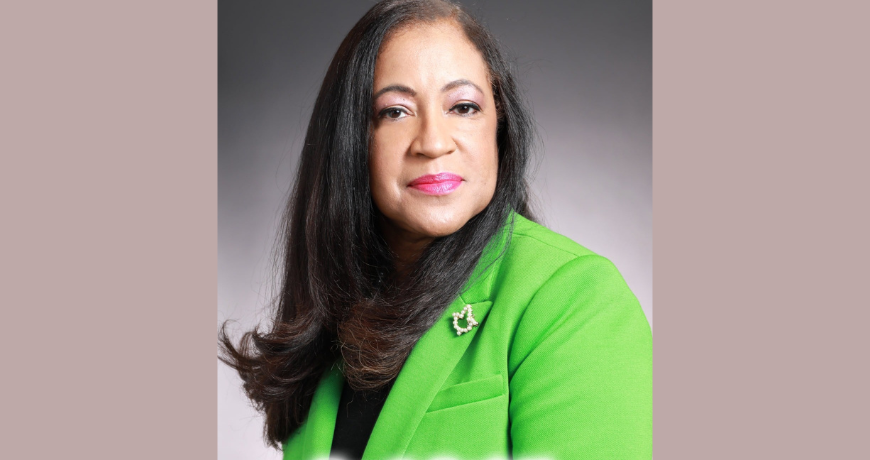
Dr. Carolyn Carter is a historian, genealogist, storyteller, and educator passionate about uncovering family histories and preserving African American heritage. Her journey began in childhood, inspired by her great-grandmother’s remarkable story, and earned a master’s degree in history – with a special concentration in public and oral history – and a Doctorate in Educational Leadership. She has taught genealogy for over a decade, conducted extensive archival research nationwide, and contributed to historic preservation projects, including Underground Railroad National and local historic designations. She is dedicated to connecting past and present, believing, “I am the hopes and dreams of my ancestors.”