
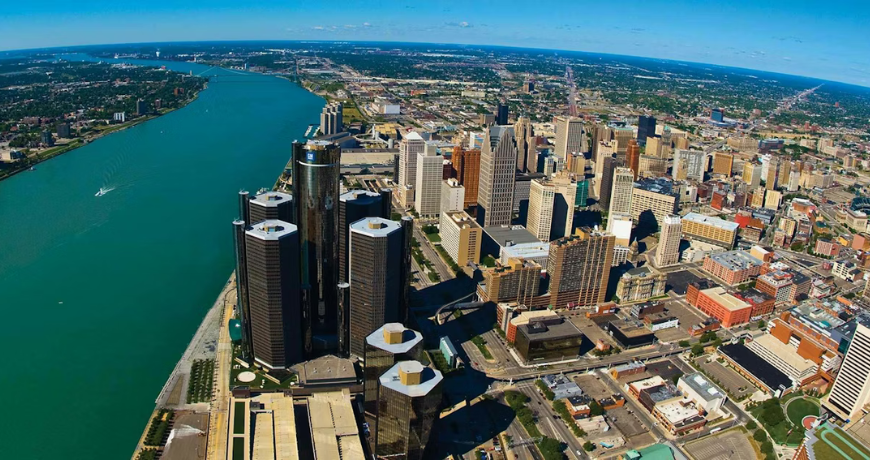

As 2025 comes to an end, here are some of Detroit’s most memorable moments and storylines. It was a year defined by change and growth – a city that truly is reflective of its people. From the election of a new mayor to the continued boom of downtown development, here are the top 10 storylines that shaped the year.
1. Mary Sheffield Elected as Detroit’s First Female Mayor
Why It Mattered:
Mary Sheffield’s election as Detroit’s first female mayor marked a historic shift in the city’s political landscape. As a young, progressive leader, Sheffield brought new energy and a vision to tackle Detroit’s most pressing issues, such as crime, economic development, and racial equity. Her victory also symbolized progress in breaking the gender barrier in a city that had never elected a woman to its highest office.
Sheffield’s win was seen as a bold new chapter for Detroit, with the potential to change how the city approached its challenges. She represented the changing demographics of Detroit’s electorate, with her leadership focusing on community engagement, youth empowerment, and tackling systemic inequality.

What the City Reported:
- Local media covered the historic nature of Sheffield’s victory, focusing on how her leadership was expected to transform the city’s policies. Reports emphasized her platform’s focus on public safety, economic opportunities for all, and her dedication to fighting poverty and environmental injustice.
- Sheffield’s victory also sparked discussions about the future of Detroit politics. Even though she had been a 12-year politician in the city, her election seemed like a break from the more traditional political establishments that had ruled the city for decades because of her promise to involve community into her decision making.
2. Crime Drops Significantly
Why It Mattered:
A significant drop in crime, particularly in homicides, shootings, and carjackings, was a major victory for Detroit’s efforts to make neighborhoods safer. This development demonstrated that community policing strategies, public safety investments, and youth programs were having a tangible impact.
Reductions in violent crime contributed to a growing sense of security among residents and businesses and were critical for making Detroit more attractive to visitors, investors, and new residents. Detroit’s Community Violence Intervention work was not framed as a side program in 2025. It sat closer to the center of the city’s safety strategy. Detroit’s “ShotStoppers” CVI program named the organizations doing street-level interruption and outreach, including FORCE Detroit, Detroit 300, New Era Community Connection, Detroit Friends & Family, Detroit People’s Community, and a Wayne Metro-led coalition depending on area/contracting.

What the City Reported:
- Coverage highlighted the double-digit reduction in crime, with stories emphasizing how partnerships between the police and community groups helped lead to safer neighborhoods. City leaders attributed the success to community outreach, police reforms, and a focus on mental health and social services.
- The city showed major reductions of violent crimes in targeted areas (FORCE Detroit 67% reduction, New Era 53%, Detroit 300 42%, Detroit Friends & Family 33%, all year-over-year reports).
- Homicides dropped to 203 in 2024, the city’s lowest since 1965, and nonfatal shootings fell from 804 (2023) to 606 (2024), according to city figures cited by national and local reporting. The declines extended across other violent-crime categories as well.
- Residents felt the difference in some corridors; other blocks stayed on edge. The point Detroit kept wrestling with was sustainability: whether safer streets would hold once ARPA-era dollars fade and whether violence prevention remains neighborhood-led rather than purely enforcement-led.
3. Downtown Development Booms
Why It Mattered:
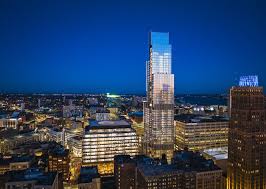
Hudson’s Detroit shifted from “under construction” to an operating destination in 2025 through phased openings. Bedrock’s development totals more than 1.5 million square feet across two buildings: a 12-story office building and a 685-foot tower, connected by a walkable plaza.
Bedrock confirmed completion of the 12-story office building at 1240 Woodward in October, with 400,000-plus square feet of Class A office space and supporting retail and amenities, with office operations slated to open in 2026. The project also put a major events engine online: The Department at Hudson’s opened in April as a 56,000-square-foot venue spanning multiple floors and marketed for events up to 2,000 guests. The broader tower plan is positioned to bring a luxury hospitality component downtown, with industry coverage describing a Marriott EDITION hotel (210 rooms) and residential units planned for later delivery.
The historic Paradise Valley neighborhood within downtown Detroit also saw several new restaurants (Enomah Detroit, Baru, Javier’s Downtown), an event space (Harmonie Club), a park renovation, and several other upgrades, giving the block a rejuvenation.
What the City Reported:
- Local media celebrated the arrival of new hotels, restaurants, and cultural venues, showcasing Detroit’s transition from a post-industrial city to a modern urban center. Journalists also reported on how the booming downtown had a ripple effect, benefiting surrounding neighborhoods and creating new job opportunities.
- Retail momentum around Woodward: Timberland opened its first Detroit store on Nov. 14, 2025, reported at 1217 Woodward Avenue (Traver Building), with coverage describing a 1,400-square-foot standalone shop carrying footwear, apparel, and outerwear.
- Downtown’s public-space buildout also added a major west-side anchor. The Detroit Riverfront Conservancy opened Ralph C. Wilson Jr. Centennial Park in October 2025 as a 22-acre riverfront park, with the public grand opening weekend set for Oct. 25–26.Reporting described the project as an $80 million build with multiple programmed areas (play garden, water garden, event green space, sports facility), expanding public access and activity on the west riverfront.
4. Population Growth
Why It Mattered:
Detroit saw two straight years of population growth after decades of decline. U.S. Census Bureau estimates for 2024 put Detroit at 645,705 residents, up from 638,914 in 2023—a gain of about 6,791 people (roughly 1%). Local reporting also noted the Census revised earlier estimates after changing methodology to better account for renovated homes becoming occupied, which mattered in a city where rehab has been a major pathway to neighborhood stabilization.
It marked a significant turning point in the city’s long recovery. As more people moved to Detroit, attracted by affordable housing, improved services, and a burgeoning cultural scene, the city began to show signs of urban revitalization.
Population growth was seen as a key indicator of Detroit’s ongoing comeback, with new residents contributing to a stronger economy, higher demand for services, and more investment in infrastructure.
What the City Reported:
- Local news outlets highlighted the record-setting population growth, with special focus on young professionals, artists, and families moving to Detroit. The city also emphasized that this growth was closely linked to improved economic opportunities and affordable housing options for residents.
5. Southwest Detroit Watermain Break
Why It Mattered:
The watermain break in Southwest Detroit exposed critical vulnerabilities in the city’s aging infrastructure, underscoring the need for significant investment in water systems and public utilities. The break disrupted water service for thousands of residents and businesses, raising concerns about the city’s ability to manage its aging infrastructure.
The incident sparked wider discussions about the underfunding of public works and the need for Detroit to invest in modernizing its water and sewer systems to avoid future disasters.
What the City Reported:
- Local media covered the response efforts to the watermain break and reported on the exposure of infrastructure gaps that many city residents had long been worried about.
- Coverage highlighted the city’s plan to repair and modernize aging infrastructure, with leaders calling for more funding and support from both local and federal governments.
6. SNAP on Pause
Why It Mattered:
The 43-day federal government shutdown that began Oct. 1 created immediate fallout in Michigan because SNAP became a legal and funding fight instead of a guaranteed monthly benefit.
MDHHS announced it was directed by USDA to pause issuance of November SNAP benefits (first warning Oct. 23, then a broader pause confirmed Nov. 8 after a nationwide Supreme Court emergency order). USDA later told states they had to “immediately undo any steps taken to issue full SNAP benefits for November 2025” and instead issue only partial benefits, citing the Supreme Court order. The disruption threatened food access for roughly 1.4 million Michiganders who rely on SNAP — about 13% of the state — and the state spends about $255 million per month on food assistance on average. One Michigan report pegged the average monthly SNAP benefit at $335 per household.
The pause was underscored by a broader federal government shutdown, where Reuters reported the Black unemployment rate hit 8.3% in November (highest since Aug. 2021), while teen unemployment also surged—signals economists treat as early indicators when the job market weakens. And the “300,000 Black women” headline circulated through 2025’s economic coverage, reflecting a broader pattern of labor market instability that becomes most visible when food benefits, rent, and childcare costs collide.

What the City Reported:
- Local news outlets reported on the struggles faced by families as federal benefits were paused, with increased community efforts to support those in need. Stories focused on how Detroit residents, local organizations, and activists were working together to address these growing inequalities.
- Detroit’s response became an emergency operations story. Duggan authorized $1.75 million in city emergency food aid and announced plans for an emergency distribution network (the city described it as a 100-site effort) to backfill pantry supply and stabilize access as SNAP payments stalled. The city said the funding would support Forgotten Harvest, Gleaners Food Bank, and Metro Food Rescue, while also pushing a volunteer mobilization so distribution sites could operate at scale when demand spiked.
7. The DEI Rollback
Why It Mattered:
The impact of the thinly veiled Project 2025 mandates had massive impacts on issues of diversity, equity, and inclusion. There were layoffs across in corporate, private, and nonprofit sectors; federal funding cuts to organizations; and eliminations of programs aimed at equalizing the playing field for historically disenfranchised groups.
In higher education, the University of Michigan closed its central DEI office and ended its DEI 2.0 initiative, a major shift after years of investment and national attention citing Trump executive orders and a federal funding warning. The university acknowledged its prior investment—more than $250 million—while outlining a shift of student-facing support into other units.
Michigan State University also moved away from requiring diversity statements in hiring and promotion, part of a broader higher-ed reset that rippled into staffing, student support, and campus climate debates.
Detroit families felt this through pipeline programs, scholarships, student services, and the broader question of who institutions choose to protect when politics get loud.
8. Homelessness Hits Detroit’s Conscience
A cold van inside a casino parking structure became the headline Detroit did not deserve, yet the headline Detroit needed to face. Two children, ages 9 and 2, were found dead Feb. 10 after their family had been sleeping in the vehicle while unhoused.
Early reports focused on freezing temperatures; autopsies later confirmed carbon monoxide poisoning. City officials acknowledged gaps in follow-up after the family sought help months earlier, then rolled out new promises around a 24-hour housing hotline and more aggressive outreach.
Nothing “illustrated” the crisis. It exposed it.
The children’s mother had contacted city resources earlier about housing, raising urgent questions about follow-through, triage, and how families fall through gaps even when they ask for help.
Cass Community Social Services described capacity pressure as more people sought shelter and meals.
Why It Mattered:
This forced a public accounting of how limited shelter placement can be for families, how quickly a “temporary” car arrangement becomes deadly, and how the city measures responsiveness when people are asking for help before tragedy.
City documents show Detroit increased shelter beds available through the Coordinated Assessment Model from 924 to 1,202 and doubled city homelessness/housing support funding from $5.7 million to $12 million.
9. Contaminated Fill-Dirt Used in Vacant Land
Some contractors for the City of Detroit found themselves embroiled in a serious controversy involving the use of contaminated dirt to fill vacant properties across the city. This issue raised alarms about the environmental safety of redevelopment practices in Detroit, a city already burdened with decades of disinvestment, blight, and pollution.
Reports surfaced that the contractors had used fill material from various construction sites, demolition projects, and urban clean-up efforts to fill vacant lots, but some of this material was later found to contain hazardous substances, including lead, asbestos, and other industrial contaminants.
The practice of using contaminated fill-dirt is particularly concerning because many of these lots are located in residential areas or near schools and community centers. Residents and environmental groups voiced their outrage, arguing that the use of contaminated dirt could expose vulnerable populations (especially children) to dangerous chemicals, exacerbating the city’s ongoing public health challenges. Environmental activists pointed out that the practice violates both state and federal regulations concerning hazardous waste disposal and soil safety standards.
The city had been under increasing pressure to address these issues, but this revelation heightened calls for more stringent oversight of its activities.
The controversy escalated when it was revealed that some of the contaminated fill dirt came from city demolition projects, where the debris had not been properly tested or separated for hazardous materials. This prompted further scrutiny of the city’s overall environmental handling of demolition waste and prompted calls for independent audits of past land reclamation efforts. City officials were forced to issue a public apology and commit to immediate action, including removing contaminated soil from affected areas and reassessing how fill-dirt was sourced for future redevelopment projects.
This scandal cast a shadow over Detroit’s ongoing efforts to revitalize its neighborhoods, and the misuse of fill-dirt threatened to undermine these goals, creating distrust among residents and environmental watchdogs.
In response to the backlash, the city promised to conduct thorough environmental assessments of all properties in its portfolio and called for a review of the agency’s practices, including its sourcing of fill materials. Some community members, however, remain skeptical, arguing that the damage had already been done, and that meaningful accountability and transparency were needed to restore faith in the city’s management of Detroit’s land. This will be an ongoing issue in 2026.
10. Tariffs Impact Detroit’s Auto Industry
Why It Mattered:
The imposition of tariffs on steel, aluminum, and other key materials impacted Detroit’s auto manufacturing sector, which had long been the backbone of the city’s economy. Rising production costs led to concerns over job cuts and delays in production, as automakers like General Motors and Ford faced higher expenses.
These tariffs also affected Detroit’s international trade relations, particularly with Canada and Mexico, which could have broader implications for cross-border supply chains and the local economy.
The Anderson Economic Group predicted a combined $5 billion drop in profits for Detroit automakers, translating to $1,000-$4,000 less in profit-sharing for UAW workers
What the City Reported:
- Detroit news outlets covered the economic strain caused by tariffs, particularly how they affected auto production and local jobs. Coverage included business leaders’ concerns over the long-term effects on manufacturing and Detroit’s competitive position in the global market. Local officials called for solutions to mitigate the tariffs’ impact on Detroit’s industries.
- The U.S.’s tariff increase has led to a 12% drop in Canadian passenger vehicle entries into Michigan and a 7% decrease in truck crossings, affecting tourism and trade activity.
- Michigan’s exports of passenger vehicles to Canada have fallen by $533 million, contributing to a 21.5% decline in overall vehicle exports in 2025, primarily due to higher tariffs on motor vehicles and parts.