
Detroit is closing out the year with a gift that few cities can claim — a $105 million budget surplus.
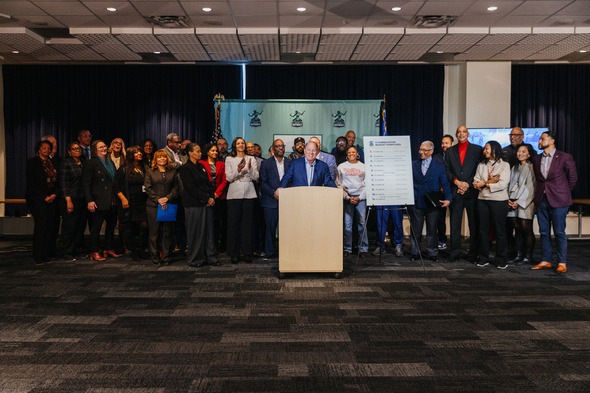
Mayor Mike Duggan and Chief Financial Officer Tanya Stoudemire announced the final audit results on December 23, confirming that the city’s 2024–2025 fiscal year ended June 30 with its eleventh consecutive surplus since emerging from bankruptcy in 2014.
“This year’s surplus was generated by strong expense management,” Duggan said. “Nearly every city department finished under budget, and they did it while making sure we delivered on city services.”
Originally projected at $60 million in September, the surplus grew by nearly two-thirds as higher-than-expected income tax revenues, strategic debt restructuring, and careful cost control took shape. The city has now achieved twelve balanced budgets and eleven surpluses under Duggan’s administration.
“The track record of 11 straight credit rating upgrades and 11 straight years of $100 million surpluses reflects the strong partnership between the mayor and City Council,” Duggan said, emphasizing the collaboration behind Detroit’s financial stability.
Chief Financial Officer Tanya Stoudemire added that disciplined budgeting and coordination between city departments have created “a model for financial sustainability that has benefited our residents, businesses and visitors to our great city.”
Detroit’s fiscal picture extends far beyond this year’s balance sheet. As of June 30, 2025, the city holds more than $548 million in reserves — including a $150 million rainy-day fund, $281 million for retiree protections, $75 million in a risk-management fund, and $42 million set aside to offset potential drops in corporate tax collections.
Moody’s Investors Service has affirmed that Detroit “continues to bolster its financial resiliency and maintain solid operating performance,” awarding the city its 11th credit rating upgrade during Duggan’s twelve-year tenure. The city’s bond rating was raised to investment grade last year by two notches with a positive outlook — a historic benchmark for a city once written off by national financial institutions.
Duggan, who leaves office January 1 and is running for governor as an independent, said the latest figures show just how far Detroit has come since its days under state control. “There will always be ups and downs,” he said. “But unlike 12 years ago, when we came in here with billions of dollars in deficits, we’re leaving behind a city that has got the reserves.”
The decision on how to use the $105 million surplus will rest with incoming Mayor Mary Sheffield and the new City Council, who will begin budget planning in February. For Sheffield, who won the November election with more than 77 percent of the vote, the moment marks a turning point for how Detroit’s financial progress can be translated into visible neighborhood impact.
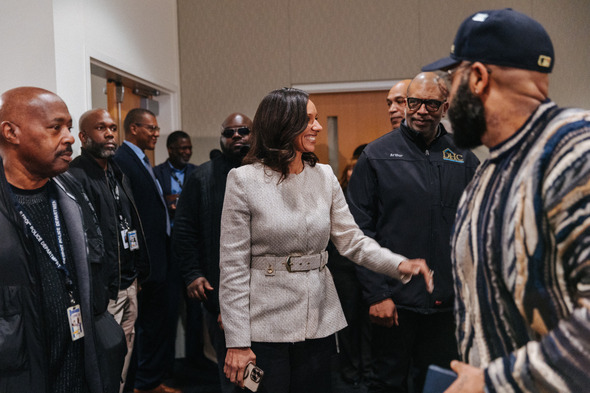
“Eleven consecutive balanced budgets and surpluses and more than a half of a billion dollars in reserve shows that Detroit is financially resilient and is well positioned to continue to rise higher,” Sheffield said during a press conference. “As I prepare to assume office in just nine days, I am deeply grateful to inherit a city that is financially sound and is on solid financial footing. My focus will always be clear: protecting Detroit’s financial stability, continuing to build our reserves and making strategic investments that strengthen our neighborhoods, improve essential services and support long-term growth. As the mayor-elect, I can assure you that it is my goal to have four more years of balanced budgets and surpluses as well.”
Sheffield has outlined a platform that prioritizes affordable housing development, neighborhood revitalization, and targeted tax relief for Detroit homeowners. Duggan said his administration frequently used budget surpluses to fund small property tax reductions, and Sheffield has signaled she intends to continue those efforts while also exploring new revenue tools to grow Detroit’s fiscal base.
Among her proposals are a city-specific sales tax and an entertainment tax for large-scale events — both of which would require approval from the state Legislature in Lansing. To support that work, Sheffield announced that outgoing Councilmember Fred Durhal will join her administration as Director of State Government Affairs to coordinate Detroit’s policy agenda at the Capitol.
“Detroit’s financial position today is the result of years of strong stewardship and collaboration,” Sheffield said. “A $105 million surplus, paired with more than $548 million in reserves, demonstrates that our city is resilient, disciplined, and prepared for the future. As we begin the next chapter, my administration will work closely with City Council to ensure this surplus is invested wisely and responsibly — centered on the needs of residents, neighborhood stability, and long-term growth.”
Duggan reflected on the moment as a closing chapter to a 12-year period that began with state oversight and bankruptcy supervision.
“I just remember standing here with the council people back when we were in financial oversight, and the whole tone in Lansing was ‘the city of Detroit can’t manage its own affairs, we have to have an emergency manager,’” he said. “Now you look at what’s happening in Detroit and what’s happening in Lansing, and you wonder who needs the emergency oversight.”
As the year closes and a new administration prepares to lead, Detroit’s fiscal story stands as one of recovery turned resilience.
The city enters the new year with $105 million in surplus funding and more than $500 million in reserves. The next question belongs to the incoming mayor and council: what decisions will keep the city financially stable while delivering visible improvements where Detroiters live.