
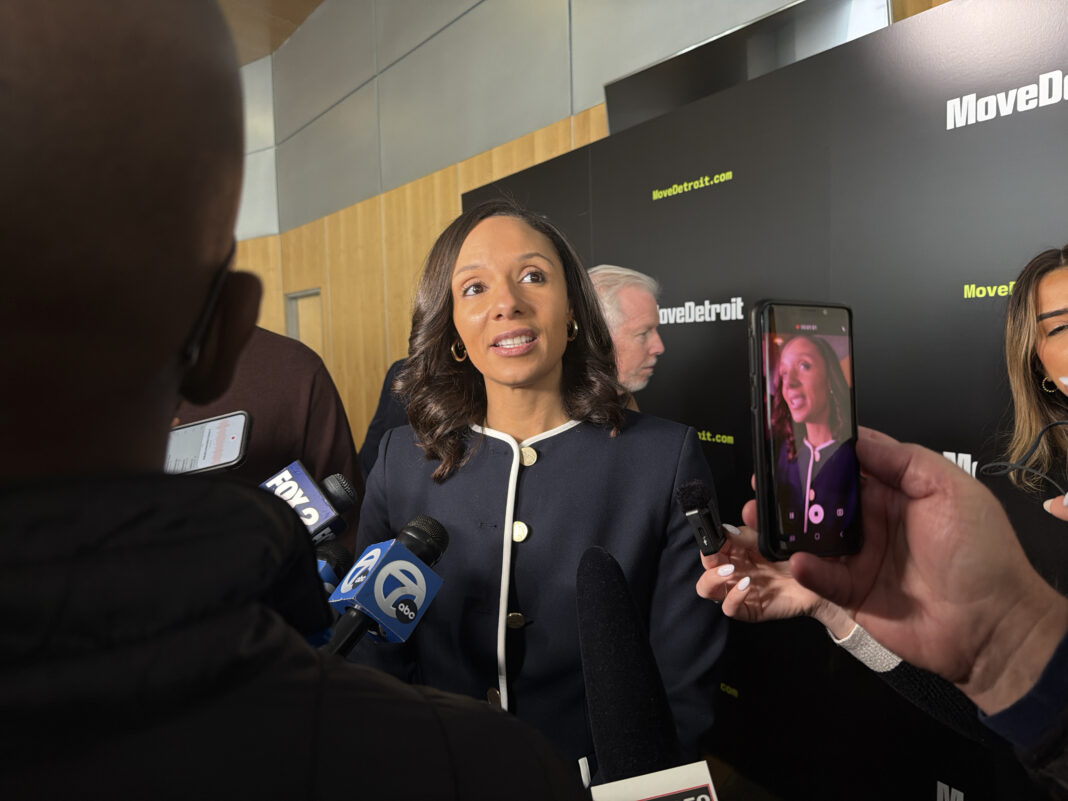

The City of Detroit will soon launch a talent search to replace its senior arts and culture officer, as well as possibly establish a standalone arts office separate from its current position within city government, a top-ranking staffer told the Michigan Chronicle on April 2.
David Bowser, chief of staff to Mayor Mary Sheffield, says “within the next couple months” the city will begin its recruitment efforts to seek a replacement for Rochelle Riley, the city’s previous arts and culture director who departed Detroit earlier this year for a new position with Charleston, S.C.’s government.
“We want to make sure we’re creating something that’s integrated in every department,” Bowser says, noting that Detroit’s charter mandates an arts and culture council. “There needs to be an arts and culture aspect to our planning, to our economic development, to our housing, to our health.
“We’re putting all that together and we’re going to plug that individual in. It’s not going to be siloed, it’s going to be integrated into a lot of existing departments,” Bowser adds.
Under Mayor Mike Duggan, arts and culture was housed under the city’s General Services Department, which oversees a range of city operations from parks and recreation, fleet maintenance to building repair. Bowser says the Sheffield administration is exploring how to make arts and culture an independent, “budget-neutral” office, and that its new director would report directly to the mayor rather than the current infrastructure of reporting to the head of GSD.
Bowser said the administration could seek philanthropic support to fund the office, but it would be primarily funded by the mayor’s office budget if it moves out from under GSD.
“It needs its own space reporting directly to the mayor’s office. [Riley] was really passionate about that. We want to make sure the structure makes sense, and also, the location makes sense to us. This is going to be different.”
Bowser name-checked the mayor’s signature “Occupy” youth-centric programming — which began with “Occupy the Corner” while Sheffield served on City Council and is now evolving into “Occupy the Summer,” which she described during her State of the City address on March 31 – as one area where arts initiatives can be implemented, as well as transportation and housing. The administration will study internally where arts already operates within the City’s framework and gather public input in the near future, Bowser says.
“We want it to be informed by our community, but we haven’t put those feelers out just yet,” he said.
Bowser’s comments come during a press conference announcing Move Detroit, a civic partnership between several local entities campaigning to attract and retain new residents to the city.
For decades, Detroit’s cultural landscape scene thrived off of an abundance of affordable housing options, as well as a generally lower cost of living compared to other cities. But a persistent complaint among the city’s creative class has been increasing rental rates and lack of municipal support for artists, prompting many to pursue creative ambitions elsewhere.
Bowser says the administration is aware and is exploring strategies to implement an economic development component to its arts initiatives, noting that former City Nightlife Economy Director Adrian Tonon is advising in “how to build an economic engine around arts and culture, as well as ensuring that local artists have priority when procurement opportunities arise.
“Move Detroit is all about opportunity, and we have to create opportunities for every segment of our population that’s here and to attract folks that left,” Bowser says.