
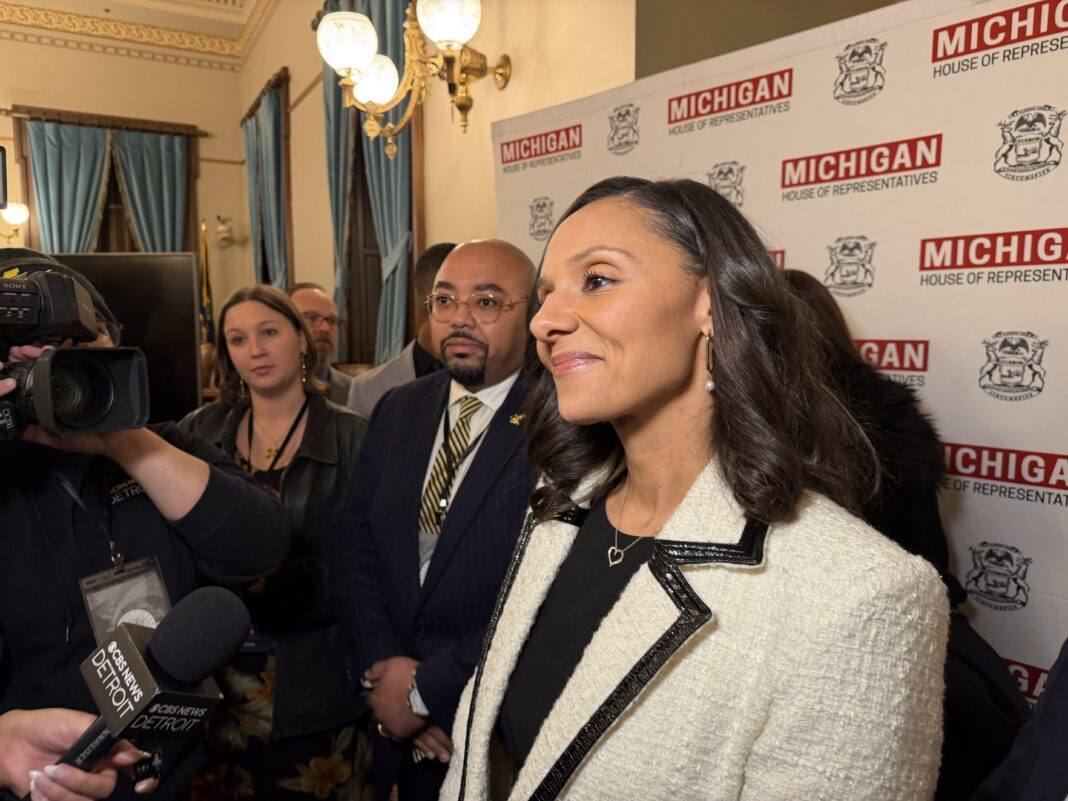

Detroit Mayor Mary Sheffield, viewed by supporters as a progressive Democrat, is promoting a willingness to work across the aisle to deliver on her agenda.
Sheffield said Wednesday night at the governor’s annual state of the state remarks that she was proud to be in Washington D.C. for President Donald Trump’s State of the Union with Michigan U.S. Sen. Elissa Slotkin.
There were interruptions to Trump’s speech caused by some House Democrats including Michigan’s Rashida Tlaib who shouted in opposition during the president’s most partisan rhetoric. U.S. Rep. Debbie Dingell cited her resistance to Trump as the reason she didn’t attend the address.
But Slotkin and the Senate Democrats followed orders from House Minority Leader Hakeem Jeffries, D-N.Y., who urged Democrats to stay home or attend with “silent defiance.”
“I’m very proud that I went to represent Detroit,” Sheffield told Michigan Chronicle Wednesday after Whitmer’s eight and final State of the State address. “A lot of good reception to Detroit from Senators — being able to make connections and insert us in the conversation nationally, I thought was important.”
Sheffield, speaking to reporters inside the House Appropriations room in the state Capitol, said the governor’s speech hit on issues that affect Detroit residents and are key to her as a new mayor, like affordable housing and improving education.
Sheffield embraced the governor’s bipartisan spirit, shaking hands with Republican House Speaker Matt Hall following the governor’s remarks. Hall’s relationship with the mayor began prior to last year’s election. He has supported the city’s Community Violence Intervention strategies and had built a friendly relationship with former Mayor Mike Duggan, who is now running for governor as an independent.
Duggan and Whitmer have been singing a similar tune in recent months when it comes to dealing with Republicans, offering to work with them on shared goals like building housing instead of confronting them over Trump’s agenda.
While Duggan endorsed Sheffield’s mayoral campaign after it became clear she was the frontrunner, it’s less clear whether the Democratic mayor will support the Democratic nominee for governor or break from her party to support her predecessor.
Sheffield said Wednesday Whitmer’s tenure is a testament to what’s able to happen when you collaborate.
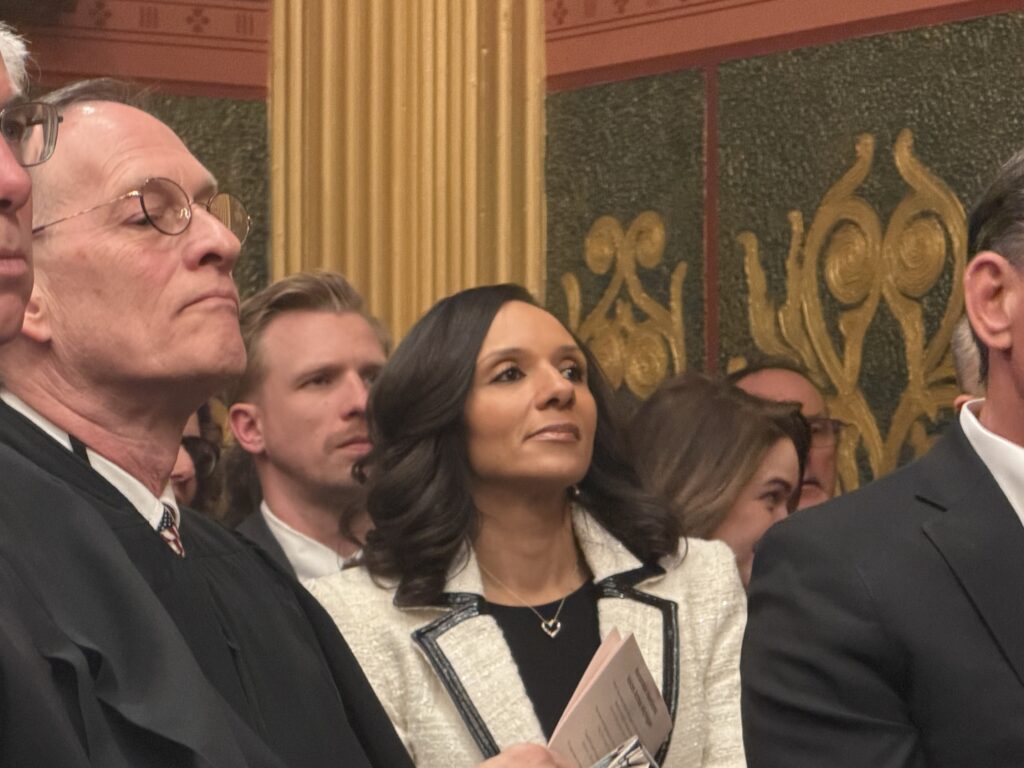
“She was able to get a lot done over her tenure because of collaboration and bipartisan support,” Sheffield said of Whitmer. “So, to hear my priorities around literacy and education as we are coming here, we’ve been very focused on how we can bridge the gap to bring more literacy and after school programs in our city. But then also my goal of developing more affordable housing.”
Sheffield said there’s overlap between her goals for the city and the administration statewide, particularly making it easier for developers to build allowing for greater homeownership among younger residents.
“Our young people have to have access to quality and affordable housing in Detroit,” Sheffield said. “We are here to support her and work across the aisle to get things done.”
Sheffield also offered her opinion on a proposed streamlining of zoning laws that opponents in Metro Detroit say could limit local authority.
“Anytime local control is up in conversation it’s an issue,” Sheffield said. “But if there’s ways to work around ensuring that we achieve the overall goal, which is, we want to reduce regulations and zoning requirements because it’s extremely difficult to build housing in Detroit. She said ‘Build, baby, build.’ That’s what we want to do.”