
By Danyail Lawton, Retired Air Force Veteran and CEO of King-Lawton Consulting
Your military career should not be the first time you build the skills your next career will require.
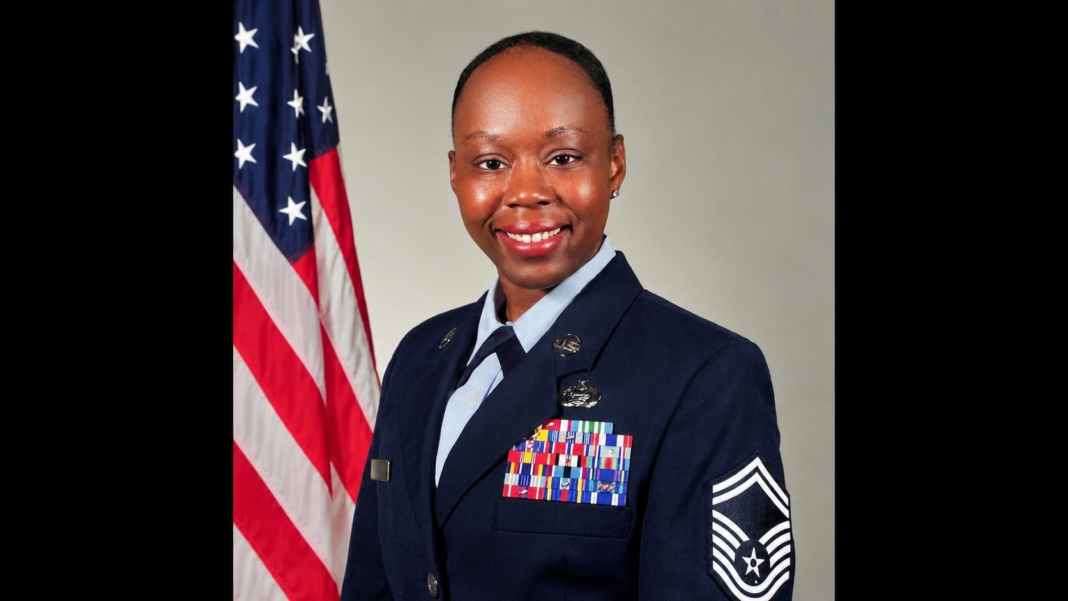
I retired from the Air Force on May 1, 2025, after nearly 23 years of service. I enlisted on October 22, 2002, served four overseas deployments, including two tours in Afghanistan, and retired at 41. After leaving active duty, I completed my master’s degree in strategic
communications in August 2025.
I knew two things: I did not want to work for anyone, and I still had more to give. When I started building my consulting firm, I wasn’t starting from scratch. I was putting years of experience to work in a new way.
People call that good timing. I call it preparation.
The year after the uniform comes off is a transition few people discuss, and it is harder for some of us than others. In 2025, women veterans were unemployed at a rate of 4.6 percent, compared with 3.3 percent for men. Black veterans were at 5.0 percent, compared with 3.3 percent for White veterans, according to the Bureau of Labor Statistics. Black women veterans carry both of those gaps. We get the ceremony and the handshake, then a Monday with no one telling us what comes next.
If you have 18 months left before separation, here are three things to
start now.
1. Recognize the civilian value of the work you already do.
Whatever you have been doing in uniform has a civilian name. Learn to recognize it, explain it, and put it to work.
I spent my first 10 years in logistics, followed by more than a decade in intelligence analysis. But my experience extended beyond those job titles. I wrote compelling documents to help the people who worked for me receive recognition, prepared them for interviews, and identified opportunities to increase their visibility. I worked with leaders to
address issues that had become public and helped protect my commanders’ reputations when difficult decisions had to be made.
That is public relations. It is also strategic communications, media preparation, and reputation management.
I had been applying those skills long before I started my consulting firm. Beginning in 2021, I also volunteered in civilian settings, where I learned to apply my experience outside the military structure.
Start documenting examples of the work you do, the problems you solve, and the people you help. Learn how employers and clients describe those skills in the civilian world. Then find opportunities to practice them before you separate.
You may not need an entirely new skill set. You may need to recognize the value of the one you already have.
2. Protect your records, especially your medical history.
Learn how to obtain your personnel records, separation or retirement orders, and medical records. Review your DD-214 when it is issued, verify its accuracy, and keep copies somewhere you control.
Do not neglect your health while you serve. Many of us pushed through pain and ignored symptoms because the mission came first. We kept going because that was what we believed service required. Eventually, that can catch up with you.
Seek medical care when issues arise and make sure your symptoms and treatment are documented. Years of suppressed health concerns can be difficult to substantiate when you leave the service and seek a VA disability determination. Medical documentation can support your claim, though it does not guarantee an award.
You do not want to be fighting to establish your medical history while also trying to navigate life after service. The mission will continue. You must make your health a priority, too.
Also, get personal contact information for three or four leaders who can speak to your work. Build those relationships before you leave, while your contributions are still fresh in their minds.
3. Decide who you want to be after the uniform.
The military gives you a title, a structure, and a clear path forward. Separation removes that structure. You do not need to have every answer before your last day, but you should give yourself room to explore what comes next while you still have a paycheck and a routine.
After retirement, I stepped away from volunteer roles and made time to build on what I had learned over nearly 23 years. That period helped me determine how I wanted to use my experience. My consulting firm grew out of that process.
I also became a published author. My children’s book, Penelope and the Vase, published this month, began as a story I wrote in ninth grade. I had never written a book for publication, but I had tangible skills in communication, planning, and bringing an idea to life. I built on those skills to navigate an unfamiliar process and turn a story I had carried for nearly three decades into a published book.
You do not have to know everything about your next chapter. You need a foundation you can build on.
Preparation is the work you do while there is still time to do it. If you have 18 months left, use them. Build your skills, keep your records updated, and give yourself room to imagine a future beyond the uniform.
Your next chapter deserves the same preparation you gave to the first.
Danyail Lawton is an Air Force veteran who served nearly 23 years and the founder and CEO of King-Lawton Consulting, a strategic communications firm in Las Vegas. She is the author of the children’s book Penelope and the Vase. Learn more at kinglawton.com and kinglawton.com/penelope-and-the-vase, or reach her at
danyail@kinglawton.com.