


When people try to minimize racism and the systematic effect it continues to have on Black people and in Black communities, they often try to do it through the context of antiquation.
“Slavery ended 160 years ago,” they say. Or “No one alive today worked in fields.”
But racism and the reality of its impact is so much more than the enslaved Africans who were forced into labor. But we’re not very far removed – not even a full generation – from one of the most heinous acts of racism that has taken place in Southeastern Michigan.
Just 55 years ago, on Aug. 30, 1971, dynamite ripped through a Pontiac School District bus yard, destroying 10 empty school buses just days before thousands of children were expected back in classrooms under a federal desegregation order.
Deborah Findley was 12.
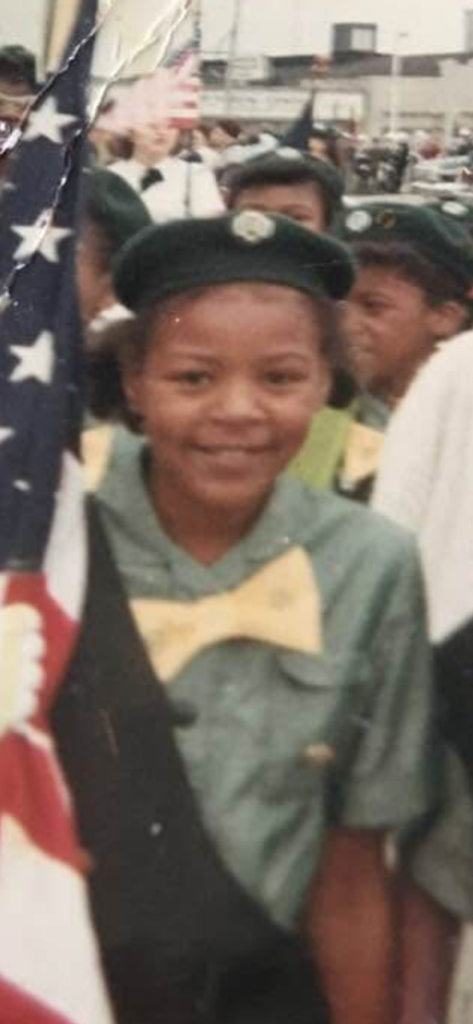
“I remember being nervous,” she said.
Findley was preparing to start seventh grade at Jefferson Junior High School on Pontiac’s south side. She remembers sitting with her family as television reports carried images and arguments surrounding the court-ordered busing plan.
Her grandmother was raising her and her siblings while Findley’s mother worked.
“I do remember her talking about stuff that happened in the South,” Findley said, “and making comparisons to events that happened in the South, comparing it to what was going to happen or what was happening at the time.”
Those comparisons required little imagination.
The Supreme Court had declared racially segregated public schools unconstitutional in Brown v. Board of Education in 1954, but the ruling did not instantly integrate American schools. Across the South, white resistance stretched for years. Black students in Little Rock entered Central High School under federal military protection. Virginia’s Prince Edward County shut down its public schools rather than integrate them.
Pontiac was not the Jim Crow South, but Black children there were still attending a deeply segregated school system.
At the time, about 30% of Pontiac’s roughly 83,000 residents were Black. When U.S. District Judge Damon Keith examined the school district, he found 29 elementary schools. Seventeen were practically all white. Six were all Black. Only six were integrated.
And Keith found that geography alone did not explain it.
Between 1955 and 1963, nine new schools had been constructed without racial integration being used as a factor in deciding where they should go. Attendance boundaries had been changed over the years without being used to break up racial isolation.
On Feb. 17, 1970, Keith put his conclusion in writing.
In his memorandum opinion in Davis v. School District of the City of Pontiac, 309 F. Supp. 734, at pages 741–742, Keith found that the Pontiac Board of Education had intentionally used decisions about school locations and attendance boundaries “in such a way as to perpetuate the pattern of segregation within the City.”
He went further.
“The fact that such came slowly and surreptitiously rather than by legislative pronouncement makes the situation no less evil,” Keith wrote in that same federal court opinion.
That was Pontiac’s distinction.
No Michigan law had a sign over one school saying Black and another saying white. Keith found segregation being maintained through the machinery of the school system itself.
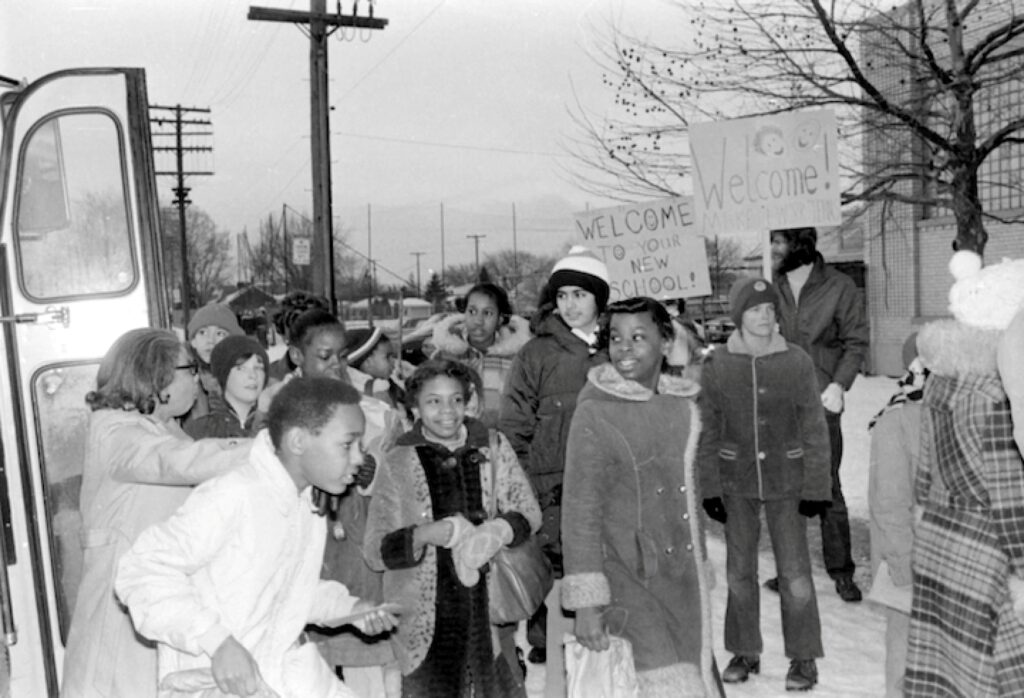
Black parents and children had gone to federal court challenging that system. Keith ordered Pontiac to integrate its students, teachers and administrators.
Buses became one of the tools for doing it. But buses themselves were nothing new in Pontiac.
Christopher Brown knows because he watched them when he was a child.
Brown is now 88, retired from the 50th District Court and still lives in Pontiac, the city where he was born, raised, educated and eventually elected to public office.
“I walked to school every day that I went to school regardless of the weather,” Brown told the Michigan Chronicle.
Then he remembers what happened when the bell rang.
“The only children that were bused were white children.”
Brown said white students living in areas including Bloomfield, Keego Harbor and Waterford were transported into Pontiac schools because the district recognized that some lived too far away to walk.
“So every day when we got out of school, there were buses outside” to transport white children back toward their neighborhoods, Brown said.
Black children like Brown walked home.
By 1971, however, “busing” had become one of the most politically combustible words in Pontiac.
Brown had joined the Pontiac Board of Education in 1968. He said he was the third Black person elected to the board, following Rev. J. Allen Parker and dentist Dr. Robert Turpin. With Brown and Turpin serving together, it was the first time, Brown recalled, that two Black members sat on Pontiac’s school board simultaneously.
“These were volatile times,” Brown said, “because the question of busing had arisen.”
Brown was living the fight from two sides of his life.
He was on the school board. He was also practicing law with Elbert Hatchett and William Waterman, the attorneys representing the Black plaintiffs in the federal desegregation case.
School board meetings became endurance tests.
Brown remembers meetings beginning around 7 p.m. and lasting until 2 or 3 the next morning.
“The meeting hall was jam packed at every meeting,” he said.
The tension became so severe that meetings were moved from the school board’s regular space to Pontiac City Hall, Brown said, because the latter had a physical barrier separating officials from the public.
Then came the opposition outside the meetings.
Irene McCabe, a white Pontiac mother, emerged as one of the most visible leaders of organized resistance to the desegregation order. Her National Action Group would eventually gain national attention.
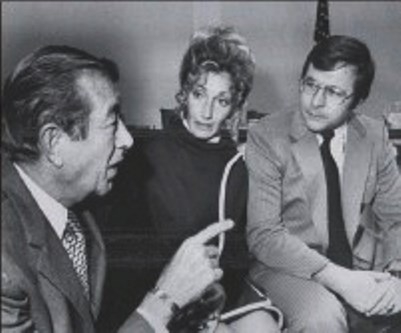
L. Brooks Patterson, then an attorney, also fought the busing order before later becoming Oakland County prosecutor and then the county’s longtime executive.
On Aug. 28, 1971, roughly 2,000 people gathered outside Pontiac’s school board offices for an anti-busing rally. Michigan Advance, in a 2021 historical account of the bombing, reported that then-state Rep. Arthur Law, a Pontiac Democrat, urged parents to boycott the schools at that gathering.
Two nights later, the buses were bombed.
A photograph from Sept. 1, 1971, shows a Pontiac police officer examining the burned shells. The Bettmann Archive caption reported that about 40 other buses in the depot escaped destruction and that Pontiac’s desegregation plan called for roughly one-third of the district’s 24,000 students to be bused.
No children were on the buses. But children were exactly who the attack was meant to reach.
Findley knew her family would soon be part of the new arrangement. During seventh grade, she could continue walking to Jefferson because white children were being transported into her neighborhood.
Her siblings had another experience.
“I wasn’t as afraid as my siblings that were riding the bus,” Findley said. “I didn’t feel the danger that he felt, you know, riding a bus to school.”
The danger she imagined was painfully ordinary for a 12-year-old trying to understand the hatred surrounding her.
“Whether or not people would throw rocks or whatever at the bus, or throw rocks at them,” she remembered.
Brown had a child to worry about, too. His daughter was in elementary school.
“We had to escort her to school,” Brown said, “because of the fear of something happening to her.”
The threats followed him to work.
Brown said gunfire struck the law office he shared with Hatchett and Waterman. The attorneys hired security. They sometimes guarded one another’s homes at night.
“We just had to be careful,” Brown said. “You could never tell when there would be an attempt to invoke some violence upon us.”
Hatchett was particularly threatened, Brown recalled. Brown and others would go to his house at night prepared to protect him. And the bullet holes in their law office? They left them.
“The holes from the bullets during that period of time are still in the window at the law office,” Brown said. “We left them in there as a memento and a remembrance of what transpired.”
Pontiac’s superintendent during the bombing was Dana P. Whitmer, grandfather of Michigan Gov. Gretchen Whitmer.
That family connection puts only two generations between one of Michigan’s most recognizable political figures today and the superintendent’s office at the center of one of the state’s fiercest desegregation battles.
The buses were destroyed, but the court order remained.
Federal investigators eventually arrested six Ku Klux Klan members in connection with the bombing. Five were indicted: Robert Miles, Wallace Fruit, Alex Distel Jr., Raymond Quick and Dennis Ramsey. Miles was a former grand dragon of the Michigan Klan.
In May 1973, U.S. District Judge Lawrence Gubow found all five guilty of conspiracy after the men waived jury trials.
Their federal crime went deeper than blowing up property.
They were convicted of conspiring to interfere by force with the execution of the desegregation order and conspiring to frighten Pontiac schoolchildren out of exercising their federally protected right to attend school without regard to race.
The integration order went forward. Findley remembers what happened after all the adults had argued and the children finally landed in classrooms together.
At first, little changed socially.
“Black students really pretty much stayed with the Black students and white students pretty much stayed with the white students,” she said.
A group called “I Can Make It Work” brought some Black and white students together in an effort to ease the tension.
By eighth grade, Findley said, something had shifted.
“It had all settled in,” she remembered. “We were being integrated and we were mixing.”
Fifty-five years later, Brown is still watching what has happened to Pontiac’s public schools. He can measure the change.
“Every school that I went to, it’s closed now, including high school,” Brown said.
The city has gone from two major high schools (Pontiac Central and Pontiac Northern) to one (Pontiac High School), and from five middle schools to just two.
Desegregation and the mixed feeling about it weren’t the only contributing factors in that decline. Closing factories, disinvestment from automotive suppliers, the rise of neighboring suburbs and school-of-choice options all became factors in Pontiac’s declining population.
But the bombing of those school buses in 1971 is still reverberating in Pontiac today.
The message to the city’s Black residents then was clear, and the lasting psychological impact is still felt by folks like Findley, Brown and many other residents who are 60 years old and up.
That singular act – and the protests that followed – changed things for the city and its residents. And it’s a constant reminder that the kind of terroristic racism society tells us was “so long ago” is really just a memory for anyone who’s old enough to have seen the television debut of Good Times.