
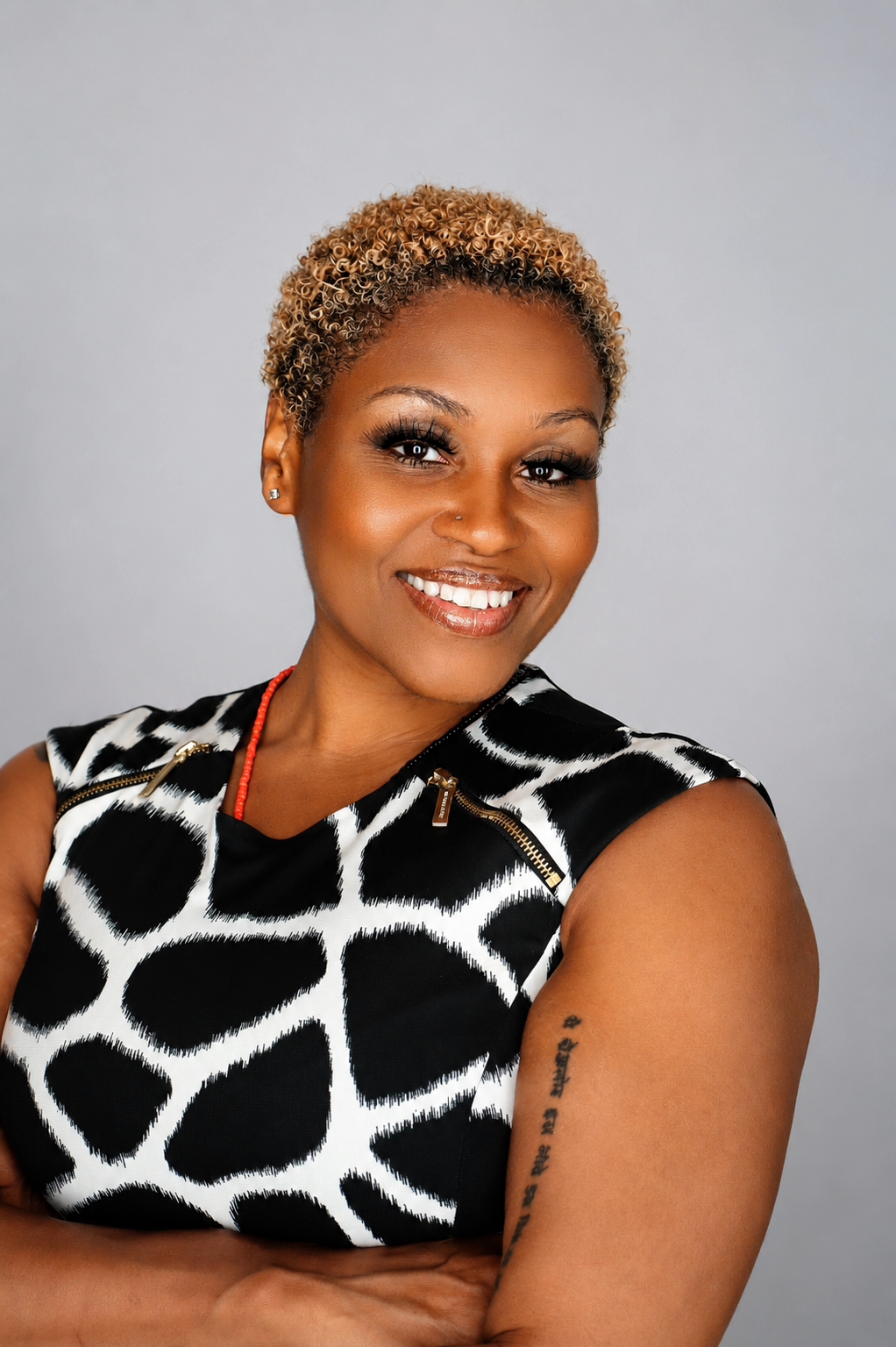


By Nina Love, All Black Everything Hospitality Group CEO
For more than two decades, I have worked in an industry that celebrates endurance.
Hospitality teaches us how to keep going.
We learn how to smile through exhaustion. How to feed hundreds of people while forgetting to feed ourselves. How to stand for 12, 14, sometimes 16 hours and still call it a good day because the guests were happy. We work weekends, holidays, birthdays and family celebrations because while the rest of the world is gathering, someone has to create the experience.
And somewhere along the way, many of us began confusing endurance with excellence.
I did. For years, I wore my ability to carry everything as a badge of honor. Business owner. Chef. Leader. Problem solver. Employer. Strategist. Creative. Fixer. Whatever needed to be done, I figured it out.
When the team was short, I filled the gap. When something went wrong, I solved it. When the business needed more, I gave more. When my body said it was tired, I negotiated with it.
Tomorrow. After this event. After this client. After this season. After I get through this one thing.
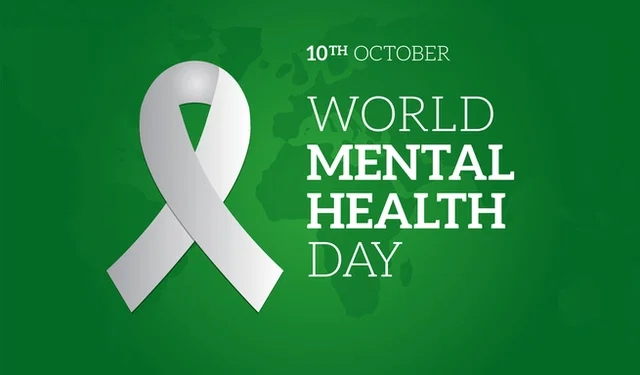
The problem is that in hospitality, there is always one more thing. October offers an important opportunity for us to have a different conversation. Mental Illness Awareness Week is observed October 5–11, and World Mental Health Day takes place October 10. The World Health Organization’s 2026 theme, “Lived Experiences Heard: Real Voices, Real Change,” recognizes the importance of lived experience in shaping conversations about mental health and well-being.
For me, that theme lands differently now. Because I have lived this. And I know I am not alone.
The Invisible Weight of Hospitality
People see the finished plate.
They see the beautifully decorated ballroom, the full dining room, the packed event, the chef coat, the television appearance, the social media post, the award, the successful activation.
They rarely see what it takes to hold all of it together. Hospitality professionals operate in an environment built around urgency. Someone called off. The truck is late. The food cost went up. The equipment stopped working. The guest count changed. The client added something. The dishwasher quit. Payroll is due.
There are 300 people waiting to eat, and nobody in the dining room cares what happened behind the kitchen door. The show must go on.
That phrase sounds noble until you realize how many people have built entire careers around never allowing themselves permission for the show to stop.
Research increasingly confirms what many hospitality professionals already know instinctively: workplace conditions, job demands, irregular schedules, chronic fatigue, sleep disruption and organizational culture can have real consequences for mental and physical well-being.
In other words, this is bigger than somebody simply needing a vacation. We have to talk about the culture.
When Success Does Not Tell the Whole Story
Over the past several years, our industry has experienced losses that have forced difficult conversations about what may be happening behind the chef coat.
In June 2025, chef and longtime Food Network personality Anne Burrell died at the age of 55. Her death was later ruled a suicide by New York City’s medical examiner.
Like millions of people, I knew her through what she shared publicly: personality, talent, humor, confidence and food. Her death is not mine to explain. None of us should attempt to diagnose someone from a distance or assign a neat explanation to another person’s private pain.
But it should make us think. Here in Detroit, another loss hit much closer to home.
In March 2024, we lost Chef Maxcel Hardy at just 40 years old.
For Detroit’s culinary community, Max was so much more than a successful chef. He was a restaurateur. A mentor. A philanthropist. A teacher. A community builder. A representation of what was possible for Black chefs coming out of Detroit and building careers on a national stage.
He had worked as a private chef to professional athletes, appeared on national food television, opened restaurants in his hometown and earned recognition as one of the Black chefs helping change the American culinary landscape.
But perhaps his greatest impact was what he poured back into Detroit. Through his nonprofit work, youth education, hunger-relief efforts and mentorship, Max consistently used food as a vehicle for service.
He died unexpectedly at 40. Forty. That number still deserves our attention. Losing someone so young, so gifted, so active and so deeply woven into Detroit’s hospitality ecosystem should force all of us to confront something larger: Wellness is so layered and much more expansive than the average conversation around it.
It is mental. It is physical. It is emotional. It is spiritual. It is sleep. It is stress. It is what we eat. It is whether we go to the doctor. It is whether we listen when our bodies tell us something is wrong. It is whether the people who spend their lives nourishing everyone else are making space to nourish themselves.
And in an industry built around service, that can be surprisingly difficult. I think of Max not simply because we lost a chef. I think about what he represented. Potential. Service. Community. Ambition. Legacy.
A man with more restaurants to open, more young chefs to mentor, more people to feed and more work he intended to do. And honoring people like Max requires more than remembering what they produced.
It should also make us consider how we care for the people who are still here producing, leading, mentoring, feeding and carrying our industry forward.
That conversation is part of his legacy too.
Success Is Not Wellness
The lesson is not that achievement causes tragedy. It is much more nuanced than that. It is that success does not automatically mean wellness. Visibility does not mean wellness. Talent does not mean wellness. Money does not mean wellness. Being needed does not mean wellness. Being physically strong does not mean we should ignore our health.
And sometimes the people who appear strongest have simply become exceptionally skilled at carrying heavy things without allowing anyone else to see the weight.
Hospitality knows something about that. We have historically celebrated chefs who worked until they dropped. We romanticized the screaming kitchen. We applauded the person who never took a day off. We treated sleep deprivation as commitment. We called dysfunction “paying your dues.” We turned burnout into proof that you wanted it badly enough.
But what if we got that wrong? What if sustainability is actually the higher form of excellence?
I Had to Ask Myself a Different Question
Eventually, I had to stop asking: “How much more can I handle?” And start asking: “What is all of this costing me?” That question changed my life.
After more than 22 years in hospitality, entrepreneurship and leadership, I reached a point where my professional capacity had outgrown my personal capacity. I could still execute. I could still produce. I could still solve problems. I could still walk into chaos and make something extraordinary happen.
But being capable of carrying something does not mean you are supposed to carry it forever.
That realization forced me to examine not only how I worked, but why. Why did rest make me uncomfortable? Why did slowing down feel irresponsible? Why did asking for help sometimes feel like weakness? Why did achievement make it so easy to ignore depletion? Why had I learned to extend compassion to everyone except myself?
Those questions became part of a larger personal reckoning.
They also became the foundation of my upcoming book, The Cost of Carrying It All.
This Book Was Born from What I Survived.
I did not write this book from the safe distance of hindsight. I wrote it from experience. From burnout. From disappointment. From anxiety. From business challenges. From relationships that required discernment. From carrying responsibilities that no longer belonged to me. From learning that sometimes the strongest thing you can do is put something down.
The Cost of Carrying It All is about the moment when the person everyone depends on finally has to ask: Who is taking care of me?
It is about entrepreneurs. Leaders. Caregivers. Creatives. Hospitality professionals. Women who have become the emergency contact for everyone else’s life. And anyone who has built an identity around being strong for so long that they no longer know how to admit they are tired.
It is also about what comes after burnout. Because burnout was not the end of my story. It became an invitation. An invitation to reevaluate success. To reconsider what I wanted my life to feel like. To rethink my relationship with work. To make room for wellness, creativity, travel, culture, my family and the parts of myself that had been waiting quietly underneath all of that responsibility.
I am still ambitious. I still believe in excellence. I still believe in building extraordinary things. I just no longer believe that destroying yourself is the price you should have to pay for them.
Maybe Hospitality Needs a New Definition of Strength
As we recognize Mental Illness Awareness Week and World Mental Health Day this October, I hope hospitality leaders will take this conversation beyond social media posts and wellness slogans.
And I hope we make the conversation bigger than mental health alone. Ask your employees if they are okay. Build schedules that allow people to recover. Create workplaces where asking for help does not threaten someone’s livelihood. Normalize mental-health resources. Encourage preventive healthcare. Get the physical. Check the numbers. Pay attention to the warning signs. Take vacations. Use your PTO. Eat something. Sleep. Drink water. Move your body. Go to the doctor. Call the therapist. Delegate. Close the laptop. Let somebody else solve the problem.
And perhaps most importantly, stop applauding suffering simply because someone managed to make it look professional.
We spend our careers learning temperature controls, sanitation standards, food safety, guest safety and emergency procedures.
Maybe wellness needs to become part of our definition of safety too. Maybe the next evolution of hospitality is not learning how to serve more people. Maybe it is finally learning how to take better care of the people doing the serving. That includes us.
I think about Chef Max Hardy when I say that. I think about the enormous imprint one 40-year-old chef was able to leave on Detroit. I think about Anne Burrell. I think about the people whose names will never make headlines.
And I think about all of us who are still here. There is still time to change the way we work. There is still time to listen to our bodies. There is still time to ask for help. There is still time to choose rest before our bodies choose it for us. There is still time to decide that longevity belongs in the definition of success.
For years, I believed strength meant carrying everything without dropping anything. Today, I believe strength also means knowing what deserves to be carried, what needs to be shared and what you finally need to put down.
That is the conversation at the heart of The Cost of Carrying It All.
And this time, I am ready to have it out loud.
Pre-order your copy of The Cost of Carrying It All today at: theloveexp.com/bookpreorder.
Nina Love, aka The Culinary Griot, is a culinary artist, hospitality consultant, and the founder of A.B.E Hospitality Group, The Love Experience, Alchemy of Excellence Consulting, and The Culinary Griot. With over 22 years of experience, she specializes in operational excellence, culinary mastery, elevated guest experience, and building transformative hospitality brands.