

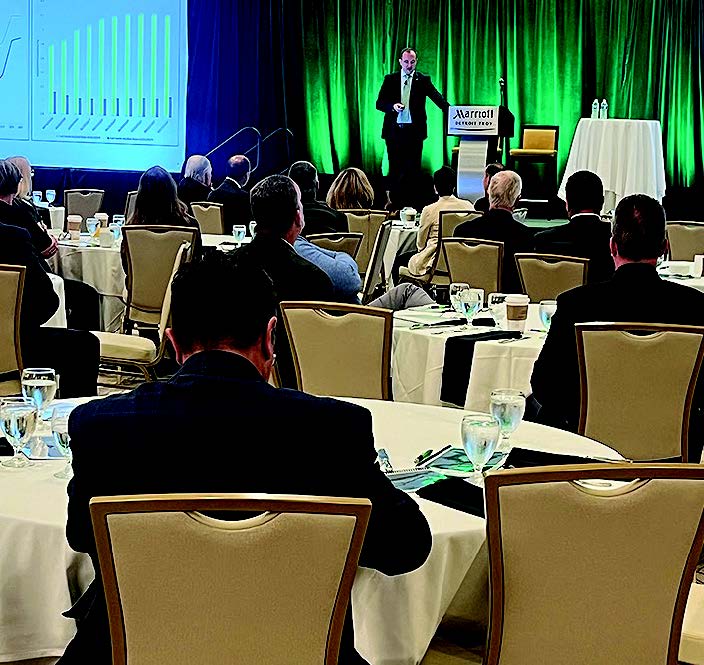
Business leaders across Southeast Michigan are facing many of the same questions. Where are interest rates headed? How resilient are consumers? Is this the right time to invest, expand or wait? These were the discussion points at Huntington’s Southeast Michigan Economic Breakfast Outlook in September. The event brought together business owners, investors, advisors and community leaders from across the region to talk about economic trends in the market, ask questions and learn from one another’s experiences.
Huntington Chief Investment Officer Marc Dizard served as the keynote speaker, sharing insights on inflation, consumer behavior, labor markets, investment trends and the broader economic environment. Dizard’s perspective comes from a deep understanding of the national economy and helping connect national trends to the decisions facing businesses and families in Huntington markets.
Joining Dizard in hosting the event was Jacob Taylor, Huntington’s Private Bank region manager, who saw the event as a great forum for community and business leaders to consider the current economic state of our market and talk about the future of their businesses and the region.
Bringing people together around the issues shaping our economy helps everyone better understand the opportunities and decisions ahead,” said Taylor. “Huntington can play an important role by starting those conversations, listening to what matters locally and connecting clients and community leaders with the expertise they need to move forward.”
Taylor and his team at Huntington help local leaders with milestone activities like business expansion, acquisitions and exits, retirement and succession planning – topics all business leaders should be thinking about and planning for, no matter the economic conditions.
“Our role is helping people connect today’s decisions with long-term goals,” Taylor said. “Whether someone is leading a business, managing investments or planning for retirement, understanding the broader economic picture helps them prepare for what’s next.”
Three takeaways that Dizard and Taylor left attendees with were: 1. Keep short-term uncertainty in perspective. Economic conditions will continue to change, but major financial decisions should remain connected to long-term goals. A good plan gives people a framework for evaluating new information without reacting to every headline. 2. Consider personal, family and business priorities together. Retirement, succession, investments and business growth rarely exist in separate lanes. The strongest planning conversations look at how those priorities influence one another and what each decision means for the future. 3. Use periods of change to ask better questions. Uncertainty can be a reason to pause and review assumptions. Are your plans still aligned with your goals? Are you prepared for different outcomes? Do the right family members, advisors and business leaders understand the plan?
The event reinforced the value of taking time to step back, learn from others and look beyond any immediate uncertainty. While economic conditions will continue to evolve, regular, thoughtful financial planning is key to the success of businesses, individuals and families.