
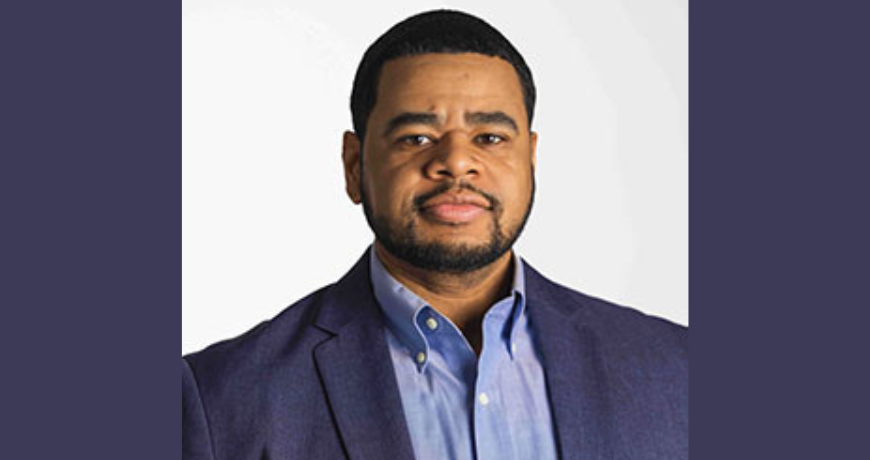

As Executive Editor of the Michigan Chronicle, I listened closely as Gov. Gretchen Whitmer delivered her eighth and final State of the State address on Feb. 25 in Lansing.
Final addresses are different. They are less about introducing plans and more about defining how promises made in past addresses were delivered to the residents of the state. They’re legacy speeches — moments when a governor decides how history will remember her priorities, her values, and the people she chooses to center.
For nearly an hour, Whitmer laid out a detailed roadmap of accomplishments and unfinished business.
She highlighted sweeping investments in literacy and pre-K expansion. She touted housing development numbers and pledged to build more. She defended Medicaid, called for medical debt relief, and celebrated bipartisan infrastructure deals. She reaffirmed protections for the LGBTQ+ community and promised to veto legislation that would diminish their humanity. She recounted balanced budgets, road repairs, clean energy investments, and economic growth.
Throughout the speech, she kept repeating the phrase: “a Michigan for all.” That’s commendable.
But in an address meant to define her closing chapter, two glaring omissions need to be addressed.
Black Michiganders were mentioned once, almost in passing. And Detroit was mentioned once, only in reference to its population growth.
That was it.
In a speech that touched on everything from tariffs and zoning reform to nuclear energy and tuition-free community college, the only explicit reference to Black residents came in the context of hair discrimination protections. That policy matters. The right to wear natural hair without fear of workplace or school discrimination is important and long overdue. But Black communities are more than a single legislative victory folded into a long list of accomplishments. (That’s not to say this is the only legislative win she’s accomplished for Black residents, but it is to say that there could’ve been more of a callout to those other efforts to showcase that intentionality.)
Michigan is home to more than 1.5 million Black residents.
We’re entrepreneurs, engineers, educators, nurses, autoworkers, clergy, students, retirees, public servants, journalists. We are disproportionately affected by gaps in homeownership, maternal health disparities, environmental injustice, and the racial wealth divide, which is one of the widest in the country in this state.
When the governor outlined her ambitious literacy agenda, where was the acknowledgment that Black students in under-resourced districts often face compounded structural barriers?
When she spoke about housing affordability and first-time homebuyers, where was the recognition that Black homeownership rates lag significantly behind white households?
When she addressed health care access, where was the direct commitment to reducing the alarming maternal mortality rates that disproportionately impact Black women?
Throughout the speech, Whitmer made direct, heartfelt appeals to other marginalized communities. Most notably, it was to Michigan’s LGBTQ+ residents. She looked into the camera and said, “You belong, you matter… I’ve got your back.” It was a powerful moment. It was clear. It was unequivocal.
Black Michiganders deserve to hear that same clarity and for it not to be implied, assumed, or buried in generalities. We need to hear it explicitly, so we know that there are intentional efforts aimed at increasing our quality of life, too.
Then there’s Detroit.
For the first time in nearly 70 years, Detroit’s population grew. Rightfully so, Gov. Whitmer proudly noted that. That achievement deserves applause.
But the growth didn’t happen organically or because of outsiders’ goodwill to the city. It reflects the policy decisions, community resilience, local leadership, and years of work by residents who refused to abandon their city when headlines did.
Detroit is Michigan’s largest city and the cultural capital of the state. The mayor of Detroit is arguably the second most powerful person in the state because of how important the city’s success is to the rest of the state.
The city serves as an international symbol of Black excellence, labor power, creativity, and reinvention. It anchors Southeast Michigan’s economy and drives statewide politics. Despite the fact that the city has secured major development projects, strengthened neighborhood stabilization efforts, expanded entrepreneurship corridors, and ushered in a new era of municipal leadership in the past year, none of those wins made the speech.
Other communities were name-checked for factories and fighter missions. Other regions were celebrated for economic wins. Detroit – the state’s economic and political heartbeat –got five seconds and that brevity is hard to ignore.
To be clear, Gov. Whitmer has accomplishments worth noting. Roads have been repaired at historic levels and budgets have been balanced despite partisan and bi-partisan quarrels about which issues deserve money. Pre-K access has expanded and community college tuition has been eliminated for many.
Gun safety laws have been strengthened, and LGBTQ+ protections have been codified. Michigan’s credit rating has improved. These are tangible outcomes that affect millions of residents.
But leadership is measured just as much by presence and attention – who gets acknowledged and centered in moments – as it is by policy wins.
Listen, final speeches are so carefully written. Every paragraph reflects great intention. When a governor has one last opportunity to frame her legacy before the state, what she chooses to emphasize signals what she believes mattered most.
Black voters have been foundational to Democratic victories in Michigan for decades, including Whitmer’s own elections. Detroit has been central to statewide turnout strategies, economic planning, and national political calculations. Yet in a moment designed to capture the fullness of her tenure, the communities that have shaped Michigan’s political landscape were largely absent from the narrative.
That absence doesn’t erase the administration’s work. But it does make certain groups feel absent from the “for all” narrative.
If literacy, housing, and health care are the pillars of Michigan’s next chapter, it’s crucial and imperative that equity is at the foundation of those issues. That means explicitly addressing racial disparities in reading proficiency; closing the Black homeownership gap with targeted, measurable strategies; confronting maternal health inequities with urgency; and recognizing Detroit as more than a comeback story in a passing reference.
I will continue to applaud Gov. Whitmer for the seven years of tremendous work she’s done across the state and the country in pursuit of making life better for Michiganders.
But she still has about nine months left in office, and (in addition to working on the important issues she described in her final address) I’d like to see her continue to deepen the conversation by engaging more directly about how important these issues are to Michigan’s Black population.
After all, a “Michigan for all” can’t rely on implication. It requires intention.