
By: Jasmine West
Wayne County voters delivered a decisive mandate for countywide public transportation Tuesday, approving a millage that will bring all 43 communities into a connected transit funding system for the first time.
With 99.9% of precincts reporting, approximately 67% of voters supported the proposal, while 33% voted against it, according to unofficial election results. More than 230,000 ballots were cast in favor of the millage.
The vote marks a major shift for Michigan’s most populous county, where municipal boundaries and decades of communities opting out of the Suburban Mobility Authority for Regional Transportation have left riders navigating a patchwork system.
The millage renews public transportation funding in the 26 Wayne County communities already participating in SMART while extending the tax and future service to 17 communities that previously opted out.
Those communities include Belleville, Brownstown Township, Canton, Detroit, Flat Rock, Gibraltar, Grosse Ile Township, Huron Township, Livonia, Northville, Northville Township, Plymouth, Plymouth Township, Rockwood, Sumpter Township, Van Buren Township and Woodhaven.
“Wayne County voters made a clear choice for a more connected region, and this millage will finally bring every community into one connected transit system for students, seniors, and workers,” SMART General Manager and CEO Tiffany J. Gunter said in a statement.
“None of this happens without our drivers, mechanics, planners, riders, and the community partners who made the case day after day,” Gunter continued. “Now the work starts, and we get the chance to prove again that this organization delivers, for everyone.”
The 0.98-mill levy will run for 10 years, beginning with the 2026 tax year and ending in 2035. It amounts to 98 cents for every $1,000 of taxable property value, or approximately $8 per month for a home with a taxable value of $100,000.
Residents in the 26 communities already paying the SMART millage will not see an increase in the millage rate. Property owners in the 17 previously opted-out communities will pay the tax for the first time.
The proposal is expected to generate approximately $57 million during its first year. Revenue will be distributed among Wayne County, SMART, the Detroit Department of Transportation and smaller community and regional transit providers.
Approximately $8 million generated annually in Detroit is expected to go to DDOT. Detroit has historically been considered an opt-out community because it operates its own bus system, although both DDOT and SMART buses currently travel through the city.
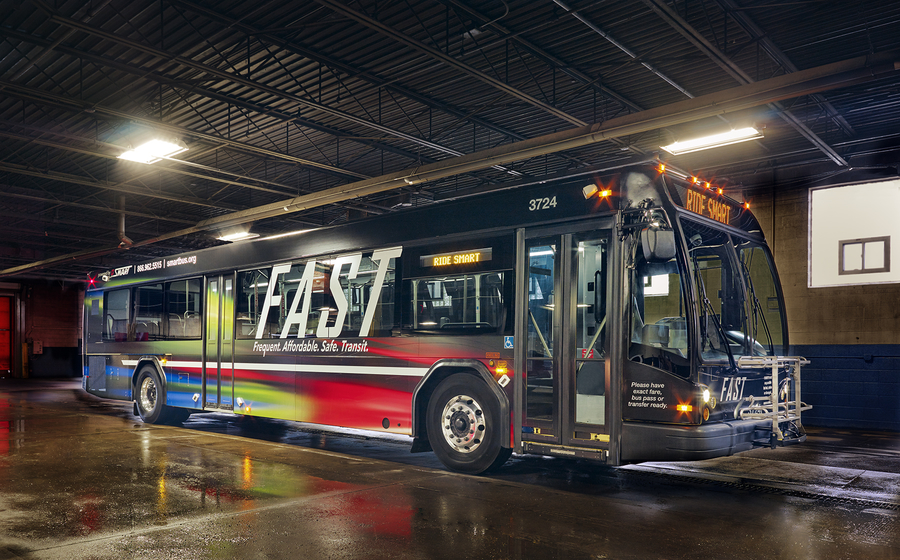
The measure also supports SMART fixed-route buses, SMART Flex on-demand service, paratransit and community transportation programs serving older adults and people with disabilities.
For people who do not drive, public transportation can determine whether they can reach work on time, attend a medical appointment, remain enrolled in school or buy groceries without relying on family members and friends.
That reality is especially important for older adults and residents with disabilities who depend on paratransit and community transportation programs to maintain their independence.
Supporters also framed the proposal as an economic development issue. A transit system that stops at municipal borders can leave workers disconnected from jobs and employers unable to reach potential employees living only a few communities away.
Under the proposed expansion, SMART plans to introduce eight routes, extend five existing routes and add on-demand service in areas that previously opted out. The expansion is expected to take place over approximately three years and will depend partly on the agency’s ability to purchase vehicles and hire the workers needed to operate them.
The approval puts Wayne County closer in line with Oakland County, where voters approved a countywide transit millage in 2022 and eliminated the county’s remaining opt-out communities. Macomb County also operates under a countywide SMART millage.
For decades, Southeast Michigan has struggled to build a transit network capable of connecting Detroit with jobs, schools, medical facilities and suburban communities throughout the region. Riders have often carried the consequences of that failure through longer commutes, limited schedules and service gaps shaped less by need than by municipal boundaries.
Opponents argued that the proposal placed an unnecessary expense on taxpayers and questioned whether expanded transit would deliver enough value to communities where bus service has historically been limited. Several organized efforts emerged in recent months urging residents to reject the tax.
Tuesday’s results, however, showed broad support for replacing that fragmented structure with a countywide approach.
The communities already participating in SMART are Allen Park, Dearborn, Dearborn Heights, Ecorse, Garden City, Grosse Pointe, Grosse Pointe Farms, Grosse Pointe Park, Grosse Pointe Shores, Grosse Pointe Woods, Hamtramck, Harper Woods, Highland Park, Inkster, Lincoln Park, Melvindale, Redford Township, River Rouge, Riverview, Romulus, Southgate, Taylor, Trenton, Wayne, Westland and Wyandotte.
Approval at the ballot box does not mean new buses will immediately appear in every neighborhood. Routes must be finalized, vehicles purchased, workers hired and residents included in decisions about where service is needed most.
The vote gives transit agencies the money and authority to begin that work.
For Wayne County residents who have spent years living beyond the reach of dependable public transportation, the measure represents the possibility of something Metro Detroit has repeatedly struggled to deliver: a regional system that recognizes a person’s need to reach work, school or a doctor does not end at a city border.