


For many Black women, spirituality has never been as simple as choosing what to believe. It is often a relationship between what we were taught, what we have experienced, and what we have come to understand for ourselves.
We grew up knowing the importance of prayer, understanding the power of faith, and being reminded to trust God even when we could not understand what was happening in our lives. Christianity was not simply a religion practiced on Sunday mornings. It was woven into our families, our communities, our traditions, and much of how we understood ourselves and the world around us.
Yet as our spiritual awareness expanded, so did our curiosity about other ways of understanding the human experience. Astrology, ancestral spirituality, the relationship between the cosmos and our individual lives, and the possibility that there is more to our spiritual existence than what we were originally taught.
And somewhere along that exploration, many of us encountered a conflict. How do you honor the religious traditions that shaped you while exploring the ancestral wisdom that existed long before Christianity became central to Black American identity? More importantly, why have we been conditioned to believe that exploring one requires us to abandon the other?
To understand that tension, we have to consider the historical, cultural, and spiritual influences that helped shape our beliefs.
Interestingly, the relationship between the heavens and spirituality is not absent from the Bible. In Genesis, the celestial lights are described as being created for signs and seasons. The Psalms speak of the heavens declaring the glory of God, while the Book of Job references constellations such as the Pleiades and Orion. Even the biblical account of Jesus’ birth includes the Magi, figures traditionally associated with the observation and interpretation of celestial signs, who followed a star to Bethlehem.
These references do not mean Christianity universally embraces astrology. Biblical teachings also contain warnings against divination, and Christian traditions have interpreted those teachings differently throughout history. What they do reveal, however, is that humanity’s relationship with the heavens and the divine has a much longer and more complicated history than many of us were encouraged to consider.
Long before European colonization, African civilizations had developed sophisticated spiritual and cosmological systems that recognized the relationship between human existence, nature, celestial movement, and the divine.
In ancient Kemet, the heliacal rising of Sopdet, known today as Sirius, was associated with the annual flooding of the Nile and the beginning of a new year. Among the Akan people, the day of one’s birth influenced naming traditions and carried cultural and spiritual significance. Within Kongo cosmology, the movement of the sun became an important representation of the cycles of life, death, and spiritual transition.
Although these traditions were distinct, they reflected ways of understanding existence in which the spiritual and natural worlds were deeply connected. Spirituality informed identity, community, ancestry, and humanity’s relationship with the larger universe.
This history becomes particularly significant when examining the religious identity of Black Americans.
Christianity existed in parts of Africa long before the transatlantic slave trade. However, European colonization and slavery profoundly influenced how Christianity was introduced, enforced, and practiced among enslaved Africans and their descendants. African spiritual traditions were frequently dismissed as primitive or pagan, while particular interpretations of Christianity were used to reinforce colonial authority.
One example is the Slave Bible, published in London in 1807 for use among enslaved people in the British West Indies. Large portions of biblical scripture were excluded, including important narratives associated with liberation, while passages emphasizing obedience and submission remained.
Consider what it means when a person’s access to spiritual knowledge is determined by those who hold power over their physical freedom. It raises questions not only about what our ancestors were taught to believe, but also what they were discouraged or prohibited from knowing.
Still, Christianity became a powerful source of strength, liberation, and collective identity within Black communities. Enslaved Africans and their descendants did not simply accept the religion of their oppressors without interpretation. They transformed Christian teachings into expressions of hope, resistance, dignity, and freedom. The same biblical tradition manipulated to justify enslavement was also used to challenge it.
And throughout that history, the heavens continued to hold meaning. The North Star became a symbol of direction and freedom for those seeking escape from slavery. Frederick Douglass, a Christian minister and abolitionist, named his antislavery newspaper The North Star, drawing upon that symbolism.
Our spiritual history, then, is not exclusively Christian, nor is it exclusively rooted in precolonial African traditions. It reflects generations of adaptation, resistance, preservation, and transformation. We inherited beliefs that sustained our ancestors through unimaginable circumstances, alongside the consequences of spiritual traditions being suppressed, reinterpreted, and sometimes deliberately erased.
Perhaps this helps explain why the relationship between faith and astrology remains complicated for some Black women today. Questioning religious beliefs can feel like questioning our families, our communities, and the very traditions that helped preserve our cultural identity.
We may find meaning in astrology while still feeling connected to the prayers of our grandmothers. We may recognize patterns within our birth charts while continuing to believe in a divine intelligence that moves beyond our individual understanding. And we may reconsider what faith means when it is no longer defined exclusively by the religious structures in which we were raised.
None of this eliminates the theological differences between Christianity and astrology. Those differences exist, and for many believers, they remain important. But understanding the history behind our spiritual traditions allows us to examine whether our personal convictions are grounded in conscious understanding or simply inherited expectations.
I believe spiritual maturity requires that kind of discernment. Not necessarily rejecting what we were taught, but becoming willing to examine its origins, consider its meaning, and determine how it aligns with our own spiritual understanding.
We can acknowledge historical religious oppression without disregarding the profound contributions of the Black church. We can honor Christianity’s role in our families while learning about the African spiritual traditions that preceded and existed alongside it. And we can approach astrology as a system of symbolic interpretation and self-inquiry without insisting that everyone must understand or practice it in the same way.
Ultimately, the intersection of faith, astrology, and Black identity invites us to consider something beyond whether these spiritual traditions can coexist. It asks us to examine how history has shaped our understanding of the sacred and how much authority we have given inherited beliefs over our own spiritual exploration.
Because there is a difference between inheriting a belief and consciously choosing to make it your own. And perhaps that is where a more authentic relationship with faith, spirituality, and identity begins.
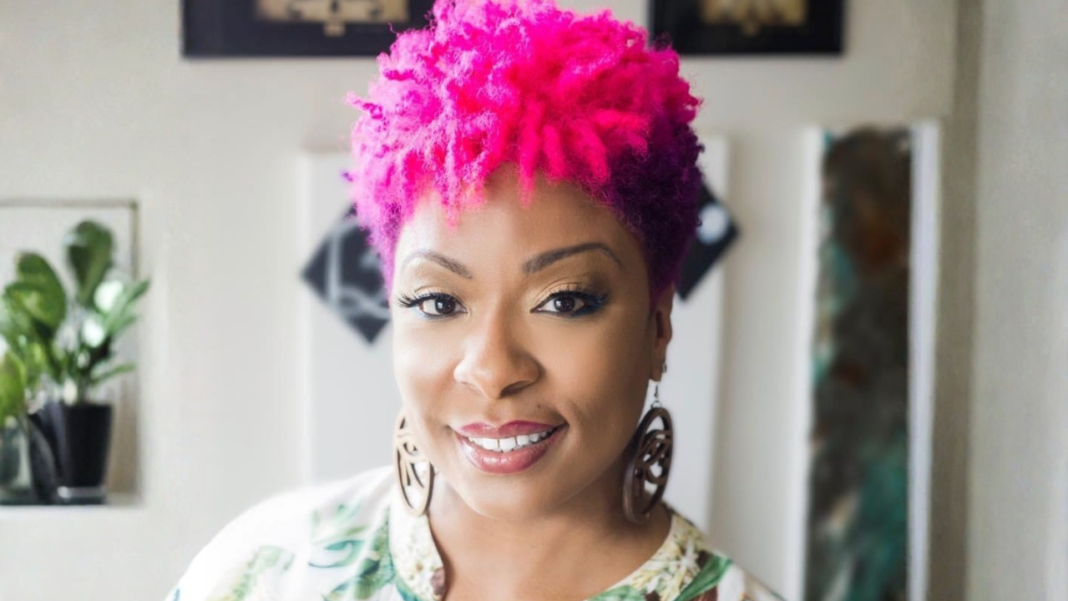
AJ Williams is a Spiritual Wellness Architect and Educator and the Managing Editor of the Michigan Chronicle. A thought leader at the intersection of spirituality, astrology, psychology, and identity evolution, she is the founder of Sunday Communion, a quarterly live transformation experience held in Detroit. The Inner Architecture is her editorial column on the work of becoming.