
Citywide momentum doesn’t erase what many youth still face day to day.
Federal data shows about 51% of Detroit children lived in poverty in 2024, a number that should stop every “revitalization” talking point mid-sentence and force a real conversation about what kids are carrying into classrooms, onto buses, and back home at night. Detroit’s overall poverty rate was reported around the mid-30% range for 2024, which means this is not a pocket problem. This is citywide.
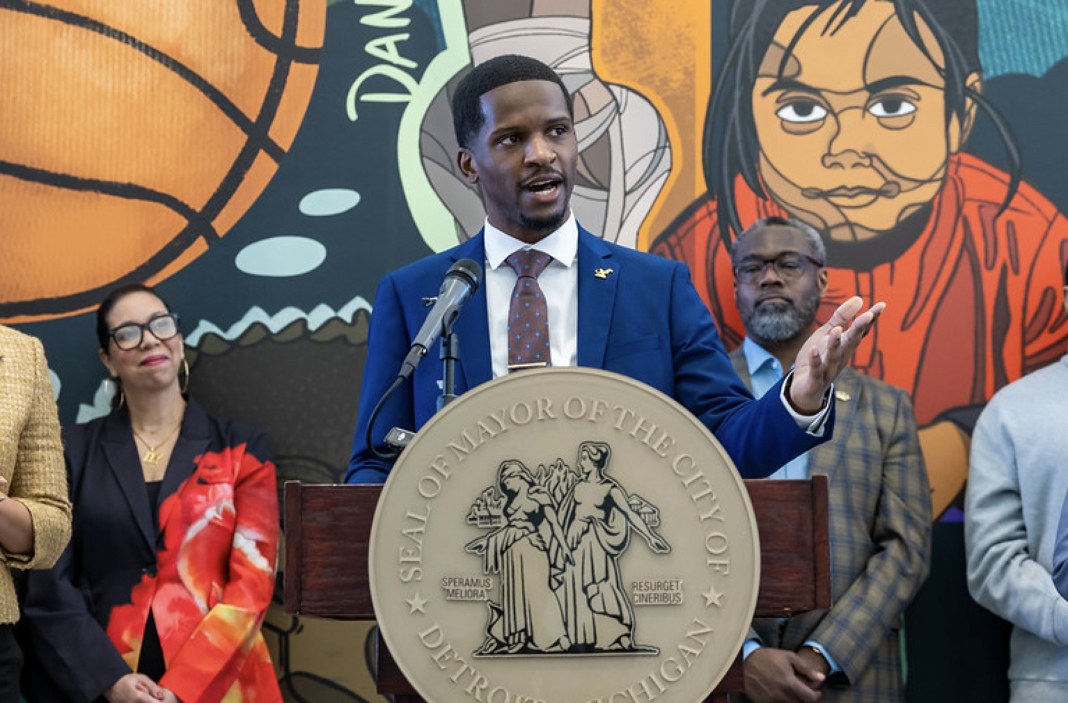
Mayor Mary Sheffield said she wants Detroit to respond like it understands that truth.
Mayor Sheffield announced Dr. Chanel Hampton as the administration’s first Senior Director of Youth and Education, with a dual appointment as Education Liaison to the Mayor. Under that leadership, JerJuan Howard was named Director of the city’s new Office of Youth Affairs.
The Senior Director role is intended to tighten coordination, strengthen accountability, and bring clearer leadership to the city’s work serving Detroiters ages 0 to 26. The position will align youth policy with the city’s education strategy and push departments to center youth needs in how decisions are made across city government. As Education Liaison, Hampton will also serve as the Mayor’s Office point person and convener with Detroit Public Schools Community District, charter schools, out-of-school-time partners, and community organizations to address ongoing challenges facing students and families.
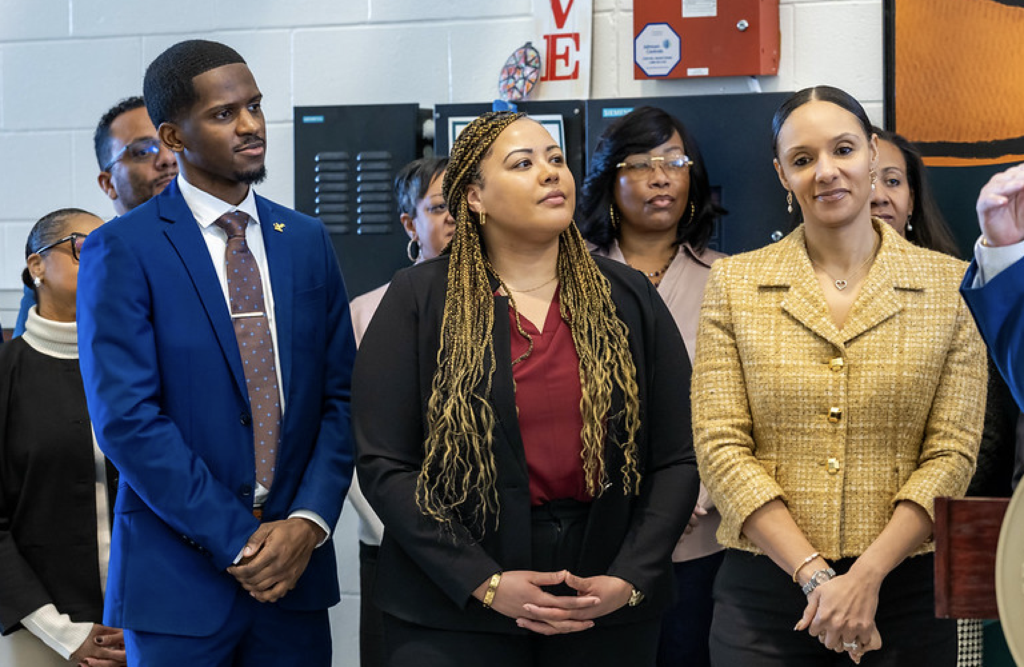
The Office of Youth Affairs is expected to bring structure to the city’s youth landscape by organizing existing youth councils, forums, and task forces into a coordinated voice, and by working inside city government to shape policy that is more equitable and responsive to what young people need.
“Detroit’s young people deserve a city that prioritizes every young person and ensures they have access and opportunities to grow and thrive,” Sheffield said. “Creating the Senior Director of Youth and Education role ensures we have a robust strategy around guaranteeing the best outcomes for young people in our city. Furthermore, with the Office of Youth Affairs, we are embedding youth in how we develop policy, allocateresources and measure success across city government.”
When it comes to Howard’s selection, it is not random. His work history is Detroit-rooted and youth-facing.
Howard, a son of Detroit’s westside Puritan Ave., is known as the founder of the Umoja Debate League and has held roles connected to Detroit Public Schools Community District and Detroit City Council.
Yes, the resume matters. However, the roots matter more.
Detroit has learned the hard way what happens when decisions about our children are made by people who do not know our schools, our blocks, our transit reality, or what it looks like when a young person is trying to focus while the lights might get cut off at home. “Youth outcomes” is a phrase that can get sterilized. Detroit families live the real version of that phrase every day.
Federal census data has placed Detroit among the cities with the highest child poverty rates, with reporting showing more than half of Detroit children living in poverty based on 2024 estimates. That reality touches everything — attendance, mental health, safety, academics, and the kind of pressure kids carry before they even hit adulthood.
Howard said his approach starts with how Detroit has always been built.
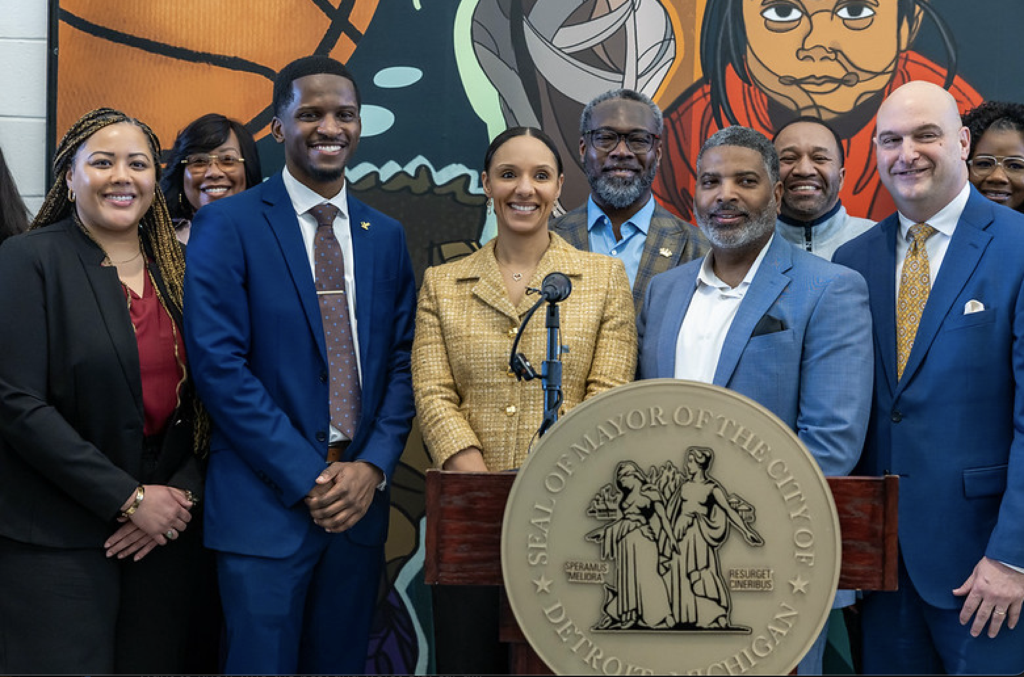
“Historically, Detroit has been built by those who care deeply about their neighborhoods, and our young people are an integral part of that,” Howard said. “As residents, they carry the same pride as older Detroiters and it is our duty to give them the platform to be contributors.”
He pointed to what he has seen working directly with youth.
“I have spent years working alongside youth in schools and on their blocks, and I have seen what happens when young people are trusted, supported and given real opportunity,” he said. “The Office of Youth Affairs will make sure their voices are embedded into how Detroit grows, so our city’s future reflects the spirit and ideas of the next generations.”
For Howard, it hits home. When sked what it means to be a Black man raised on Detroit’s west side now carrying responsibility for Black boys and girls who look like he once did, he kept it plain.
“For me to be a Black man born and raised in this city, I understand the power of representation,” he said. “I know what it feels like to look for someone who understands your neighborhood, your school, your struggles, and your potential. To hold this responsibility means everything. It means little Black boys and girls in Detroit can see that leadership can start with you, someone on your block, in your classroom, etc.”
Just last year, Howard purchased a long-vacant building near Umoja Village and decided to turn it into something the neighborhood could use.
“Back in the spring of 2024, a 25+ year vacant building around the corner from Umoja Village was put up for sale,” Howard said. “At the very same time the community needed a place to meet/congregate, and the literacy rates here in Detroit needed improvement. When I toured the building I knew that I wanted it to be a solution to some of the problems that my community had.”
He wanted it to be a real neighborhood spot — a place people could come together, talk, and build.
“I had the idea for it to be a bookstore/cafe shop with hopes that it could play an intentional role in the resurgence of my childhood neighborhood,” he said. “I went on to purchase the building and now we have a grand opening date of April 25, 2026.”
Howard said his motivation comes from being poured into himself as a child.
“I had a great childhood. I changed career paths often; from artist, basketball player, to journalist, to lawyer. I was always described as a curious kid,” he said. “A ton of people poured into me during my childhood. I grew up very close to my grandparents Virginia and Tommy, so they played a huge role. I looked up to my grandfather.”
When asked what he would say to Detroit, he framed it as a commitment to the city and his neighborhood.
“To Detroit, I’m fully invested. I came home because I believe in us,” Howard said. “To my neighborhood, I carry you into every room I enter. Every decision I make will reflect the pride, resilience, and potential of the city that raised me.”
He also offered advice across generations, putting responsibility where it belongs — on all of us.
“I would tell our generation to get involved in some capacity in your neighborhood. Play an active role in sustaining it or building it,” he said. “If you’re here, stay and invest. If you left, consider coming back. Detroit is in a position right now where we can shape it into what we want it to be. It is important that we don’t limit ourselves.”
“For the younger generation, I would say use your imagination boldly,” he continued. “The world you want to live in has to be imagined before it can be built. Your creativity is needed.”
“For the older generation, mentorship is key,” Howard said. “Historical context matters now more than ever. Without it, we risk repeating mistakes, but with it, we give young people a foundation to build smarter and stronger.”
Howard said his mission in the role is straightforward.
“My mission is to elevate the voices of youth and make sure they are prioritized at every level of Detroit’s government,” he said. “Young people should see themselves reflected in the decisions that shape this city. My responsibility is to create the systems that make their influence real, measurable, and lasting.”
Howard pointed to Umoja as proof he knows how to build something that lasts.
“Founding the Umoja Debate League prepared me for this role in every way,” he said. “It prepared me to see youth not as participants, but as contributors to the future of Detroit. Umoja started as a simple idea rooted in curiosity and problem solving and grew into a citywide infrastructure serving dozens of schools including some national and international debates,” Howard said.
For Howard, debate was never about a trophy case. He said it was about giving young people tools they can use anywhere — confidence, critical thinking, conflict resolution, and civic engagement.
More than half of Detroit children have been counted as living in poverty in recent Census estimates. That’s the backdrop for this work. That’s why residents will judge this office by what shifts on the ground — what gets funded, what gets fixed, and whether young people feel the difference.