
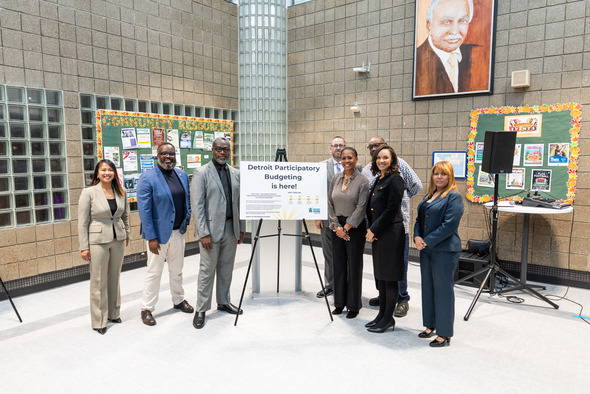

The City of Detroit is giving residents an opportunity to decide how local funds are spent.
City leaders on Thursday announced the launch of a participatory budgeting process that will allow residents to propose, deliberate, and vote on how a small portion of public dollars are spent.
The announcement comes after the city’s progressive council members advocated for the idea as a way to take financial decision-making power away from elected officials and directly to local residents.
Detroit’s participatory budget pilot model will be organized around the city’s existing council district structure, officials said. Each district receives an allocation of $250,000 in funds, providing residents with a dedicated budget to identify, develop, and vote on priority projects that address local needs.
Think of it as a way for neighbors to come together to make decisions over what proposals and ideas they want to see. The proposals that get the most votes gets the funding.
While the $250,000 amount will go toward seven proposals as part of the pilot process, officials said the long-term goal is to secure millions of dollars per district.
“For years, I have advocated for giving everyday Detroiters a direct say in how their tax dollars are spent, and today we are making that a reality,” said Mayor Sheffield. “When I served on the council, I pushed to put real spending power directly into the hands of our neighborhoods. This pilot initiative is a monumental step forward for equity and transparency in our city, ensuring that the people who live, work, and raise families here are the ones steering our community investments.”
City Council member Denzel McCampbell of District 7 was a key proponent of the process.
Participatory budgeting was one of the items McCampbell advocated for during his campaign for the west side council district. In a financial audit committee meeting earlier this month, McCampbell put forth language to push Sheffield’s administration to roll out the pilot during the current budget year.
“I’m glad that effort succeeded. This is something I talked about when I ran,” McCampbell said. “Participatory budgeting is really a direct way for residents to make decisions and talk to each other about what is needed in our communities and in the districts. My goal is as this continues, we get more funding into this.”
McCampbell said the process could get people more engaged in the civic process. The council member held a simulation of the process with Cody High School students at a recent youth roundtable. He asked students where they would dedicate money if they were in control of the city’s finances.
“These students came up with stuff around mental health: some came up with like a community hub where folks can come get resources and materials and items. Others said funding to get a teen hangout for a safe place for teens to hang out, others came up with this program to hire young people to go out and do lawn care for seniors and folks with disabilities.”
Detroit City Council President James Tate said the pilot program is a way to ensure direct public stewardship of public dollars toward neighborhood projects that matter most to residents.
“Detroiters know their neighborhoods best and they deserve a real say in how public dollars are invested,” Tate said. “Participatory budgeting turns community engagement into meaningful improvements residents can see and benefit from. I appreciate Mayor Sheffield’s long-standing leadership on this process and look forward to seeing what our neighbors come up with.”
The city in a press release gave examples of what the small to medium scale capital projects the $250,000 in funding could go toward: park enhancements, street or sidewalk improvements, community safety infrastructure and neighborhood beautification.
Applications open Monday, November 16 for what the city is calling the “Design Committee.” Applications to be on the “Delegate Committee” will open in the spring; each composed of 16 residents and City staff.
A Design Committee Member will collaborate with fellow residents, community organizations, City Council, and City departments to create the official rules and procedures guiding Detroit’s participatory budget process.
The Delegate Committee Member will turn public community ideas into ballot-ready project proposals by reviewing public submissions and ensuring project feasibility.
The pilot process will move through distinct phases, with public idea submission beginning in May, 2027 and public voting in October, 2027.