
There are conversations that can change the financial direction of a family. They rarely happen in a bank, a mortgage office, or even at the closing table. More often, they begin around a kitchen table, where parents, children, and grandparents have an opportunity to discuss something that can shape generations: ownership.
After more than 30 years in the mortgage business, I have come to understand that one of the greatest obstacles to Black homeownership is not simply the cost of housing, the availability of financing, or the qualifications lenders require. It is that too many families have never had a meaningful conversation about the economics of owning property. We discuss education, employment, and the importance of working hard. Yet we do not always discuss how money works, how credit creates access, how real estate builds equity, or how ownership can change a family’s financial circumstances.
I founded Property is Power out of a conviction that economic advancement must include a deeper understanding of real estate ownership. Over the years, I have sat across the desk from people who worked for decades, raised families, paid rent faithfully, and fulfilled every financial obligation expected of them. Yet, after 15 or 20 years, they had little to show for the money they had spent on housing. Their labor had sustained someone else’s investment, while their own opportunity to accumulate wealth remained largely untouched.
I do not suggest that renting is always a mistake or that homeownership is appropriate for everyone. But I have encountered too many people who wanted to own, could have positioned themselves to own, and simply lacked the information, preparation, or guidance to make it happen.
Information is not a small thing. In the marketplace of wealth creation, information often determines who participates and who remains on the sidelines.
The Conversation We Are Not Having
I want to challenge Black families to do something that may seem simple but could have lasting consequences: schedule a family meeting devoted to financial preparation and property ownership.
Bring the generations together. Invite the adult children. Include the grandparents. Let the teenagers listen. Put the phones away and have an honest discussion about where the family stands financially and where it intends to go. The objective is not to make everyone a real estate investor overnight. It is to establish a different understanding of money, credit, savings, and ownership. It is to move from discussing what the family earns to discussing what the family is building.
I would begin with three subjects: credit, savings, and a plan for ownership.
Credit: Your Financial Reputation Has an Economic Consequence
We often speak about credit as though it were merely a number. It is much more than that. Credit is a record of how the financial marketplace perceives your borrowing history. That perception can influence whether you receive financing, how much you can borrow, and the interest rate you pay.
Creditworthiness is developed over time. It should be treated as a financial asset requiring maintenance, discipline, and attention. We cannot expect the next generation to make informed financial decisions if we do not teach them how the system works.
Savings: Income Is Important, but What You Keep Matters
A family may have a respectable income and still lack the resources to purchase a home. Earning money and accumulating money are two different disciplines. Homeownership requires more than the ability to make a monthly payment. There may be a down payment, closing costs, inspections, insurance, and the inevitable repairs that accompany maintaining a property.
Families should establish a dedicated ownership fund. It does not have to begin with thousands of dollars. An automatic deposit from every paycheck, a portion of a tax refund, or a reduction in unnecessary spending can establish the foundation.
Families should also discuss whether they can help one another responsibly. A parent may be able to assist an adult child with a documented down-payment gift. A grandparent may have resources to help a grandchild begin saving. There is nothing wrong with families using their collective knowledge and resources to create opportunities for their family members. We have to stop thinking exclusively as individuals when the objective is to strengthen generations.
The Plan: Turn Good Intentions into an Economic Strategy
What kind of property are we pursuing? Where do we want to live? What can we reasonably afford? Are we preparing to purchase a primary residence, an investment property, or perhaps a multifamily property that could generate rental income? What needs to happen over the next twelve or twenty-four months to make that possible?
Establish savings targets. Identify credit issues that need attention. Research available homebuyer assistance programs. Speak with a knowledgeable mortgage professional before making major financial commitments.
A family meeting should not be a one-time event that produces enthusiasm for a week and then disappears. It should become a regular conversation about financial progress, obstacles, and opportunities. The larger objective is to establish a culture in which ownership is discussed, planned, and pursued with the same seriousness families traditionally give to education and career advancement.
Ownership Does Not End at the Closing Table
Buying a home is an accomplishment. Maintaining it is an obligation. Protecting its value is an investment in both the household and the surrounding community. Take care of the property. Maintain the lawn. Repair the porch. Keep the sidewalks clean. Replace the exterior light that has been out for months. Pay attention to the roof, foundation, plumbing, and exterior.
These may seem like ordinary household responsibilities, but they reflect something larger: an understanding that property ownership carries responsibilities beyond the four walls of a house. A neighborhood’s value is influenced by the collective behavior of its residents. Neglect can become normalized just as pride can become contagious. When homeowners invest in maintaining their properties, they contribute to the stability and economic health of the surrounding community.
We should understand that neighborhood improvement is not solely the responsibility of government. Public investment and fair housing policies matter, but residents also have a role. Ownership should inspire participation, not isolation.
The Home Is an Economic Institution
We sometimes underestimate the economic significance of a home because we have become accustomed to thinking of it primarily as a place to live. But a home is also an asset. Over time, mortgage payments can reduce principal and build equity. Property may appreciate, although appreciation is never guaranteed. That equity can provide financial options for education, business development, or other family needs, provided it is accessed responsibly.
A home can also provide stability that extends beyond the individual borrower. Children may remain in the same school district, develop lasting friendships, and benefit from continuity in their educational environment. Parents become invested in the quality of local schools, the condition of their streets, and the vitality of nearby businesses. Homeowners support local economies by purchasing materials, hiring contractors, using neighborhood services, and supporting entrepreneurs. Their presence can help sustain commercial corridors and strengthen surrounding communities.
The Inheritance We Should Be Discussing
Perhaps the most important reason to hold a family meeting is the conversation about legacy. For generations, too many Black families have had to build their financial lives from the ground up, with limited assets to transfer and fewer opportunities to benefit from the accumulated wealth of previous generations.
That history did not happen by accident. Redlining, restrictive covenants, discriminatory housing practices, and unequal access to mortgage financing systematically limited the ability of Black households to acquire and retain property. Their economic consequences did not disappear when those practices became illegal. We should understand that history without allowing it to define the limits of our future.
The home can become one of the instruments through which families change that equation. But inheritance requires preparation. Families need wills, trusts when appropriate, clear title, and conversations about how property will be managed and transferred. Too many families have lost valuable property because nobody addressed the legal and financial responsibilities of passing it down.
We should not spend thirty years building equity only to leave the next generation with a title dispute or an unresolved estate. Legacy is not simply what we leave behind. It is what we prepare the next generation to receive, protect, and build upon.
Bring the Family to the Table
I have spent more than three decades in the mortgage business, and one lesson has remained constant: families rarely stumble into lasting financial progress. It requires information, preparation, discipline, and a willingness to make decisions that may not produce immediate gratification.
The Black homeownership conversation must become more intentional. We cannot discuss the racial wealth gap without discussing property. We cannot discuss generational wealth without discussing assets. And we cannot talk about changing the economic circumstances of our communities while overlooking the importance of what families own, what they retain, and what they pass forward. Property is not the only path to wealth, but it remains one of the most consequential wealth-building opportunities for families who prepare, purchase responsibly, and protect what they acquire.
So, call the meeting. Set a date. Bring the generations together. Talk about credit, savings, homeownership, investment property, and estate planning. Talk about the kind of financial foundation you want your children and grandchildren to inherit.
The family meeting may be the most important financial meeting you ever hold.
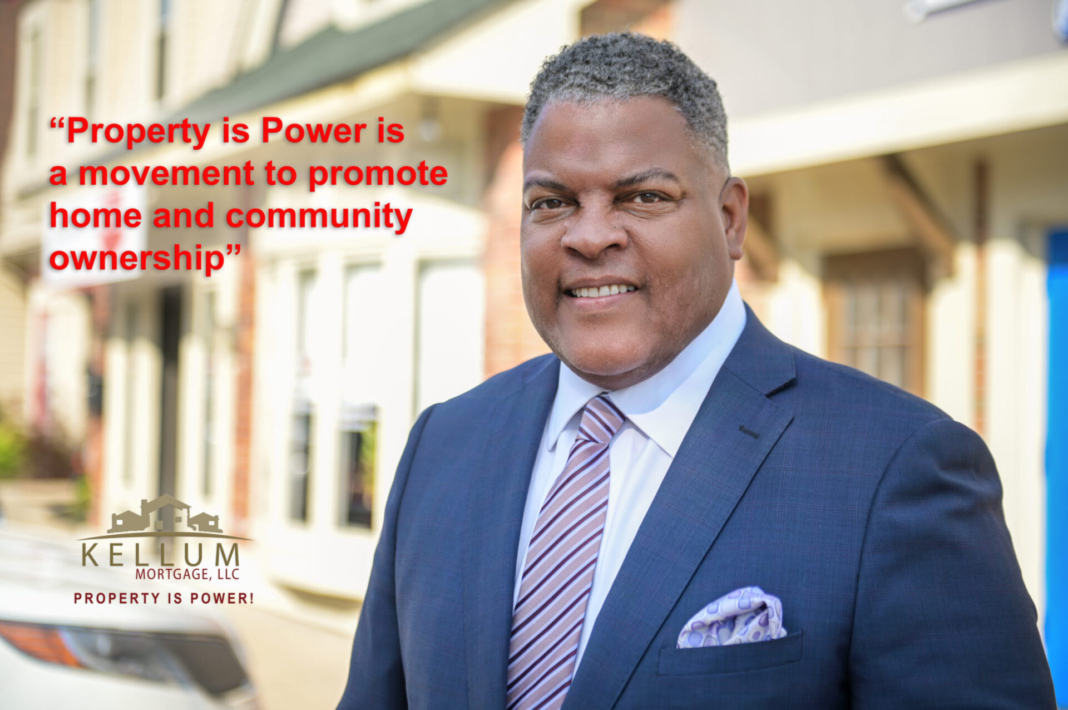
Property is Power! Dr. Anthony O. Kellum is CEO of Kellum Mortgage, LLC, a homeownership advocate, speaker, and author. NMLS #1267030 / #1567030. www.KellumMortgage.com
Property is Power! is a movement to promote home and community ownership. Studies indicate homeownership leads to higher graduation rates, family wealth, and community involvement.