
Five years can feel quick inside a neighborhood that changes block by block.
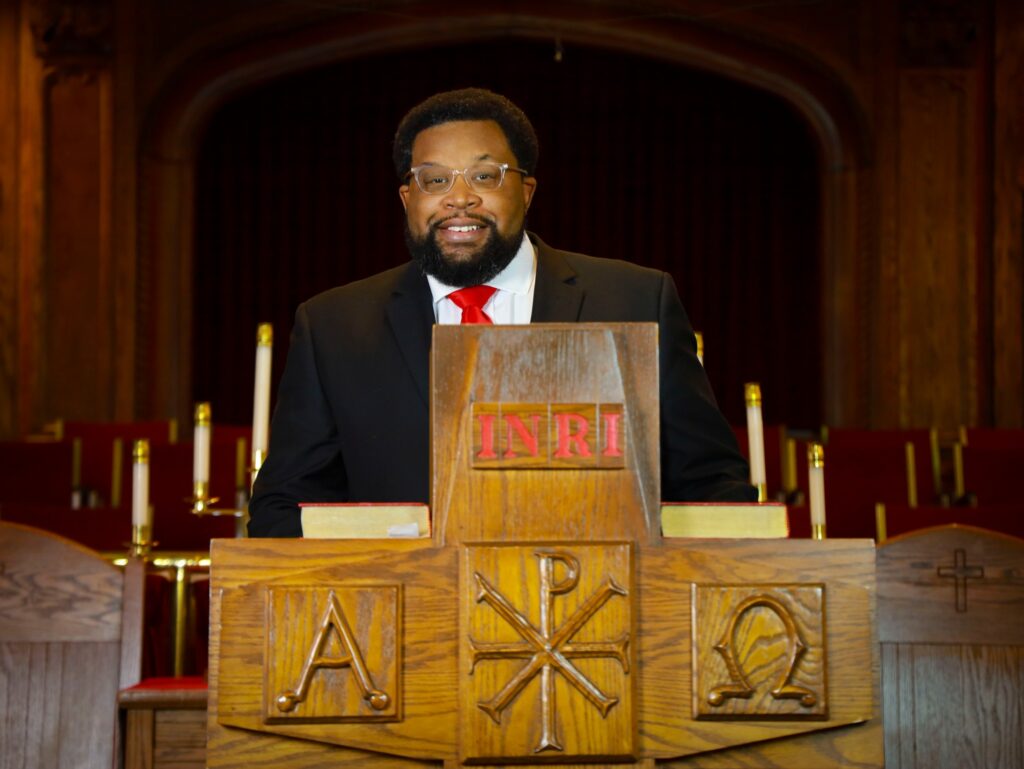
At Second Baptist Church of Detroit, five years also lands like a checkpoint. This month, Pastor Lawrence W. Rodgers reaches his fifth anniversary leading the 190-year-old congregation planted a few steps from the entertainment district of Greektown. He arrived during COVID-19, when the church had to protect elders, keep ministries alive, and stay visible in a district shaped by tourism, casinos, and constant redevelopment.
Rodgers calls the church a public resource with a spiritual engine.
“I believe that the church is the people’s resource,” he said. “And when I say people, I don’t just mean the church members. I mean the people of the community. Churches are spaces that are owned by the people and should be utilized for the people and for the communities that sit around our congregations.”
That outlook has guided his approach as Greektown continues its transformation and as Second Baptist balances preservation with a future-facing mission. Rodgers has expanded outreach tied to homelessness and mental health support, and he has built partnerships meant to keep the church connected to daily neighborhood needs. He also has grown youth programming that puts STEAM and workforce preparation in the same sentence as ministry.
The work sits on top of a legacy that long predates any current development plan.
Second Baptist traces its founding to 1836 and has documented history tied to Black liberation and civic advocacy. The church’s published history describes its role as a station on the Underground Railroad from 1836 to 1865, helping freedom seekers with food, clothing, and shelter before moving them toward Canada. The church also notes that it established Detroit’s first school for Black children in 1839, and that educator Fannie Richards, a member, became Detroit’s first Black career public school teacher.
Rodgers says his “social outlook” fits that lineage.
He points to the kinds of community-facing programs Second Baptist has hosted during his tenure: political forums, opioid overdose response training with Narcan administration certification, financial literacy sessions, and health clinics focused on diabetes, blood pressure, Alzheimer’s and dementia. He has also brought programming on human trafficking, which he describes as a real concern in Detroit’s role as a border city.
Rodgers also places the church’s civil rights ties in the center of its identity. Martin Luther King Jr. corresponded with the church’s then-pastor in the 1950s, “Dr. King wrote us a letter saying that no other church raised more money for the Montgomery bus boycott than the Second Baptist Church of Detroit.”
That history matters to Rodgers for a practical reason. A church that once organized for freedom, education, and dignity has to decide what the next urgent need looks like on Monroe Street right now.
He sees it in the youth.
Rodgers talks about STEAM training as a way to keep Detroit kids from being locked out of tomorrow’s economy. He references automation and robotics and what those shifts can do to traditional manufacturing work, which has shaped Detroit families for generations. His goal, he said, is simple: no community gets left behind.
He connects that belief to his own childhood. Rodgers recalled taking a shop class where he built a small woodworking project for his mother. The point, he said, was not the napkin holder. The point was confidence.
“That shop class demystified woodworking for me,” he said. It made tools feel familiar. It taught safety and skill. That kind of early exposure, he argues, translates into adulthood and into career possibility.
He applies the same idea to science and technology.
“Exposure to the sciences, to technology, to engineering, arts and mathematics helps to demystify these things for young people,” Rodgers said. “They can see themselves in automation or robotics or chemistry, pharmaceuticals, mathematics, engineering, cybersecurity. I don’t want my community left out of the future marketplace.”
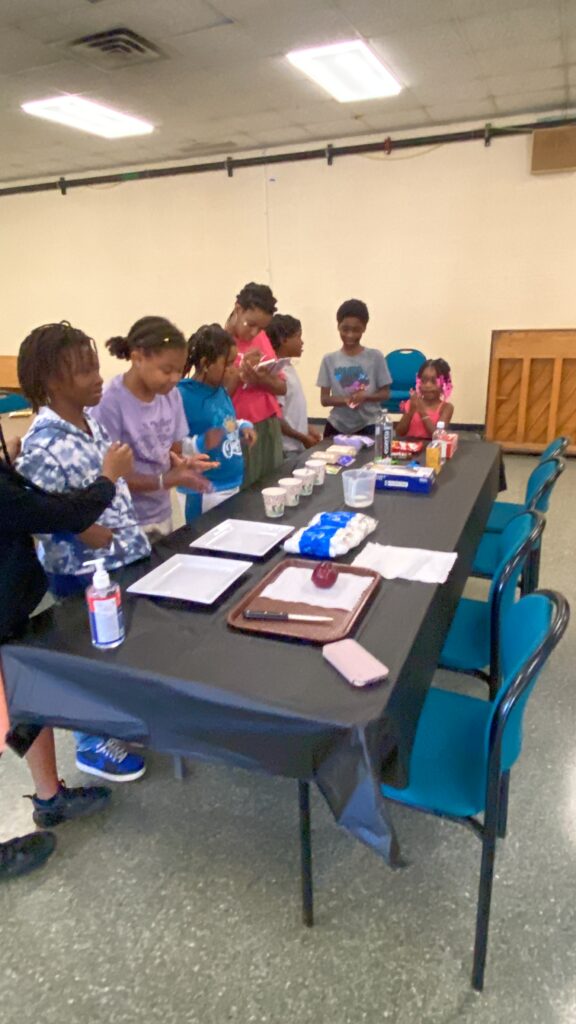
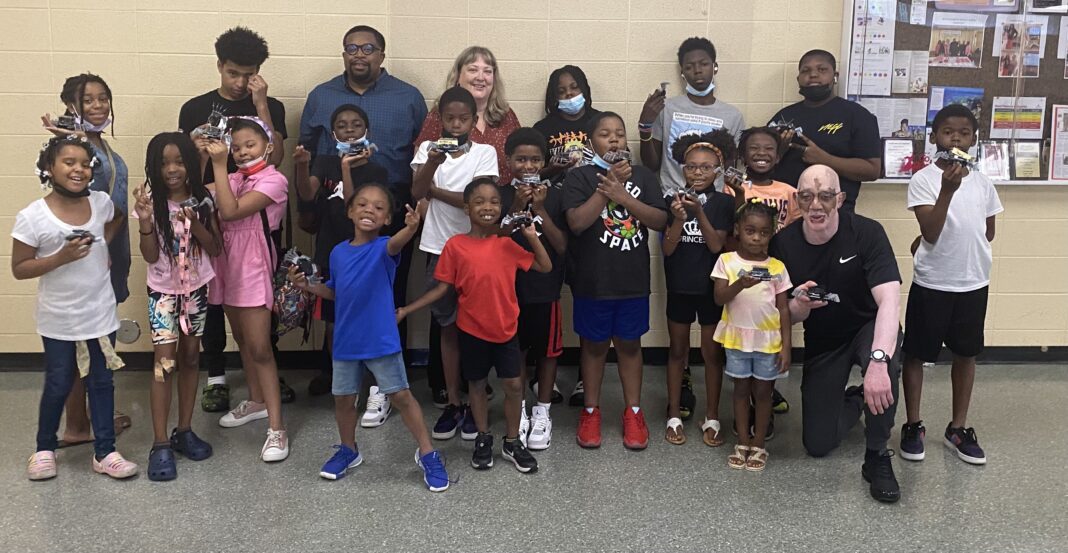
Under Rodgers’ leadership, Second Baptist has hosted youth activities that mix learning with fun. He described sessions where young people built robots and held “robot wars.” He described chemistry classes where kids watched reactions play out in real time. Financial literacy sessions have included conversations about saving, investing, business ownership, and using a dollar with intention. He has seen young entrepreneurs walk into the space with real stories: a young girl selling lip gloss, a young boy building a resale hustle through thrift finds and online platforms, and other youth learning coding and automation.
Rodgers says the programming is growing, newly backed by outside support.
Second Baptist received a $7,000 grant from the DTE Energy Foundation to support youth STEAM programming, with additional support noted from the Marshall Mathers Foundation.
He said many classes draw about 35 to 40 participants, and the church is planning multiple program dates across spring, summer, and fall, with a new STEAM campaign slated to begin soon.
Greektown’s setting shapes the ministry too. Rodgers describes a district where churches and merchants share sidewalks and the same set of public concerns.
He said he watches compassion and commerce work in proximity, and he believes that partnership can put “humanity” into whatever economic beliefs people carry. He also sees the area’s development as a chance to build more walkable space and more room for community events that lift morale, from neighborhood cookouts to holiday gatherings.
Rodgers also sees opportunity in the district’s nightlife realities. He wants Second Baptist positioned to support people facing addiction, including gambling addiction, alcoholism, and substance use, with partnerships that reach beyond church walls.
Being planted in a modern entertainment district, he said, creates access to people who might never step into a traditional church setting.
Second Baptist will mark its 190th anniversary on March 15, 2026, Pastor Rodgers said. Rodgers hopes the milestone signals something bigger than longevity: a church that remembers what it has stood for, and a church that keeps choosing the next generation as a reason to stand.
For community members looking to connect with programs or partnerships, Rodgers directed residents to the church’s website at secondbaptistdetroit.org.