


Val has done what so many Black mothers do without applause. She raised her kids. She held down a home. She stayed committed to a marriage that once felt like partnership. Then the house gets quieter, the distance inside the relationship gets louder, and she starts feeling the kind of loneliness that can sit right next to a wedding ring.
That is the emotional doorway into “Mary J. Blige Presents: Be Happy,” Lifetime’s new film executive produced by Mary J. Blige, directed by Gabourey Sidibe, and built around a familiar turning point: an empty nest, a drifting marriage, and a woman trying to remember herself.
Yet the real backbone of “Be Happy” is not the romance.
The real backbone is the mother-daughter relationship, the one that Black families understand in their bones. Mothers start out as the teacher. Daughters grow up watching, learning, surviving, becoming. Then one day the dynamic shifts. A daughter’s care becomes the soft place her mother can land. A daughter’s home becomes a refuge. A daughter’s voice becomes guidance.
That shift lives in the film through Kayla, played by Nzingha “Zing” Ashford, a Michigan-raised artist whose own story carries the same kind of layered lineage the movie is trying to honor.

“I was born here in Detroit and then my family moved to Saginaw,” Ashford told the Michigan Chronicle. “That’s where I was raised and bred, and I started singing in churches.”
She described how her skills were nurtured by community leaders who “poured into the youth, artistically,” then how she took that foundation to Howard University, where she pursued musical theater and made the connections that helped launch her career.
That Michigan-to-HBCU-to-screen arc matters for a Detroit audience because it reads like home. It reads like a path built through neighborhoods, church aisles, school stages, aunties, mentors, and people who took a young person’s talent seriously enough to invest in it.
Ashford’s story fits the city’s ethic: gifts get sharpened in community.
Val, played by Tisha Campbell, is grappling with empty-nest feelings, loneliness and growing emotional distance from her husband Ross, played by Russell Hornsby, and she begins to realize her marriage and the woman she once was, may be slipping away.

That is not a rare storyline. That is a Black family storyline. Plenty of Detroit women have watched their mothers carry a household through grit and routine, then watched those same mothers face the question nobody prepares you for: Who am I when my role changes?
“Be Happy” answers that question through movement — through Val leaving home and going to her daughter. The film positions Kayla’s life in New Orleans as the backdrop for Val’s rediscovery. Kayla is married, pregnant, nesting. Val shows up needing air, needing clarity, needing a mirror that does not judge her.
“I love the relationship between Val and Kayla,” said Ashford. “It’s filled with so much love and mutual understanding and support, even as Val is journeying through something that is new for her. Kayla gives her mother a safe space to grow and learn more about herself. Their bond is so tight knit.”
She connected it right back to her own life: “My mother and I are super close as well.”
That is the piece that hits hardest for Black women watching.
The mother-daughter bond can feel spiritual because it carries history. It carries sacrifice. It carries the things mothers never put into words because there was work to do. It carries the parts daughters only fully understand once they become adults, once they see their mother as a full person who had dreams before motherhood and desires beyond duty.
“There is this interesting shift with good mother and daughter relationships where the daughter kind of sort of becomes a mama at some point,” she said. “We were in college calling mom for everything. And I still do. Don’t get me wrong. But there’s been a shift where, like, hold on, Mom needs me.”
Black daughters often grow up learning how to be strong by watching their mothers do it. Then adulthood arrives, and suddenly the strength becomes mutual. The daughter becomes caretaker in certain moments. The daughter becomes the one to remind her mother to rest. The daughter becomes the person her mother calls when grief hits, when change comes, when the world asks too much.
Ashford spoke about that tenderness with the kind of honesty that does not rush past pain. She mentioned her mother’s mother passing away years ago and how hearing her mother miss her own mom “breaks my heart.”
She named what so many families live through quietly: “We always need that maternal love and care.” That truth is not about weakness. That truth is about being human.
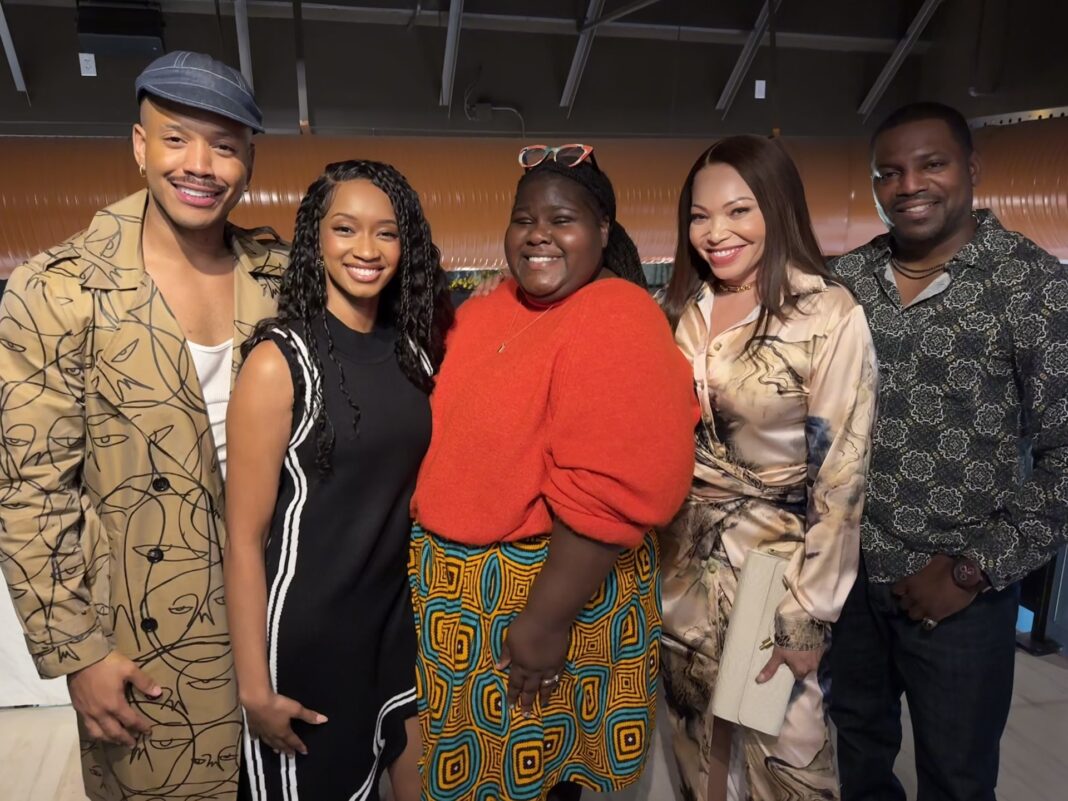
The film’s casting and creative team underline why Lifetime is positioning “Be Happy” as part of its Mary J. Blige partnership. The film is the first of three new original films under Blige’s expanded deal with Lifetime, with Sidibe directing “Be Happy.” The movie features a cast that includes Tisha Campbell, Mekhi Phifer, and Russell Hornsby, alongside Ashford.
For Michigan viewers, Ashford becomes the hometown pull and the hometown pride, while the story itself becomes a conversation starter. Detroit knows what it looks like when women pour into everyone else first. Detroit knows what it looks like when a mother’s identity gets flattened to “provider,” “wife,” “caregiver,” “the one who keeps it together.”
“Be Happy” pushes back by centering healing and self-recognition, then letting the mother-daughter relationship carry the emotional weight without turning it into a lecture.
Ashford also spoke to why Black women-centered stories keep connecting right now.
“Black women find ourselves being put in boxes, far too often overlooked, and not cared for in the way that we deserve,” said Ashford. “Films like this is cathartic because they show healing for us, support, love being treated the way that we deserve.”
For Michigan, that bond lands in a specific way because the state carries its own Black family rhythms. Detroit aunties who raised nieces as daughters. Saginaw families who held tight through economic shifts and still found joy in church choirs and school arts programs. Grandmothers who served as a second set of parents. Daughters who moved away and still became a home base through phone calls, FaceTimes, emergency visits, money transfers, prayer, and the simple act of showing up.
Ashford’s own life reflects that intergenerational thread.
“I followed my sister to Howard, choosing the same school because I wanted to do everything my sister did,” she said. “Then watching my sister perform with the Howard Gospel Choir, I became obsessed.”
She credited her time at Howard for the relationships that helped her find her first agent.
That is also the story many Black women recognize: you get pulled forward by somebody you love. You learn by watching. You keep going because someone before you made the path feel possible.
“Be Happy” premieres as a romance drama on paper. On screen, the deeper promise is something else: permission for mothers to evolve, and permission for daughters to be more than students of their mothers’ strength. Kayla does not replace her mother. Kayla supports her mother. Kayla becomes a living reminder that motherhood does not erase womanhood.
That is a story Detroit families can sit with, talk about, argue about, laugh about, cry about, then carry into real life the next time a mother calls her daughter “my baby” and the daughter answers with the kind of care that sounds like: I got you, Ma.