
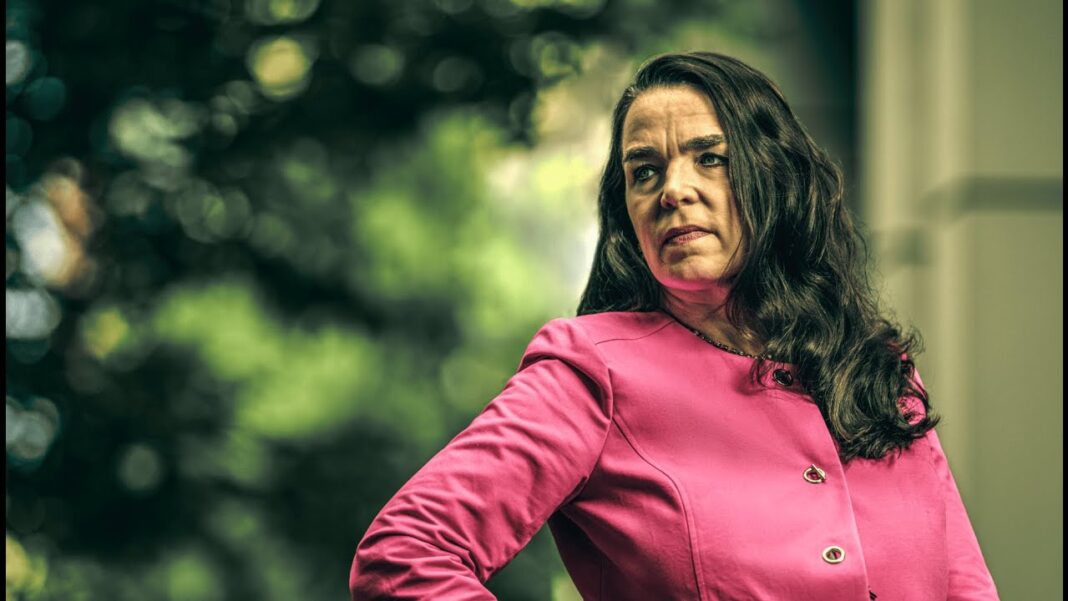

After more than a decade overseeing Michigan’s prison system, Department of Corrections Director Heidi Washington announced that she will leave her position at the end of December, closing a nearly 29-year career with the agency amid mounting questions about the treatment of incarcerated people, deteriorating prison conditions and the department’s accountability to those in its custody.
The Detroit News reported that Washington sent an email to her staff on Nov. 24, which read, in part:
“We have faced significant challenges over the years — a pandemic, budget cuts, hiring challenges — but there is no one I would rather have faced those with than the great staff, agents and officers of the MDOC. I have always been able to rely on our team, and because of you, we have celebrated more successes than we have faced challenges… I will work to elevate corrections as a profession and educate the public about the important work that you do, which often goes unnoticed and unrecognized.”
Washington’s departure comes at a consequential moment for the Michigan Department of Corrections (MDOC), which oversees approximately 33,000 people in 26 state prisons, along with thousands more on probation and parole. Her tenure has been marked by changes in prison programming, efforts to reduce recidivism and persistent criticism from incarcerated people, families, lawmakers and prison reform advocates who say the department has failed to address longstanding problems behind prison walls.
The leadership transition also arrives as Democratic Gov.-elect Jocelyn Benson prepares to take office in January, placing the future of the department’s leadership among the decisions facing the incoming administration.
Washington joined MDOC in 1998 and was appointed director in July 2015. Before taking the department’s top position, she held several leadership roles, including serving as warden of the Charles E. Egeler Reception and Guidance Center and the Duane L. Waters Health Center.
Her departure, however, is unfolding against a backdrop of renewed scrutiny that has intensified throughout 2026, particularly following a series of deaths at Women’s Huron Valley Correctional Facility in Ypsilanti, the state’s only prison housing women.
The deaths have prompted families to demand answers, legislators to call for leadership changes and prison advocacy organizations to question whether the department has adequately protected the health and safety of people in its custody.
In May, 28-year-old Khaira Howard died at Women’s Huron Valley just days before her scheduled release. Rebecca Fackler died four days later. Two additional women died in the following weeks, bringing the number of deaths at the facility to four within less than two months.
By July, a fifth woman, Howard’s fellow incarcerated resident and others whose deaths had drawn attention, had become part of a growing public conversation about medical care and conditions inside the facility
Accounts from incarcerated women and former prisoners described concerns about delayed medical treatment, deteriorating physical conditions, mold, inadequate accommodations and difficulty obtaining timely responses when health problems arose.
In one particularly troubling account, Tina Stoll, a prisoner observation aide who had been assigned to monitor Howard, told local media that Howard complained about losing feeling in her legs and that staff repeatedly dismissed her concerns. The reporting raised questions about whether warning signs of serious medical distress had been adequately addressed.
The department has maintained that it takes the health and safety of incarcerated people seriously. MDOC has also disputed allegations of dangerous systemic mold at Women’s Huron Valley, citing independent environmental testing that it says did not find dangerous levels of toxic or black mold throughout the facility. Investigations into individual deaths have remained ongoing.
Still, the concerns have extended beyond one prison.
Earlier this year, more than 30 current and former Michigan lawmakers called for Washington’s resignation, citing prison conditions, staffing shortages and concerns about the department’s handling of deaths and other serious incidents. U.S. Rep. Shri Thanedar also publicly called for her resignation in May.
Now, six organizations focused on prison conditions and criminal justice reform are asking Benson to consider a broader leadership change as she prepares to assume the governorship.
In a letter to the governor-elect in early November 2026, the American Friends Service Committee, Citizens for Prison Reform, Friends of Restorative Justice, the Michigan Collaborative to End Mass Incarceration, Nation Outside, and Safe and Just Michigan called for new leadership at the agency responsible for the state’s incarcerated population.
“Crisis upon crisis has plagued Michigan’s prison system over the last decade,” the American Friends Service Committee, Citizens for Prison Reform, Friends of Restorative Justice, the Michigan Collaborative to End Mass Incarceration, Nation Outside, and Safe and Just Michigan wrote in a statement to Benson in early November 2026.
“Deteriorating infrastructure, inadequate and unhealthy food, serious health care deficiencies, an aging prison population, lack of programming for higher security levels and long-serving people, chronic staffing shortages, and increasingly harsh conditions of confinement have created an environment of instability.”
The organizations’ appeal places the question of leadership within a larger debate about what Michigan’s correctional system should look like and whether the incoming administration will pursue meaningful changes in its operations.
For advocates, the concerns extend beyond individual incidents and isolated failures. They point to what they describe as a pattern of institutional problems that have persisted across multiple facilities and have disproportionately affected people who have limited ability to advocate for themselves.
The scrutiny also comes as Washington assumes a prominent international corrections position. On Oct. 27, she was elected president of the International Corrections and Prisons Association, an organization that connects corrections leaders and professionals from around the world.
In remarks following her election, Washington described the international organization as an opportunity to strengthen relationships among corrections professionals and advance conversations about prison operations and rehabilitation.
“I am deeply honored to serve as President of ICPA, and proud to represent the United States and our corrections professionals on the world stage,” Washington said. “ICPA brings together leaders from around the world who share a commitment to safe, humane, and effective corrections. I look forward to strengthening those partnerships and learning from one another as we work to improve outcomes for staff, incarcerated people, and the communities we serve.”
Attention is now turning toward who might succeed her and whether the next director will come from within the department.
One name that could enter the conversation is Jeremy Bush, who currently serves as deputy director of MDOC’s Correctional Facilities Administration, the division responsible for the state’s prison operations.
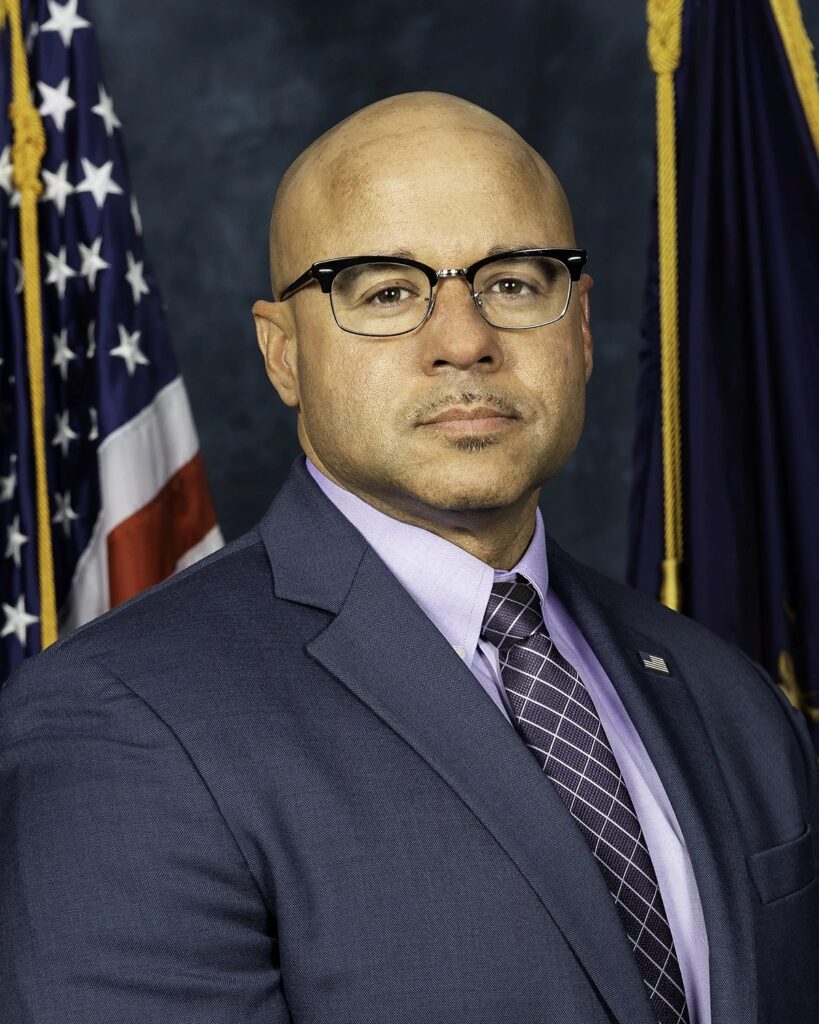
Bush was appointed to the position by Washington on Oct. 6, 2020. His career with the department spans more than two decades, beginning as a corrections officer at the former State Prison of Southern Michigan. Over the years, he has worked across multiple facilities and custody levels, including assignments involving both male and female prisoners.
His professional progression has included positions as sergeant, lieutenant, captain, inspector, acting deputy warden and warden. In 2015, he became warden of the Charles E. Egeler Reception and Guidance Center before eventually moving into departmentwide leadership.
Bush also brings an academic background in criminal justice and management. He holds an associate degree and bachelor’s degree in criminal justice, as well as a master’s degree in management, strategy and leadership from Michigan State University.
His experience provides a substantial foundation for consideration. He understands the department’s internal operations, has worked directly within correctional facilities and has experience managing employees and incarcerated populations across different security classifications.
As a Black man who has spent much of his professional life inside Michigan’s correctional system, Bush’s potential elevation would also carry historical significance.
Michigan has previously had an African American lead its corrections department. Robert Brown Jr. became the first Black director of MDOC in 1984, following the resignation of Perry Johnson. The department recognized Brown’s historic appointment in its own February 2020 employee newsletter.
Bush, therefore, would not be breaking that particular barrier. But his appointment would represent another opportunity for Black leadership at the highest level of an agency whose decisions have enormous consequences for Black communities across Michigan.
His qualifications merit serious consideration. However, the question of whether he would make an effective director cannot be answered solely by his years of service or his position within the current administration.
The next director will inherit an agency confronting questions about medical care, prison infrastructure, staffing, food quality, programming and the treatment of aging and medically vulnerable incarcerated people. That leader will also have to establish credibility with employees, families, lawmakers and advocates who have questioned whether their concerns have received adequate attention.
Bush’s institutional knowledge could prove valuable in addressing those challenges. At the same time, a new director must be willing to examine existing practices, acknowledge failures where they occur and demonstrate a commitment to accountability that extends beyond internal department reviews.
There is also the question of whether Benson will select someone from within MDOC or bring in leadership from outside the agency. The decision could signal how the incoming administration intends to approach corrections policy and whether it views the department’s problems as operational matters or issues requiring a broader cultural and administrative reassessment.
Washington’s expected retirement creates an opening for that conversation. But the departure of one director will not, by itself, resolve the concerns that have accumulated during her tenure.