
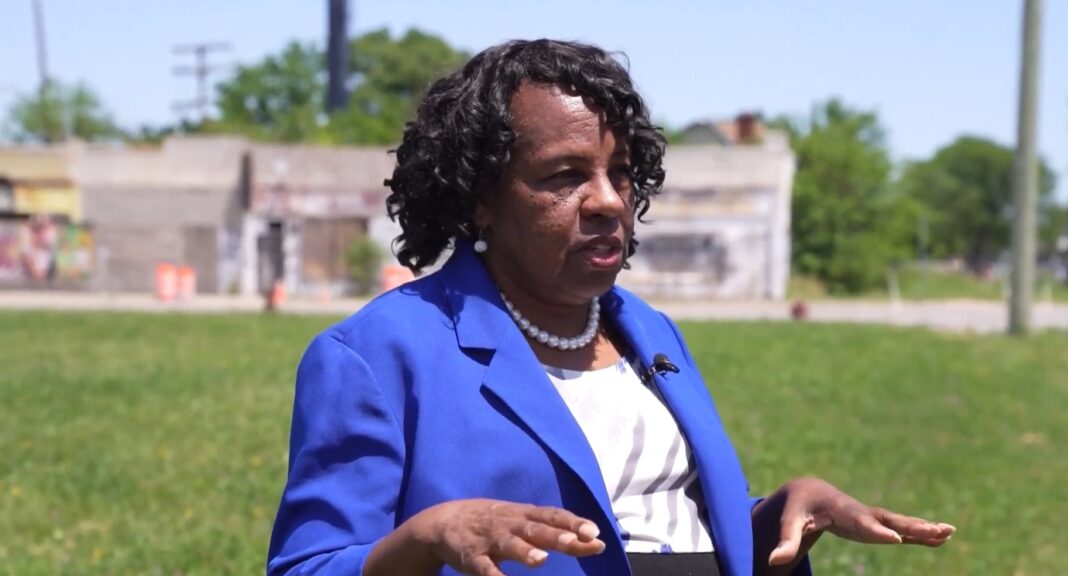


When Mayor Glenda McDonald talks about Highland Park’s future, she talks less about campaign slogans and more about construction projects, demolition sites and water pipes buried beneath city streets.
As she seeks another term in office, McDonald is making the case that after years of financial struggles, political turnover and stalled development, Highland Park is finally starting to gain traction. The challenge now, she says, is making sure the city doesn’t lose momentum.
“There’s a lot going on in Highland Park these days,” McDonald said during a recent interview.
At the top of her list is what she considers the biggest accomplishment of her administration: securing $100 million from the state to overhaul Highland Park’s aging water infrastructure system.
The project includes replacing lead service lines, installing new meters and modernizing a system that McDonald says residents have struggled with for years.
“One of the biggest accomplishments – and it wasn’t just me. I give credit to the citizens who went and helped us with the Senate and legislators and the governor’s office – was the water infrastructure project,” she said. “A hundred million dollars is unheard of, but we were able to get that done.”
For McDonald, the project is about more than infrastructure.
“They’re going right now putting in these lines, which children no longer have to worry about having lead pipes that can lead to lead poisoning,” she said. “Securing that funding for that is monumental.”
The mayor also points to visible changes happening around the city.
The recreation center is being renovated. New playground equipment is coming. Pickleball courts are being added. Baseball diamonds are being upgraded. Meanwhile, crews are continuing to tear down vacant structures that have been abandoned for decades.
Among the biggest targets is Highland Towers, a long-vacant high-rise that has become one of the city’s most recognizable eyesores.
“That has been an eyesore, and it’s been a public safety issue,” McDonald said. “It’s huge for Highland Park that we get these buildings down that have been standing for years.”
The demolitions are part of a broader strategy that McDonald believes could reshape Highland Park’s future. According to the mayor, roughly two dozen developers have expressed interest in building in the city once more properties are cleared and ready for redevelopment.
“We have approximately 20 developers waiting to come and buy up this land that we have and start developing housing projects, mixed-use projects, different things that we need in the city,” she said.
But getting development moving hasn’t always been easy. McDonald acknowledged that some projects have faced delays, including disagreements over property sales.
“We’ve had some small setbacks where City Council did not want to sell the properties,” she said. “Developers get frustrated with that.”
Still, she argues the city isn’t creating unnecessary obstacles.
“As long as the developers have everything they’re supposed to have, starting with their plans and making sure they go through the Planning Commission for approval, there should not be any problems,” she said.
One issue residents continue to raise is street lighting. For many Highland Park residents, dark streets remain one of the most visible reminders of the city’s long-running financial struggles. McDonald said she understands the frustration.
“The citizens deserve to have their lights back on in the city of Highland Park,” she said.
But she also argues that restoring every light at once would be financially irresponsible.
“We have to gradually increase what we can and do what we can to make sure that we’re not going back into those financial disparities,” McDonald said. “We don’t want to have to come to the citizens and ask them for tax increases for lighting because we know that they can’t afford it.”
Instead, she says the city is pursuing a combination of solar and traditional LED lighting while working to grow its tax base. That tax base, McDonald argues, is the key to almost everything else.
“As long as we own half of the city, that means we’re losing half the taxes,” she said of the fact that the city owns nearly half of the 2.9-square-mile city.
Her vision is straightforward: sell vacant city-owned land to qualified developers, create new housing and business opportunities, generate additional tax revenue, and use that revenue to improve city services.
“The key is to make sure that we get rid of these lots that we own to developers who are willing to build and provide housing, provide different mixed-use facilities so that we can get increases in our taxes,” she said.
The election itself presents another challenge. McDonald is facing three opponents, including community activist Mama Shu, whose work through Avalon Village has earned recognition far beyond Highland Park’s borders. Asked whether Mama Shu’s popularity presents a political obstacle, McDonald didn’t sound concerned.
“I don’t see any obstacles. All I see is progress,” she said. “All I see is the future of Highland Park.”
Instead, she framed the race as a choice between continuing projects already underway and starting over.
“In order to continue the progress, we have to continue the status quo, and that has been a problem in Highland Park over the years — the constant turnover of elected officials,” she said. “When you’re on a roll, you keep rolling.”
McDonald believes one of her biggest hurdles with voters isn’t her opponents but explaining how local government actually works.
“People think we’re supposed to just instantly be able to do something. That’s not how it works,” she said. “Everything is checks and balances. Everything has to either have approval, or it has to be a part of the process.”
As she reflects on her first term, McDonald says the job has changed her perspective on city government. She came to the mayor’s office after serving on City Council, but she quickly learned the executive role carries a different set of responsibilities.
“I’ve learned a lot about the finance of a city,” she said. “I’ve learned a lot about legalities and making sure that you’re staying within the guidelines of those legalities. I’ve learned a lot about our city charter and the things that’s good and the things that’s bad.”
Most of all, she says she’s learned patience.
“What I have learned is that slow and steady wins the race,” McDonald said. “There’s nothing that can be done in four years to build a city that’s been down for 25 year.”
Whether voters agree may be one of the biggest questions facing Highland Park this election season. McDonald argues the city is finally beginning to move in the right direction. Her opponents will undoubtedly argue that progress isn’t happening fast enough.
For her part, the mayor says she hopes residents focus on what has already been accomplished — and what she believes is still possible.
“I really want the citizens to know that Highland Park can be the best place ever. It was. It can, and it will be again if we work together as a people,” she said. “There’s nothing that can stop us from building this city back from where it is.”