
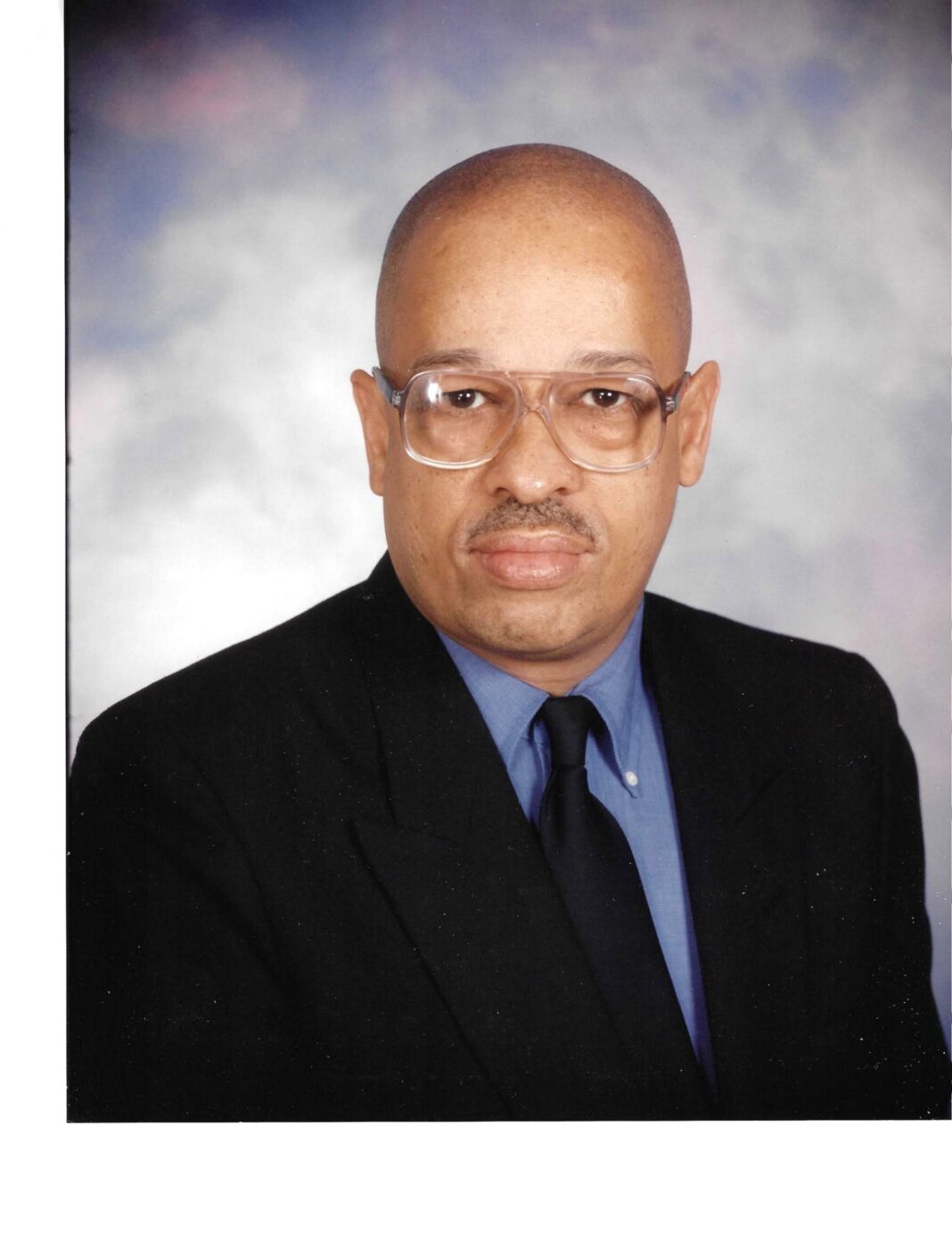


Steve Holsey, a veteran journalist who began writing for the Michigan Chronicle in his teens and would go on to spend the next five decades exclusively with the newspaper documenting the evolving Black entertainment scene in Detroit – as well as Detroit’s place in Black entertainment at large – has died. He was 77.
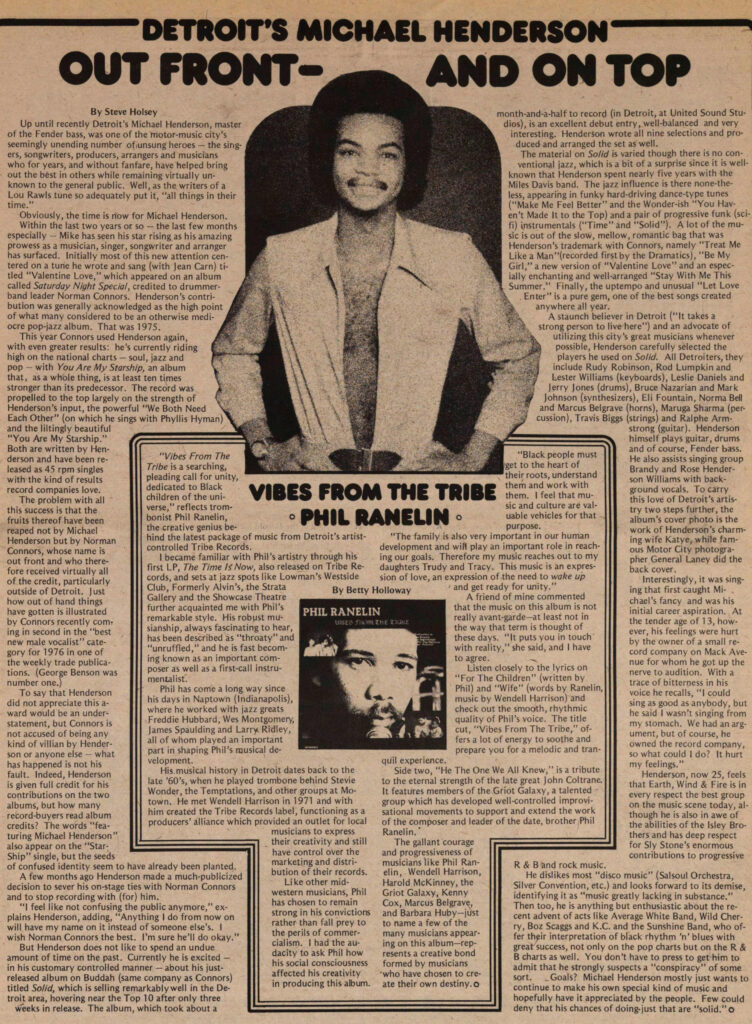
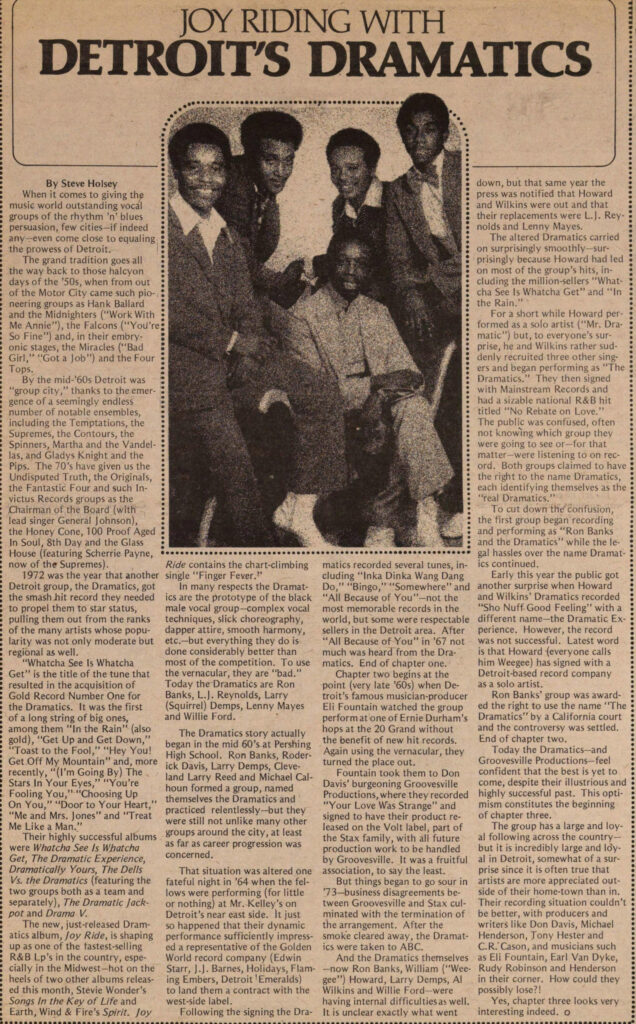
For years, “Let the music play!” was Holsey’s regular sign-off in his weekly column, which both set and followed trends in local and national entertainment. Arriving at the Chronicle in 1968, Holsey’s expansive notebook details Motown’s post-golden age when the company relocated its headquarters to Los Angeles just as a new crop of homegrown entertainers began to fill the void left behind; the increasing influence of Detroit as an entertainment stronghold for then-new Black creatives seeking to make a name for themselves; and countless interviews with both the big names in front of the lens and the ones holding the camera.
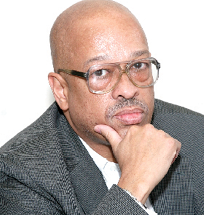
But despite the front-row seat and all-access pass to the show, Holsey himself preferred to remain behind the curtain. His identity was always known – each week, his headshot was printed in his column – and the amount of correspondence from readers and artists alike left in his archives are proof, but Holsey did not seek the limelight as some of his peers in entertainment media, nor traded his influence for favor among the celebrity elite.
“There are certain people who find their passion and their purpose, and that’s their payoff,” said PulseBeat.TV founder Greg Dunmore, whose father, former Chronicle managing editor Al Dunmore, mentored Holsey. “He would take his vacations going into the Michigan Chronicle office – for him, that was a form of a vacation. You tend to go where you enjoy, and there was no place Steve enjoyed more than the Michigan Chronicle.”
Holsey, by all accounts from those who worked with him, was “understated, but understood,” Dunmore said. And while any other Detroit newspaper journalist of similar stature with an uninterrupted tenure at a publication would be lauded with industry honors, Holsey did not seek out the awards and recognition. In retrospect, as his friends posit in remembrance, his enduring commitment to the Black press and its readers was to be admired, but perhaps a hindrance as to why the industry at large did not bestow him the same kind of accolades while his career was at its most active.
“He documented Detroit,” longtime media personality Montez Miller, who notes that Holsey was the first to write about her, says. “He documented our culture. He documented our entertainers, our artists, our community and the people who helped make this city who it is.”
In 1967, then a recent graduate from Southeastern High School and student at Highland Park Community College, Holsey spent some of his free time as a dancer on “Swingin’ Time,” a local teen dance show that featured area youth produced and taped across the international border at CKLW, a radio studio in Windsor. In the Chronicle’s regular “Teen About Town” feature, Holsey penned some thoughts about local radio stations and cross-pollination of their playlists.
“I think R&B stations should make a practice of playing more non-soul records, because some of ‘their’ music sounds pretty good,” Holsey wrote in the November 18 issue from that year. “After all, the non-soul stations play plenty of ‘our’ music, don’t they?”
How fitting that in the decades to come, CKLW’s radio station would be partly responsible for popularizing several “white” songs – chief among them, Elton John’s “Bennie and the Jets,” a song showing “Black music lovers are beginning to base record choices on personal appeal…rather than the race of the artist,” Holsey wrote in 1974 — among Black listeners in the region, while shuffle-happy deejays like The Electrifying Mojo would incorporate cuts like The B-52s’ “Mesopotamia” (“Zany, danceable and fun…but not for everyone,” Holsey cautioned in 1982) into rotation at Black outlets like WJLB. In retrospect, Holsey’s two-sentence proposal unwittingly serves as just one of many predictive looks into Detroit’s cultural future. Until then, a teenager’s wise-beyond-their-years insights caught the attention of Chronicle staff.
Ushered into the paper by then-entertainment editor Rita Griffin, Holsey began publishing full-length features and interviews the next year, eventually given space for his first column, “Steve and the Stars” in 1969. Griffin, the first Detroit journalist to interview Diana Ross, helped facilitate early interviews between the young Holsey and then-rising stars, including Bettye LaVette, Lonette McKee (a fellow dancer on “Swingin’ Time”), Spencer Barefield and Carl Carlton.
“You know, I’ve gotten press all over the world now, but nothing was important as those early pieces from Steve Holsey in the Michigan Chronicle. Nothing. It just doesn’t compare,” Detroit native Donnie Simpson, a one-time WJLB teen deejay who went on to become one of the faces of BET after a long-running radio career, says. “Steve was just cool. I liked him so much, and he was very kind to me. The first press I ever got was from Steve Holsey.”
Along the way, Holsey’s opinion-heavy writings prompted heated debate among Chronicle readers – and made him a must-read byline.
“I am forever tired of people, especially teenagers, criticizing Diana Ross and the Supremes,” Holsey wrote in 1969, the year Ross departed the group to begin her solo career. “Miss Ross is not a ham, a show-off or a phony. She’s Diana Ross. Whenever Black entertainers make it big and begin to appeal to a large audience or diversified in their musical selection, they are unjustly accused of deserting soul or selling out to white people.”
“Steve and the Stars” quickly gave way to Holsey’s next regular column, “Reflections” – perhaps “Reflections of the Way Life Used to Be” was too lengthy of a title – which would debut in 1970 and would remain a weekly fixture well into the 2010s. By now, Holsey was also a fixture in Detroit’s entertainment scene while simultaneously reinforcing the Chronicle’s stature as a go-to source for Black news across all subjects.
“Motown has asked me to announce that each member of the Jackson Five is alive and well in Los Angeles,” Holsey wrote in one column amid death rumors circulating among the Indiana boy band after the release of their first album, “Diana Ross Presents the Jackson 5.” Several anecdotes, far too numerous across 50 years to publish succinctly, lend to Holsey straddling a rare stance between Black Detroit and Black Hollywood.
“I contacted her at the Celebrity House Salon on Puritan where she is happily employed,” Holsey wrote about Betty Kelley, a former member of Martha Reeves and the Vandellas who’d seemingly gone MIA after leaving the group; “As far as the Jackson sisters are concerned, Janet is the most noteworthy in the talent department” he wrote two years before the release of “Control”; “Derek Dirckson, leader of the very popular group Chapter 8, reports that the group has been in the recording studio within the last few weeks recording their debut album,” one of a long string of tidbits about the local cabaret act that eventually launched its lead singer, Anita Baker; “There is something you should know about community activist Esther Gordy Edwards: She is a lady who truly loves Detroit,” he wrote about the sister of Motown founder Berry, the former of whom he shared lifelong friendship.
Admittedly, not all of Holsey’s takes aged as nicely. (“I, for one, will be glad when the currently popular expression, ‘shud up!,’ fades. But it’s not nearly as bad as ‘what up doe,’ he wrote in 1985.) But throughout the 1980s and 1990s, as veteran Black musicians entered the second phase of their careers, traveling stage plays hit their peak, and a crop of new Black directors began opening films at theaters, new waves of Black entertainment made Holsey a crucial link between readers in a million-plus Black city and the entertainment offerings around them.
Former colleagues note Holsey’s secondary role as a liaison between visiting celebrities, who’d always find an audience in Detroit, and the Chronicle – as well as its sister publications in the then-Sengstacke Newspapers chain. Holsey’s “Reflections” column, now a catch-all for all things Black entertainment beyond Detroit, was syndicated among readers in other cities, while he’d go on to represent the Black press at press junkets nationwide, or right at home at the Chronicle’s former Ledyard Street location in the Cass Corridor.
There’s Keenen Ivory Wayans making a stop on Ledyard after a “grueling” day of interviews to discuss how he and other Black filmmakers like Robert Townsend are able to be more flexible in making films like “I’m Gonna Git You Sucka!,” while also dropping a note to Holsey that a yet-to-be-titled film based on a Motown-style group called “the Heartbeats” is in the works. “This town has been so good to me over the years,” Phyllis Hyman told Holsey during a Detroit stop, before asking him, “Could I have one of those Michigan Chronicle 50th anniversary papers?”
The Chronicle, turning 90 years old this year, carried a Holsey byline for 50 of them, making him the longest-tenured editorial staffer at the publication to date, in body or in spirit – and perhaps the longest-running columnist at any Detroit publication, Black, weekly, or otherwise. His desk on the second floor of 479 Ledyard, looking out across a park to the Masonic Temple, would come to be stacked with piles upon piles of reporters’ notebooks over the years, next to a metal file cabinet filled with 8×10 headshots – many autographed – by the who’s-who over the years.
“I remember having this conversation with Frankie Beverly one night,” Simpson says during an hourlong conversation reminiscing on Holsey and the impact and importance of Black media, “And I said, ‘Frankie, I would never speak for you, but…you and I are similar in this regard in Black America, they have this love for us, man. We’re so blessed, it’s just amazing. But white America doesn’t really know us, you know?
“Now I would love to have the other, but I can die 100 percent happy without it just knowing that my people felt that way about me. That’s how I feel about the support I got from Steve,” Simpson added.
In that same 50-year timeline came just as many years of wisdom – frequently shared over one of two desserts from Mr. Fo-Fo’s, German chocolate or caramel cake — passed along to the many Chronicle staffers who came to be mentored by Holsey.
“Steve had an efficiency with words,” said Jill Day, the first woman to serve as the Chronicle’s associate executive editor. “It was never too little, never too much. But you always got exactly what you needed when you read them.”
A reserved but not reclusive presence around the newsroom, Day and several other staffers noted Holsey’s generosity when it came to sharing not just sweets, but entertainment knowledge – particularly when it came to the significance of reporting on both veterans and newbies. A devoted fan of Nancy Wilson, Billie Holliday and other jazz greats of days gone by, Holsey encouraged writers to live in the present while acknowledging the past.
“(He said) ’The only advice is I can give you is to write from your heart and your soul, and the audience will get it,’” Dunmore said. “I always think of what Steve Holsey would tell me. Let me just cut out all the bull**** and being so concerned what people would think, and let me just express myself from my heart.”
The amount of praise and criticism Holsey has received by mail – paper and electronic – could fill a post office at least twice over. One repeated piece of correspondence that Holsey received was invitations to Aretha Franklin’s annual holiday party; “Aretha was a fan of Steve Holsey. That’s a fact,” Dunmore said – but, in true Holsey fashion, declined the invite each time, choosing to eschew any hob-nobbing and elbow-rubbing.
The other came directly from Miss Ross herself sometime in the 2000s, in a personal letter of appreciation to Holsey for all the support over the years. “He was so excited to get that letter,” Dunmore said, “but I told Steve, ‘she should have written that letter 25 years ago.’ I think that letter came 25 years too late.”
Blessings to Montez Miller, Danton Wilson, Ken Coleman, Linda Moragne, Donnie Simpson, Greg Dunmore, Dr. Patricia Holsey, Ray Allen, Jill “Mom” Day-Foley, and the many, many others too numerous to name for the assistance in eulogizing Steve.
Condolences and appreciations can be sent to the Michigan Chronicle, c/o Dr. Patricia Holsey, 1452 Randolph Ave., Detroit, MI 48226, or via email to newsdesk@michronicle.com. For email correspondence, please write “Reflections” in the subject line.