
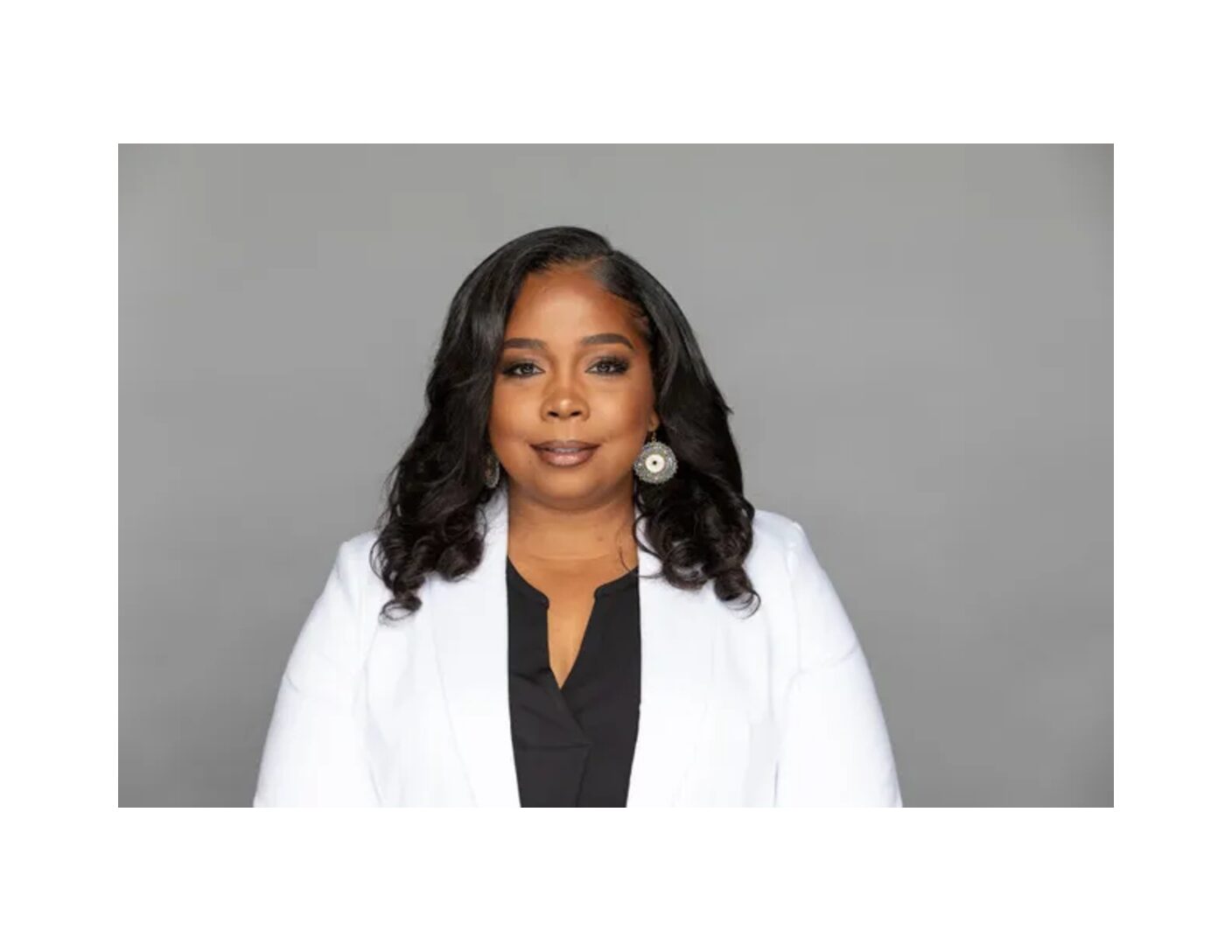

Detroit Public School Community District (DPSCD) board elected LaTrice McClendon as president Tuesday, putting a DPSCD parent of three and fourth-year trustee in the seat that sets the board’s agenda and tone for a district still fighting to raise literacy, cut chronic absenteeism, and rebuild community trust in how decisions get made.
“This is my fourth year on the board, and this is the last year in this term unless I decide to run again,” McClendon said.
“I started off as just a regular board member. I had to learn the ropes. I’ve been on several committees,” she said. “Last year I was the vice chair.” McClendon said she had the opportunity to serve as president last year, yet stepped back when then-colleague Corletta Vaughn wanted the role. “This year, the board collectively voted me in as president of the Board of Education,” she said.
The 2026 officer slate reflects that shift: McClendon as president, Bishop Corletta Vaughn, Ph.D., as vice president, Monique Bryant as secretary, and Dr. Iris Taylor as treasurer, according to the district’s announcement following the organizational meeting.
McClendon’s presidency arrives with a profile Detroiters know beyond education politics. She joined the John S. and James L. Knight Foundation in August 2023 as director of the Detroit program, overseeing investments meant to strengthen informed communities and support projects tied to Detroit’s culture and resident power. The Michigan Chronicle has also publicly recognized her as a Power 50 leader, placing her among those shaping the region’s political, economic, and civic direction.
That civic résumé does not erase the basics of what families want from DPSCD. It raises the expectation that the board can communicate clearly, govern with discipline, and push the district toward measurable improvements.
“As a parent, I’m not just talking about school board stuff and making decisions in theory. I’m making it in practice,” McClendon said. “I have three children in the district, some in middle school and one in high school. I understand what my children face every day they walk into a Detroit public school.”
“I believe that diversity of thought matters,” she said. “My heartbeat and my goal for this role is to make sure that we are grounded and reaffirmed that our students should come first. At every decision we make, every policy we consider, every dollar we advocate, all of that must be centered around what is best for the young people we serve.”
Chronic absenteeism remains one of the loudest warning signs across Michigan, and DPSCD is still battling rates that would overwhelm most districts. State data reported in 2024–25 shows 60.9% of DPSCD students missed 10% or more of the school year, though the same data also shows Detroit’s rate has improved enough to dip below its pre-pandemic benchmark for the first time in years.
Literacy remains another high-stakes pressure point. Detroit has seen incremental gains on state assessments, including an 11-year high in third-grade reading proficiency, yet the share of students reaching proficiency is still far below statewide rates, a gap that shapes everything from long-term graduation outcomes to whether students can fully access advanced coursework later on.
McClendon’s answer to that reality is governance that the public can actually see.
“Because we are a governance board, strong governance means transparency,” she said. “It is our job as a board to ensure that our one employee, which is our superintendent, upholds the district’s vision and mission.”
“For me this year, I’m pushing this concept of transparency,” she said. “Stakeholders should know exactly what we’re doing. We should be listening to our stakeholders. We should be open about the decisions that are being made.”
She described one immediate change meant to reduce confusion and stop information from traveling through separate committee lanes. The board is moving away from siloed committee meetings where different audiences hear different information at different times.
“We used to meet with individual committees for academics, finance, and policy,” McClendon said. “We’re going to start having one meeting as a whole to break down silos and allow the public and ourselves to hear information at the same time, disseminated from our superintendent.”
She said the board is also planning more study sessions “where the board as well as the community can get a better understanding of what’s happening all around the district.
“Our priorities have to remain clear,” she said. “We need to advance literacy in our schools. We need to focus on college and career readiness. We need to focus on whole child support.”
Her “whole child” approach includes what Detroit families have been saying for years: students do not arrive at school as blank slates. Transportation, health needs, housing instability, and family stress show up in attendance patterns and classroom performance. McClendon did not treat chronic absenteeism as a moral failure. She framed it as a system problem that requires the district to respond with urgency and strategy.
“We have a lot of work to do,” she said. “We have to close the gap with our chronic absenteeism. We have to make sure our kids are able to get to school, whether they’re using the city bus or riding a bus service that we provide.”
That emphasis on getting students to the building connects directly to what the numbers say about opportunity. Detroit students have shown they can improve when conditions support them. The district has also invested in attendance work over time through strategies that include outreach and partnerships, efforts that have been linked to Detroit’s recent progress compared to earlier pandemic years.
McClendon repeatedly returned to collaboration, arguing that the district cannot operate like a stand-alone institution in a city where families rely on layered systems to survive.
“We need more collaboration and partnerships because I really believe it takes a village,” she said. “We can do a better job with our relationships. We should be connecting with nonprofits, grandparents, and really the whole community.”
She also spoke about building a strong relationship with Detroit’s new mayor, Mary Sheffield, noting that city leadership has signaled education as a priority and that coordination matters if the goal is to put students first across systems that touch their lives.
Her view of Detroit students is also a direct pushback against the narrative that frames DPSCD kids as deficient.
“We have brilliant minds, brilliant children,” she said. “We have an opportunity issue. We have to make sure we give all of our students opportunities to excel.”
McClendon’s most personal argument for the district came through her own schooling and her choice as a parent.
“I’m a proud DPSC grad,” she said. “I’ve had the privilege of being a bank president. I’ve had the privilege of being an executive on several levels, managing local foundation work. I’ve always carried the pride of being a DPSCD student.”
“My children are in DPSCD not because I have to,” she said. “I could afford private school. They’re in DPSCD because I know we have excellent schools, excellent teachers, excellent administrators. I know they can get an excellent education.”
“I want my children to say they were proud, just like I was proud,” she said. “My education helped me get to where I am today.”
The board’s leadership shift is now set for the 2026 governance year, McClendon said the role is effective immediately following the organizational meeting and framed the moment as one that should bring partners to the table, not add another layer of talk.
Parents and taxpayers will judge the presidency by outcomes and clarity: whether literacy gains grow beyond incremental improvements, whether attendance continues trending down from crisis-level absence, whether decision-making becomes easier to track, and whether the board’s public posture matches what families experience when they need help.
McClendon said the standard is not complicated.
“Our students should come first,” she said. “Every decision we make, every policy we consider, every dollar we advocate must be centered around what is best for the young people we serve.”