
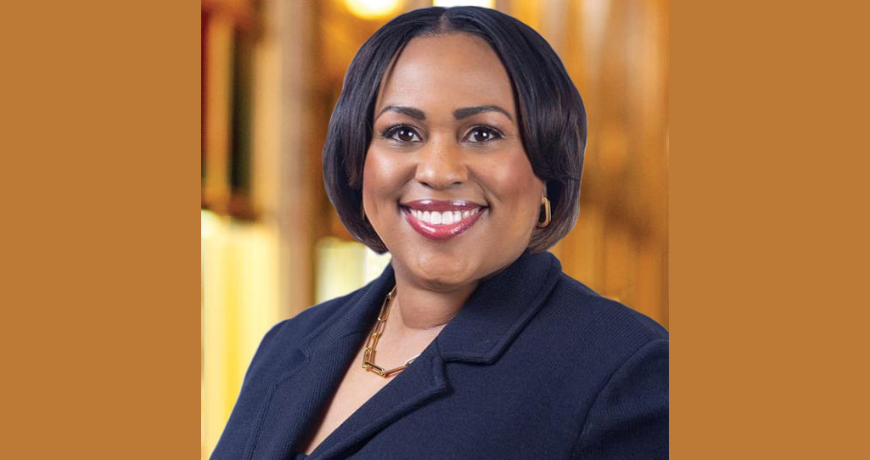


By Dr. Darienne Hudson, President/CEO United Way for Southeastern Michigan
Most of us know what it feels like to fall behind.
A surprise medical bill. A childcare issue that forces you to rearrange your entire week. An unexpected expense or unforeseen challenge that leaves you playing catch-up for the rest of the month.
For some families, those moments are temporary. For far too many of our neighbors, these struggles are an ongoing, daily reality.
Before we can close the gaps holding families back, we have to acknowledge how wide those gaps have become.
At United Way for Southeastern Michigan, we see these challenges every day. We hear from parents juggling work and the rising cost of necessities. Seniors stretching fixed incomes to cover food, medicine, and housing. Young adults struggling to keep up with today’s costs while trying to build a future for their growing families.
Before I came to United Way, I spent my career as a teacher and superintendent. I saw firsthand how financial instability shapes a child’s experience at home and in the classroom. When family budgets are strained and caregivers are stressed, children carry that burden with them.
The latest ALICE (Asset Limited, Income Constrained, Employed) Report, released by the Michigan Association of United Ways, reinforces what we’ve been seeing across the region for years. It shows that 41% of families across Macomb, Oakland, Washtenaw, and Wayne counties struggle to cover the cost of a no-frills monthly budget including only basic needs like food, housing and healthcare. Whether someone lives in Detroit, Warren, Pontiac, Ann Arbor, or any other community we serve, we hear the same message: working hard no longer guarantees financial stability.
By comparing basic expenses to what households are actually earning, the ALICE Report provides a much more accurate picture of financial hardship than traditional poverty measures. For example, the Federal Poverty Level (FPL) is primarily based on food prices established in the 1970s and indexed to inflation, meaning it doesn’t adequately capture the reality of rapidly rising essentials.
While 15% of households in southeast Michigan are reported to live at or below the poverty level, an additional 27% of households earn below the ALICE survival budget. Combined, these two numbers make up the percentage of total Michigan households living below the “ALICE Threshold.”
ALICE households—working families with earnings above poverty but less than the basic monthly survival budget—often make too much to qualify for many forms of assistance. Meanwhile, the rising of basics like food and gas are putting stability further out of reach.
In 2024, the annual survival budget for a family of four with two adults and two children in southeast Michigan reached more than $97,000 as childcare costs alone increased by nearly 28% in a single year.
A family of four needs to earn $48.84 an hour to simply make ends meet. Yet, nine out of 10 jobs in our region pay a median wage far below what is needed to meet this allowance. Even households with two full-time earners often struggle to keep up.
The report is also a stark reminder that hardship does not affect everyone equally. Nearly 62% of Black households in Michigan fall below the ALICE Budget Threshold as do nearly 73% of single parent-headed households
These numbers do not happen by accident. They reflect longstanding barriers to opportunity, education, employment, and wealth building that have continued to shape outcomes from the founding of our country to present day.
In addition to the ALICE report, calls to United Way’s 211 helpline provide a real-time view into what happens when families can’t make the budget math work.
Each day, our Southeastern Michigan 211 call center receives nearly 800 calls for help with utilities, food, housing, and other basic needs. Call volume has remained above pre-pandemic rates as the challenges families face remain very real.
Those we hear from are not asking for a shortcut. They are working, budgeting, sacrificing and doing what they can to get ahead. The problem is that costs are rising faster than their paychecks.
Together, the ALICE Report and 211 data offer meaningful insight into the health of our community. Both point toward growing financial strain for far too many families.
The impact of more than a third of local households facing financial struggles reaches far beyond individual families. Employers face workforce shortages and higher turnover. Children arrive at school carrying the weight of financial instability. Older adults delay needed care. Local economies lose momentum.
That is why United Way advocates for change in addition to providing support services. We champion policies such as the water affordability package and free school meals for all, while also supporting innovative solutions like RX Kids that help reduce financial strain on families. We bring together stakeholders from every community to solve complex challenges no single organization can solve alone.
Meeting this moment will require all of us. Employers, policymakers, educators, nonprofit organizations, philanthropists, and neighbors all have a role to play in ensuring every family in every zip code has an opportunity to thrive. We owe it to ALICE, and we owe it to ourselves. When families thrive, our communities thrive along with them.
Dr. Darienne Hudson is a high-energy nonprofit executive and life-long educator serving as President and CEO of United Way for Southeastern Michigan, located in Detroit and serving Macomb, Oakland, Washtenaw and Wayne Counties.