

Detroit enters 2026 at a crossroads politically, economically, and structurally.
It will be defined by the arrival of a new mayoral administration, a revamped City Council, and a statewide election cycle that promises intense attention on Detroit’s voters, and these events and others have set the stage for a transformative year.
Meanwhile, neighborhoods continue demanding fairness: fair housing, fair policing, fair taxation, and fair representation. And after the Detroit Reparations Task Force submitted its sprawling 558-page report in late 2025, the question of how Detroit repairs past harms — or whether it will at all — hangs over everything.
As the city prepares for what could be one of the most consequential years in recent memory, the Michigan Chronicle has identified 10 of the most important issues Detroiters should watch in 2026.
These challenges will shape not just the political headlines, but everyday life: how families live, what neighborhoods look like, whether businesses thrive, and what kind of city Detroit chooses to become.
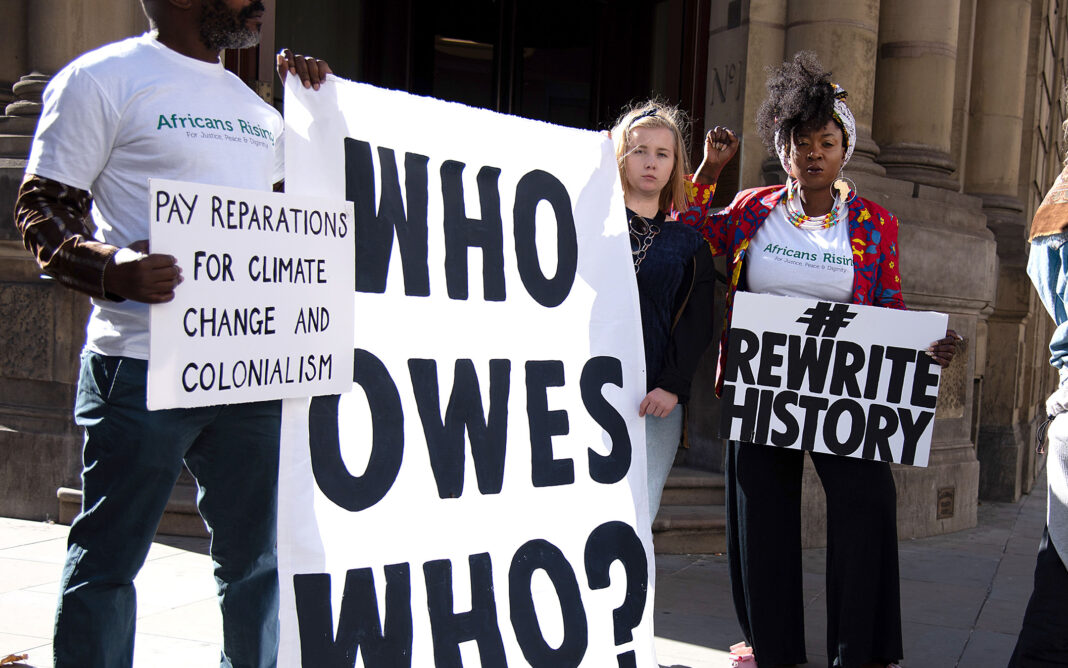
1. Reparations at a Turning Point: Will Detroit Act — or Retreat?
When the Detroit Reparations Task Force delivered its long-awaited report in October 2025, it presented a list of policy proposals while at the same time outlining a moral reckoning. Housing investment, water affordability, business grants, environmental remediation zones, police accountability reforms — the plan offered a comprehensive roadmap for generational repair.
In 2026, the plan’s fate hangs entirely in political hands.
Neither former mayor Mike Duggan nor new mayor Mary Sheffield have publicly committed to any portion of the report. City Council members are divided — some arguing for incremental adoption, others expressing skepticism about cost, implementation, or eligibility requirements tied to lineage.
Meanwhile, community activists insist that a ballot-initiated Task Force — launched with overwhelming voter support — demands more than symbolic acknowledgment. They expect action. Whether the city embraces the report or buries it in committees will reveal Detroit’s political soul.
This year, residents should watch for:
- Whether council will adopt any of the recommended housing grants or water reforms.
- How the city plans to define eligibility and verify lineage.
- Whether a Reparations Administrative Office will be created — the backbone of program implementation.
- How Detroit navigates funding debates without pitting neighborhoods against downtown interests.
2026 could mark either the birth of modern municipal reparations — or the moment Detroit turns away from bold repair.
2. Mayor Mary Sheffield’s First Full Year: Leadership, Priorities, and Power
Detroit’s new mayor enters office at a time of both opportunity and volatility. The first 12 months will reveal priorities, governing style, and political alliances — especially around development, public safety, and neighborhood investment.
Key areas to watch:
Hiring and departmental restructuring: The administration has already began to bring in fresh leadership, but she’s also showing that she will rely on continuity in certain departments like communications and neighborhoods?
Development philosophy: Does this administration break from the city’s decade-long downtown-first model? Or continue tax incentives and mega-project partnerships?
Budget choices: The 2026–2027 budget cycle will show where spending shifts — particularly in response to the reparations report, housing demands, policing reform, and a lack of federal funds the city has been getting for the past half decade from COVID relief.
Neighborhood engagement: A central question: Will the new mayor create meaningful channels for community participation or rely on traditional top-down processes?
Detroit hasn’t seen an open mayoral transition in years. The political mood is shifting — and the Chronicle will be watching how the new administration sets the tone.
3. City Council Dynamics: Budgets, Battles, and Political Ambitions
The mayor’s office sets the agenda, but City Council will determine how — or if — it gets executed.
And with new members who have differing political beliefs, expect there to be some early headlines about how well the group will mesh.
Council members are already bracing for fights over:
- tax abatements and developer incentives
- police funding and oversight
- water affordability and drainage fees
- expansion or rollbacks in surveillance technology
- enforcement of community benefits agreements
The budget season, beginning in spring, will be especially trying.
A critical storyline: Will council unify or splinter into factions that slow progress on key issues?
Detroit’s governance in 2026 will live or die on the relationship between council and the mayor’s office.
4. Development Flashpoints: District Detroit, I-375, and Neighborhood Revitalization
Detroit’s development landscape is entering a new phase — one defined by questions of equity and accountability.
District Detroit projects, shepherded by Ilitch and Olympia Development, remain a lightning rod after years of stalled promises and generous tax breaks. In 2026, several key developments are scheduled to hit major milestones, and residents are watching to see whether promised jobs, housing, and community benefits materialize.
Michigan transportation officials pressed pause on a plan to reconnect Detroit neighborhoods with the I-375 Reconnecting Communities Project, saying the $500 million effort to replace the sunken freeway with a surface boulevard would not break ground in 2025 as planned. The Michigan Department of Transportation cited surging costs, concerns about long-term durability, and sustained public opposition as reasons for the delay. While the project might not take off in 2026 either, planning for it will be imperative this year.
And across Detroit’s neighborhoods, redevelopment remains uneven. Community groups want:
- more affordable housing that matches local incomes
- repair funds, not displacement
- fewer corporate abatements
- stronger enforcement of Community Benefits Agreements
- a real strategy for vacant land and commercial corridors
2026 could redefine whose interests Detroit’s development machine serves — the corporate core, or the long-neglected neighborhoods beyond it.
5. Detroit Public Schools and the Fight for Education Funding
Detroit education policy is entering one of its most uncertain eras. The district faces:
- aging buildings with billions in deferred maintenance
- persistent teacher shortages
- declining enrollment
- challenges expanding mental-health and wraparound services
- digital access disparities
- pressure from charter school expansion
State funding remains the biggest obstacle. Detroit Public Schools Community District (DPSCD) continues pushing for equitable per-pupil funding, facilities support, and legislative revisions that address decades of underinvestment.
2026 will also feature debates over:
- use of formerly shuttered school buildings
- implementation of African-centered curriculum initiatives
- youth sports infrastructure
- free internet access programs
- STEM and skilled trades expansion
The future of Detroit’s children — and the future of the city — hinges on what Lansing and local leaders decide this year.
6. Transportation and Mobility: A System Struggling to Meet a Growing Need
If Detroit wants true economic mobility, it needs physical mobility. And right now, the system is strained.
Although service in recent years has drastically improved, DDOT continues to grapple with:
- unreliable bus schedules
- driver shortages
- aging fleets
- inconsistent safety and cleanliness
Meanwhile, repeated attempts to build a coherent regional transit system — linking Detroit to Metro Airport, the suburbs, and major employment zones — remain stalled by political resistance outside the city.
In 2026, key developments to watch include:
- potential regional transit ballot initiatives
- state-level road funding tied to electric vehicle adoption
- mobility pilot programs (microtransit, autonomous shuttles, bike and e-scooter expansion)
- long-term plans for walkability and safe streets in neighborhoods
Detroit’s transportation infrastructure is a mirror of its inequality. 2026 could be the year the city decides whether mobility becomes a right — or remains an afterthought.
7. Water, Sewage, and Stormwater Reform — Detroit’s Infrastructure Reckoning
Few issues cut as deeply across class, race, and neighborhood lines as water.
After years of shutoffs, drainage fees, basement flooding, and tension with the Great Lakes Water Authority (GLWA), Detroit enters 2026 with an opportunity to reshape its water future.
Key storylines:
Affordability: Will Detroit adopt an income-based billing system that caps water and sewer charges at a percentage of household earnings?
GLWA negotiations: Detroit currently shoulders the vast majority of sewer system costs. Leaders are pushing for a more equitable cost-sharing model.
Flood mitigation: With heavier rains fueled by climate change, Detroit must accelerate stormwater infrastructure upgrades — or face repeated basement backups and neighborhood damage.
Liens and shutoffs: Advocates want the city to permanently end the practice of converting water debt into property liens.
Water is more than a utility. It’s a justice issue. And 2026 will test whether Detroit treats it that way.
8. Public Safety and Policing: Trust, Transparency, and Transformation
Policing remains one of Detroit’s most emotionally charged issues. In 2026, several debates will take center stage:
Police accountability: Calls for greater civilian oversight, transparency in use-of-force cases, and restrictions on surveillance technology will intensify.
Staffing shortages: The department continues struggling with retention and recruitment — particularly of Black officers.
The future of “One Detroit”: Advocates want to dismantle the multi-agency initiative, which they argue over-polices Black neighborhoods.
Community-based alternatives: Grassroots violence interruption groups, restorative justice programs, and mental-health response teams are asking for stable and expanded funding.
Technology: Facial recognition, license plate readers, and real-time crime centers will face renewed scrutiny.
Public safety in Detroit is not a binary debate. It’s a question of equity, accountability, and whether the city can invest in safety without sacrificing the civil rights of its residents.
9. Michigan’s 2026 Statewide Elections — and Their Implications for Detroit
Detroit’s political power often lies in its turnout. In 2026, every major statewide office is on the ballot, including governor, attorney general, secretary of state, and all 148 state legislative seats.
What’s at stake for Detroit?
- school funding and facilities dollars
- water affordability legislation
- environmental justice enforcement
- transportation and transit funding
- criminal justice reforms
- community development grants
- tax policy affecting cities and families
Expect national attention on Detroit’s voters — especially young voters, Black voters, working-class families, and residents in neighborhoods that have historically been ignored by statewide campaigns.
Candidates who win statewide will shape Detroit’s fiscal, educational, environmental, and economic landscape for years to come.
10. Big Events & Detroit’s National Spotlight: Who Really Benefits?
In recent years, Detroit has hosted major national events — from the NFL Draft to prominent conferences and cultural festivals. These events bring visitors, media attention, and investment.
But they also raise important questions:
- Do the economic benefits reach neighborhoods, or remain concentrated downtown?
- Who gets contracts and vendor opportunities — big companies or local small businesses?
- Are residents displaced or inconvenienced by event-related construction, closures, or policing?
- How does the city leverage national attention to strengthen long-term community investment?
In 2026, Detroit will continue drawing major events. The Chronicle will be watching whether these moments become catalysts for inclusive growth — or simply downtown spectacles.
Looking Ahead: A City Defining Its Future
Detroit has been here before — at moments of potential transformation, where decisions made in council chambers and state capitols ripple into classroom sizes, water bills, bus stops, police encounters, housing stability, and neighborhood futures.
But 2026 feels different. The stakes seem clearer. The demands from residents are louder, more organized, and more urgent. But the vision also seems brighter with Mary Sheffield at the helm.
This year will test whether Detroit’s leadership is bold enough to confront the city’s deepest structural issues — or whether familiar patterns of delay, division, and deferral take hold again.
What happens next — in reparations debates, school funding battles, development negotiations, water reform, and political showdowns — will shape Detroit for decades.
And the Michigan Chronicle will be here to cover it, ask the hard questions, and amplify the community voices that must be at the center of every decision.