
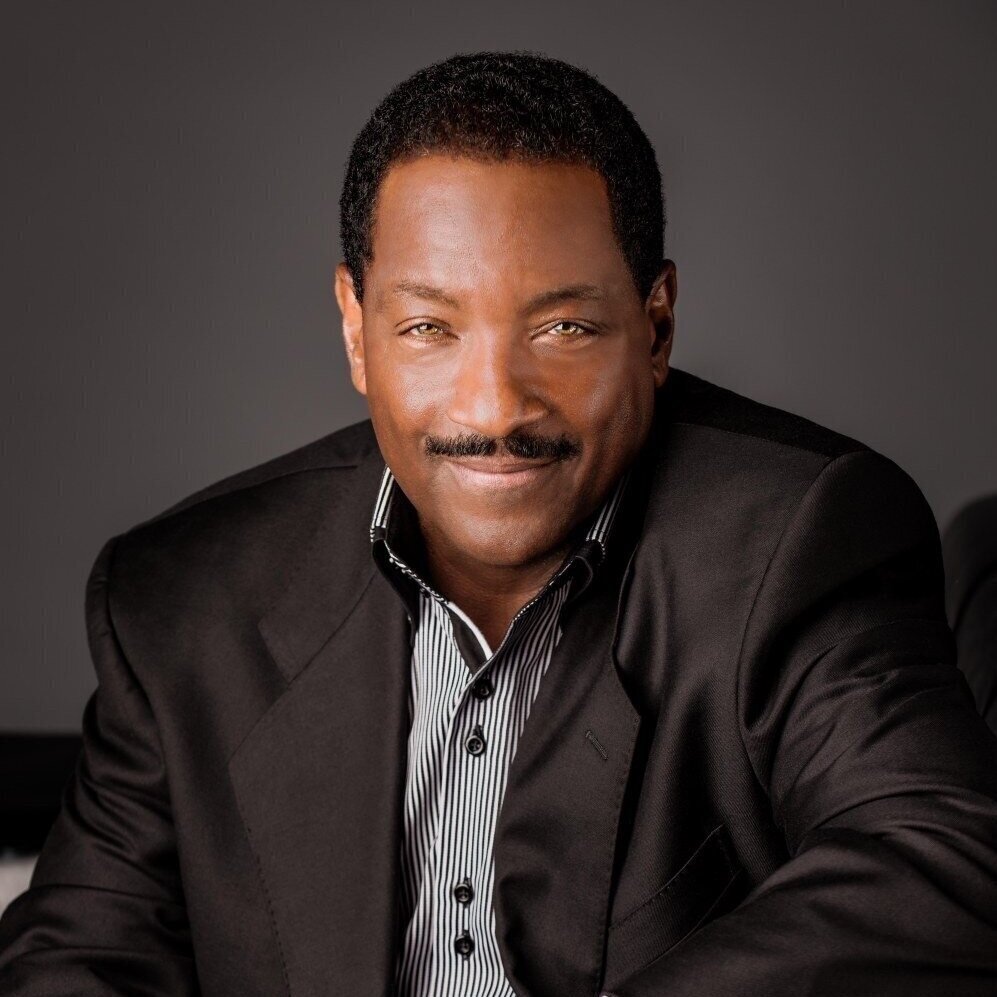


It’s a late Friday evening in the DMV, and Donnie Simpson is at home reciting a Ice-T verse word-for-word over the phone to a journalist in his hometown of Detroit while also trying to remember where his grandson’s next hockey game is being played.
The two parties here could be doing literally anything else on a Friday night, including but not limited to listening to quiet storm radio in either the D or D.C. – but more on that, and a few other topics, later. Instead, Simpson is waxing nostalgic about his beginnings working in his parents’ record shop on Six Mile back in the day, nurturing the next generation of Simpson grandkids (there are six) right now, and what to do with all these memories from the years between.
“It’s funny, man. I feel like all my life, all my career….people have been trying to urge me to write a book since I was 19 in Detroit,” says Simpson, who as of late has something of a third career as a keeper of history after two careers making it.
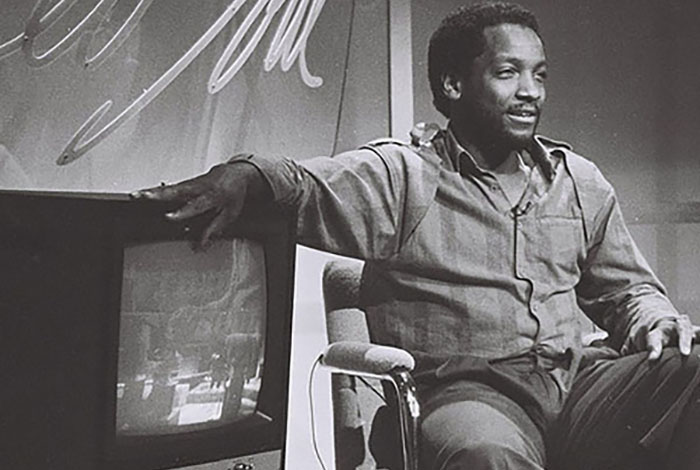
Simpson was originally brought to this conversation for more sympathetic purposes. On September 30, longtime Michigan Chronicle entertainment editor Steve Holsey passed away, prompting an outpour of memories and gratitude from many of the subjects who’d first earned ink in this publication by way of him – including Simpson, who was championed by Holsey from the beginning when he was a teenager spinning records on WJLB, throughout his professional radio career in Washington D.C. and beyond as he moved into syndication, and his subsequent move into television, most notably as one of the first hosts on the then-new Black Entertainment Television cable network.
But of course, Simpson couldn’t have come this far and still be here by being a man of few words. Holsey often wrote in his column to “come and get these memories,” borrowing a lyric from Martha and the Vandellas. Here’s enough memories to fill the entire State Fairgrounds.
This conversation has been edited and condensed for clarity.
AF: I’ve been asking friends and colleagues of Steve to just give me their first impression of him, or when they first met him. What do you remember most?
DS: Steve was very, very cool. I just liked him so much, and he was very kind to me. I mean, he always did his job, but you know…I’ve always been very fortunate that I never had any bad press. Thank God. I mean, never. And that goes way back to the beginning in Detroit. And the first press I ever got was from Steve Holsey and the Michigan Chronicle. You know, that was so important to me. To this day, it is. The most important.
AF: Did it have any more impact on you coming from the Black newspaper?
DS: Well, let me tell you like this. I remember having this conversation with Frankie Beverly one night. And I said, “Frankie, I would never speak for you, but on this particular issue, I think you would agree with this. But I want to say it, and that is this: You and I are similar in this regard — In Black America, they have this love for us, man. We’re so blessed, it’s just amazing. But white America doesn’t really know us, you know?” I sit here now, and I would love to have the other. But I can die 100 percent happy without it just knowing that my people felt that way about me.
Frankie said, “100 percent, man. 100 percent.” So, that’s how I feel about the support that I got from Steve and the Michigan Chronicle. You know, that was ours. And that nothing could ever surpass that to me. To know that my people supported me like that, man. That Steve supported me like that. You know, from the beginning, always supported me. And I just…I just never forgot it. Just never forget it. It still means the world to me. You know, I’ve gotten press all around the world now, but nothing was important to me as those early pieces from Steve Holsey in the Michigan Chronicle. Nothing. It just doesn’t compare.
AF: There’s something to be said about that late-1960s, early-1970s era in which you and Steve both started your careers. It seems like there was an entire generation of Black men all coming to prominence in various forms of entertainment media – Don Cornelius with “Soul Train” sort of being the nucleus of all this.
DS: I definitely agree with that, but Steve was just important for our culture, for our entertainment in general, for Michigan. I mean, his position was huge to me. I mean, that’s where we got our ink. I was fortunate enough that the Detroit Free Press and the Detroit News would cover some things sometimes, but Steve was there for everything. You know? He was always there, just always.
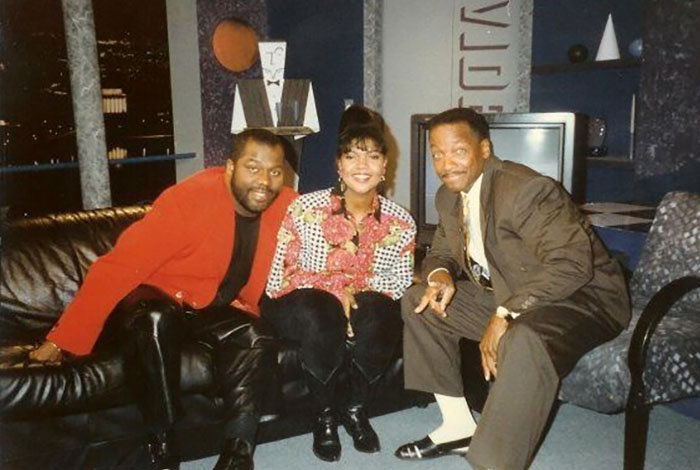
It’s like people always talk about TV, like back in the day when I was a kid, I remember running home because word would pass around school that [for example], the Temptations are going to be on Mike Douglas today. You know, one of those talk shows at 4 o’clock. Man, we’d be running home from school to see that, because we got such few chances to see us on TV. And so Steve and the Michigan Chronicle was something where we did get a chance to see ourselves, to see us in print. And that’s significant.
AF: You were a teenager on the air at WJLB. Steve started writing for the Chronicle when he was 18. Most of Motown’s roster in the beginning was still in or barely out of high school. What was in the water back then that made Detroiters want to put themselves out there at that age?
DS: Well, you know, I think it’s very simple. I don’t know if it’s so much courage or strength as it is God putting you in the position He wants you to be in. You know? I was just pushed. And I always said through people, I was always pushed where I needed to be. And that push, I have no doubt, came from above.
When I was working in my mother’s record shop at 14, 15 years old and people would come in there and say, “You sound like a DJ, you ought to be a DJ”? It was in one ear, out the other ear. I wanted to be a Baptist minister; that was my first ambition. Then, you know, we had [WQBH deejay] Al Perkins come by my mother’s record shop and do a show live there one day and it was just, “Oh, my god!” When I went into that little booth and saw him patting his feet to the music with them headphones on, just jamming? I was like, man, I could do that. That’s exactly what I want to do right there. A career was born from that moment. But all those people had been telling me prior to that, “you ought to be a DJ.” And it happened.
AF: And you carried that to TV?
DS: When they would come see me do my show, now they’d say, “See, you ought to be on TV. You ought to be on TV.” There it went, you know? Eventually I was pushed there. I don’t view it so much as courage because I just view it as following God’s plan. It was just divine to me. Was this divine pushed me? That’s the way I look at it.
AF: Something else I’ve just realized in talking with folks is that not only do you and Steve have these very long media careers, but that folks talk about Steve letting the work speak for itself – yet he’s still recognizable among readers. You’re a household name across Black America and we could readily say the same about your work. I’m wondering how have you been able to keep your name out there, but do it in such a way that we know your name just as much as the celebrities you interview, but not outshine the celebrities themselves?
DS: Oh, I ain’t never above anybody, you know. Man, please. [Laughs.] That is such a great, great question, by the way – I’m not sure I’ve ever been asked that, man. I really appreciate this question. Because for me…wow, how can I address this?
You know what? I’m going to go back to something I learned, and it was from Johnny Carson. But it was via Jack Benny. And it’s just something I saw Johnny talking about that he learned once. It’s like you, if you look at a lot of the talk show hosts today, it’s almost like they use their guests to set up themselves.
AF: Mm-hmm.
DS: Johnny said that Jack Benny once told him that it doesn’t matter who has the line, it only matters that it’s on your show. Because tomorrow, all they’re going to say is, “did you see Jack Benny last night?” And that’s true. And I never forgot that, man. That was so important to me. And you look, if you look at Johnny, who is the ultimate host to me – there’s never been anyone better — when his guest came on there, he was a facilitator, man, it’s their time to shine. It’s not about you. It is time. You know, you are to set a stage and let them shine. You’re a facilitator. And that’s what I always felt. That’s what I always believe, man. It’s, you know, and again, that comes from a lesson well learned from the best, just from something that I saw him talk about one day. It was just amazing to me.
And it’s amazing that you get to the point where the celebrities that you host come in and they’re freaking out because they’re in there with you. You know, it’s half a trip. It’s like, what? You know, I still can’t believe the reaction sometimes that people have to you. But that shine comes from being in their spotlight, to me.
AF: Do you feel like – for lack of a better term – your favorite celebrity’s favorite celebrity?
When I was inducted into the R&B Music Hall of Fame, man, I was so blown away. I never sung a song. I never played on one. I never wrote one. But they saw value in what I did. and decided to put me in the whole thing. I said, “you are the coolest people on earth, and for one night, you let me be in your group.” Now, I’m only in the group for one night. Temptations ain’t gonna keep me. I can’t sing. I’m just there for one night, you know. I’m not the light. I’m a recipient of it — a reflection of light, if you will.
AF: So I’m going through the Michigan Chronicle archives, and I noticed that every time Phyllis Hyman visited Detroit, she made it a point to visit the Chronicle newsroom.
DS: Wow.
AF: But seeing Phyllis’ name so much reminds me of the clip of when you’re interviewing Patti LaBelle on “Video Soul” and Phyllis surprises her mid-interview with a rose bouquet, to which Patti responds, “I’ll make you some chicken when I get home.”
DS: Oh, really? I don’t even remember that, man.
AF: You don’t remember that? That’s one of your most viral clips on YouTube.
DS: No, not at all! That’s awesome!
AF: But there’s a kind of comfort of knowing that only something like that could happen on “Video Soul,” or that Phyllis really felt at home in certain spaces in Detroit. And we talk about this a lot now in modern media, this idea of Black celebrities opening up more when they’re talking to us, even though this is not a new concept. I’m wondering what your thoughts are around this.
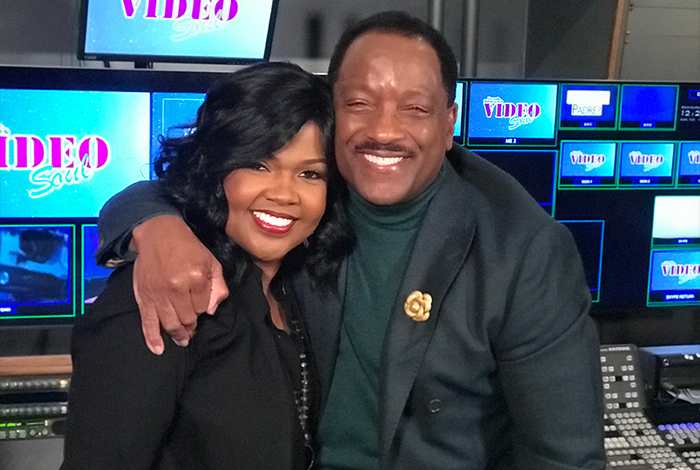
DS: First of all, let me say this, that I’ve always said that, The greatest compliment I can get from a listener or a viewer is that “I feel like when I’m watching you, I feel like I’m sitting on the couch with you and Janet Jackson.” Like I’m in the living room with you. That’s the greatest compliment I can get from them. The greatest compliment I can get from a guest — from a celebrity — is “you made me feel comfortable.” There’s no greater compliment to me than that.
Now, what makes them feel comfortable? One, that they know this is not gotcha television. I’m not going to try to stick you, I’m not going to try to put you in an uncomfortable position. If there is something that’s difficult that we have to talk about, I’m going to get into it, because I can’t make it look like I don’t know. We had that situation with Jodeci, as a matter of fact, when they were on the show. There were rape charges against a couple of them. Before the show, the producer came to me and said, “Donnie, we cannot talk to them about these rape charges.” Right before they come in, the manager comes in and says, “We can’t talk to them about the rape charges.” Then the group comes in. I go, “You know I got to talk to you about these rape charges, right?” They said, “yeah, come on man, let’s go.” Just like that. And we got into it. But the point of that is because, it speaks to what you’re talking about, that even in a difficult situation, they felt comfortable with me.
I’m a music lover, man, and I’m a people lover. I just try to always be welcoming and kind. I just don’t know any other way. That’s what I do. That’s who I am. And I think people feel very comfortable when it’s ours — like BET was ours, it belonging to Black America. That’s just like the Michigan Chronicle. It belongs to us. You know, it’s just like I said about the conversation with Frankie, that it just means something different when it’s your people. And I love all people. But I really love us.
I’m trying to get too philosophical or anything, but I don’t even know if I’ve answered your question…
AF: You’re giving me more than enough. And I don’t know how you feel, but I dislike “yes” and “no” questions – I’ll never ask a question where the responses could be just “yes” or “no,” but I don’t like getting one-word responses regardless of the question.
DS: Being an interviewer myself, the toughest interviews are kids. Like when Stacy Lattisaw was 14, it was like talking to my grandkids – “how was school?” “Good.” You know that universal answer with kids? “Good.”
I love being around them, though. To this day, I ask: “Who are you listening to? Tell me what you like.” I’m a deejay, man, I always want to know.
AF: What are your grandkids listening to? Do you like what they like?
A lot of times I do. I listen to a lot of stuff they do, like “yeah, I like that!” A lot of it is kind of the same to me [laughs], but I hear a lot of good voices sometimes. I was with my granddaughter one day listening to somebody, and I said, “wow, she can sing, who’s that?” It was Ariana Grande.
George Clinton told me 40 years ago, man, he said, “Donnie, keep yourself surrounded by young people. They keep you young.” It makes sense. I just always want to know what people like…and I never made the mistake of saying “they don’t make music like they used to.” I’ve never said that, because it’s true. They never make music like they used to, they never have and they never will. It’s always changing. So if you want to keep listening to your Temptations 8-track and your Rick James CD, then go ahead. It’ll move on without you.
When people talk about, “oh I don’t listen to rap.” You mean, you don’t know Biggie’s flow?…
AF: For me, I tell people that Biggie, and so many others, pulled from the catalogues of our artists here in Detroit or Michigan. DeBarge’s catalogue, Diana Ross’ catalogue…
DS: For me, it was “Back on the Block,” Quincy Jones’ album. It’s like a Black music history lesson. Man, that thing was so heavy…matter of fact, we did a two-hour “Video Soul” special for that album, and we did it in Bel-Air where Quincy lived. Everybody was there, everybody that was on the album. I’m talking about Big Daddy Kane, Ice-T, Sarah Vaughan, Ella Fitzgerald, Take 6, 12-year-old Tevin Campbell, Barry White, everybody.
But that album – L.A. Reid told me he had the same experience. I had it in my car, and I put it on expecting to hear classic, old Quincy, like “Gula Matari.” And the first thing I hear is Ice-T: “L.A., home of the body bag/You wanna die, wear the wrong color rag.” I’m like, “oh, my God!” It took me 40 minutes to listen to the first song. L.A. Reid said, “same thing.” But that’s what Quincy did – he embraced the new.
AF: I have to ask you to choose a side since you’re a Detroiter who’s spent considerable time in the D.C. radio market. The term “quiet storm” – it was coined by a D.C. radio deejay, but it’s named after a song written and performed by a Detroit native. So who gets credit for, like, the entire concept of “quiet storm” – Detroit or D.C.?
DS: Well, I mean, as a radio format, I have to give it to Melvin Lindsay and WHUR here in Washington, D.C. He came up with the idea of using it. Now of course, they use the song to introduce it. Smokey [Robinson] had it as a song title, but it was a song. It wasn’t a radio format. So, I have to give Melvin Lindsay that credit.
I said that once talking with Cathy Hughes, who…I know I’m sure you know Cathy Hughes is.
AF: From Radio One and TV One.
DS: Right. But, at that time, before she owned all this stuff, she was, I think, general manager at WHUR, when Melvin kicked off his thing, and she called me to check me that, she came up with the title, and she came up with the concept. I didn’t say this to her at the time, and I wish I would have, because — and I don’t care if she reads it or whatever, but because it’s the truth, you know? You can set the Mona Lisa in front of me. That don’t mean I can paint her. Melvin Lindsay painted those pictures every night. It’s not about the title. It’s the mood that it created.
That was Melvin Lindsay. I’m telling you, brother. You didn’t even need a radio at night. Just open the window. That’s what you were gonna hear. It was the air. In DC. I’ve never seen anything like it, man. It was amazing what Melvin Lindsay did.
AF: Melvin Lindsay is just one of those names a lot of us media nerds know or hear about not even growing up in their markets.
I was very blessed to have been able to get him into the Radio Hall of Fame five years ago. And that was such a moment for me. It was a year after I went in, then they asked me to be a part of the nominating committee. At first, I didn’t want to do it because it’s just kind of not my thing, you know — I just like to do my show and that’s it. But then I thought about what I’d said in my induction speech, which was that when I first found out I was going into the Radio Hall of Fame, I went online to their website – not looking for who was in there, but who was not in there. And who wasn’t in there was all of us who lived on the right hand side of the radio dial. When I didn’t see Frankie Crocker in there, and I don’t know if you know who that is…
AF: From WBLS? Yes.
DS: The New York legend, man. I mean, Frankie to me is just the greatest, man. And he wasn’t in there. And I said, if you don’t have Frankie Crocker in there, I feel like I shouldn’t be in there. I feel guilty. The next year we were able to put him in and several other Black members in the “legends” category.
Last year, was able to get uh, brother named Shelley the Playboy Stewart in out of Birmingham, Alabama. You know, here’s a brother who’s 91 or 92 years old now, but he’s one of the original Black deejays in the country. Shelley down in Birmingham uses his station to make sure that the mic was always available to Dr. King. He would speak to his audience in code by saying certain things, or playing certain songs at certain times, to let them know where the meetings were that night. Because if the KKK or the sheriff — which, of course, we know sometimes were one and the same — knew, then it’s a problem. Shelly did that.
I said to a committee member I was fighting with to get Shelley in – you can talk about me or Tom Joyner, or Howard Stern, or whoever you want to talk about. But in terms of impact, you can’t beat this man’s story.
AF: Too many times there are these monumental Black figures that don’t get the honors they deserve, living or dead. But why do you take up this mantel of making sure that they do?
DS: Let me try to explain using another homeboy. I was on a plane with Michael Jordan – his plane, not any plane. He had come to D.C. and had a party to go to, we played golf that day, and he asked when I was going home (to Florida), and I said the next day, and he said, “well come on, we’ll both go down and play some ball.” And all the way down there, we’re listening to K’Jon. And I wasn’t familiar with K’Jon. And Michael said, “man, you don’t know K’Jon? That’s your homeboy. He’s from Detroit.” I said, “really?”, he said, “man, I love K’Jon.” I was there a couple of days, but then I had to go back to Detroit – it was my mom’s 80th birthday, 17 years ago, I guess it was. So when I get home, I’m at the record shop, and I’m telling Mom this story. And I wish I could find K’Jon, I don’t know him, I don’t know where to find him. She said, “Baby, I know K’Jon, he comes in here all the time. I have his phone number.” And how cool is this, that my mom is still connected like that?
She gives me his number and I call him, because I thought he would want to know Michael Jordan how felt about him. And of course it means the world to him … he says, “you just have no idea how much this call meant to me, man.” He says, “I was down today, because the Grammy nominations came out this morning, and I didn’t get a nomination.” I said, “K’Jon, let me tell you this: Marvin Gaye didn’t win a Grammy until ‘Sexual Healing.’ Not ‘What’s Going On?’, not ‘I Want You,’ none of that. That’s all you need to know about that. You don’t need that to validate you. Your people validate you.
“That’s what I feel about what you’re talking about right now, that with Steve and the Michigan Chronicle, that you don’t need all those awards. Your people validate you. That’s where you get your validation. And you know what Steve and the Michigan Chronicle meant to us.”