
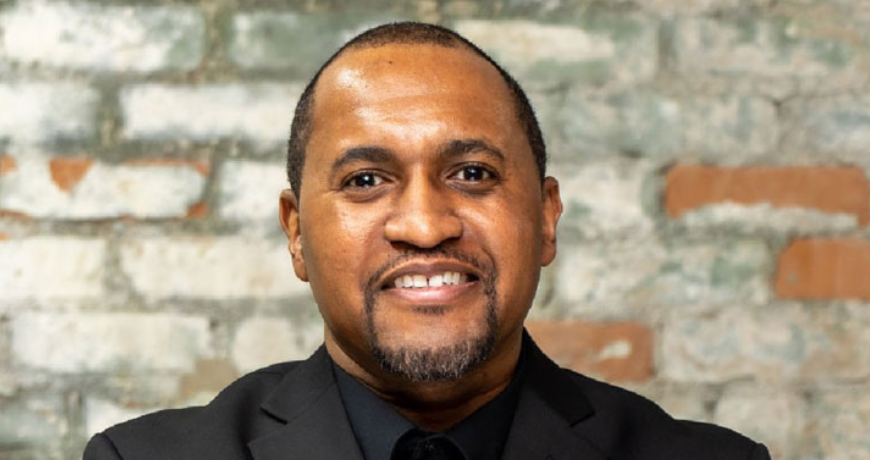

By Hodari P.T. Brown, Guest Columnist
There is a hard truth that many people of faith have been hesitant to confront directly. What we are witnessing in modern politics, particularly within segments of the Republican Party, the Evangelical Christianity community, and the broader Religious Right, is not simply a difference in political ideology. It is a spiritual conflict over the integrity of faith itself.
At the center of this issue is the erosion of a foundational principle: the Separation of Church and State. This principle was never meant to remove faith from public life. It was designed to protect faith from political corruption and to ensure that no government could weaponize religion for power. When politics begins to dictate theology, faith is no longer sacred. It becomes a tool.
That is exactly what we are seeing unfold.
When Faith Becomes a Political Weapon
There is a growing pattern where scripture is selectively quoted, distorted, and repurposed to justify policies and behaviors that stand in direct contradiction to the core teachings of faith. The message of Jesus Christ was rooted in love, compassion, humility, service, and justice. He consistently stood with the poor, the sick, the marginalized, and the oppressed.
Yet today, we see leaders and influencers who claim religious authority while promoting division, exclusion, and harm. We see support for war not as a last resort for protection, but as a first response for dominance. We see silence, deflection, or even defense when it comes to abuse, exploitation, and injustice.
This is not faith. This is distortion.
War, in any religious context, has historically been framed as a tragic necessity only in defense against harm. It was never intended to be glorified, politicized, or used as a mechanism of control. The normalization of aggression contradicts the very essence of spiritual teaching, which calls for peace, reconciliation, and restoration.
The Danger of False Doctrine
False doctrine does not always appear obvious. It often comes wrapped in familiar language, religious symbolism, and cultural identity. It sounds like faith, but it does not produce the fruit of faith.
When religion is used to justify harm against the vulnerable, it ceases to be righteous. When policies disproportionately impact the poor, restrict access to basic needs, or ignore the suffering of communities, they are not aligned with any true spiritual tradition.
Scripture across traditions calls believers to protect the widow, the orphan, the stranger, and the oppressed. These are not optional values. They are central commandments.
To defend systems or leaders that harm these groups while claiming religious justification is not just a political stance. It is a spiritual contradiction.
A Moment of Reflection in Global Faith Leadership
Recent criticism directed at Pope Francis for advocating peace highlights a deeper issue. When a global religious leader calls for peace, reconciliation, and restraint, that should not be controversial within faith communities.
It should be expected.
The backlash reveals how far political influence has shifted the moral compass of some who claim to act in the name of religion. Peace is not weakness. Compassion is not compromise. These are the highest expressions of faith.
Faith Is Measured by Love, Not Loyalty to Power
As believers and as leaders, there is a responsibility to discern the difference between genuine faith and political ideology dressed as faith. Blind loyalty to any political party, whether the Republican Party or otherwise, should never take precedence over truth, justice, and moral integrity.
Faith does not belong to a political party.
Faith belongs to the people. It belongs to communities seeking hope, healing, and purpose. It belongs to those who are striving to live out principles of love, compassion, respect, and service.
A Call to Return to True Principles
This is not a call for division. It is a call for alignment.
It is a call for believers across all denominations and backgrounds to come together and reclaim the true essence of faith:
• Love over hate
• Compassion over cruelty
• Truth over manipulation
• Justice over oppression
• Peace over unnecessary conflict
Religious freedom must be protected, not politicized. Faith must be lived, not leveraged. And doctrine must be rooted in truth, not distorted for influence.
As ministers, leaders, and believers, there is a duty to speak clearly and act courageously. Not to condemn people, but to confront harmful systems and ideologies that misrepresent what faith truly stands for.
Because at its core, faith is not about power.
It is about people.
And any system that forgets that has already lost its way.
Hodari P.T. Brown, MBA