

The citizens of Highland Park are currently casting votes to decide who will lead their city as its next mayor. The choice before voters is between incumbent Mayor Glenda McDonald and challenger Shamayim “Mama Shu” Harris.
Highland Park is a city that has faced so many challenges over the past several decades, losing its status as a nationally recognized “Model City.” The community has endured a massive population decline, dropping from nearly 55,000 residents during its prime down to an inherited population of about 8,700 today. Alongside this loss of residents, the city has had to navigate an industrial exodus, excessive blight, deteriorating infrastructure, and serious public safety concerns.
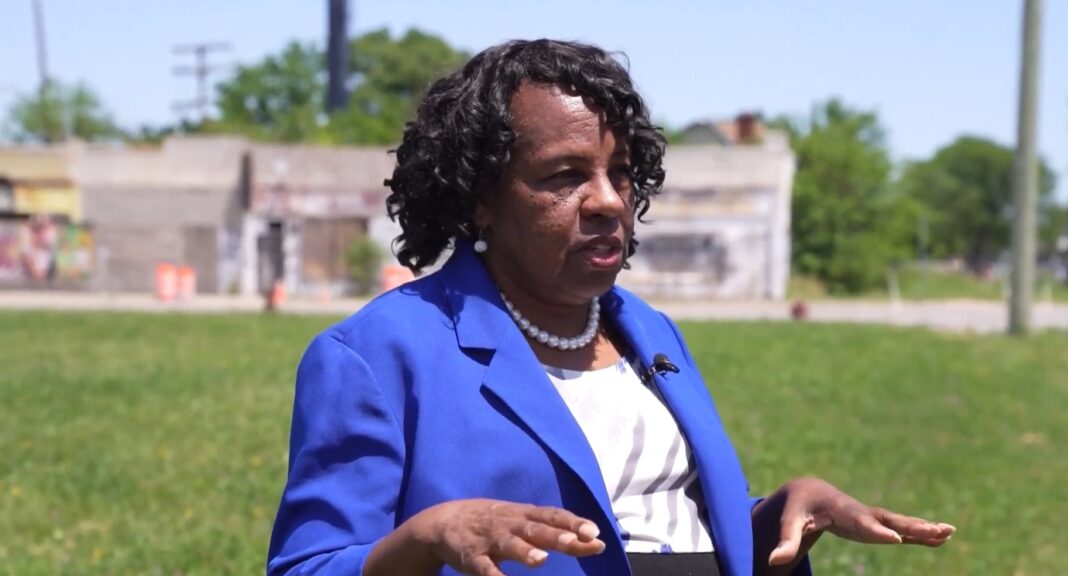
Because of the sheer magnitude of these challenges, Highland Park requires a leader who possesses a proven, working knowledge of municipal government. For this reason, Highland Park should re-elect Glenda McDonald for a second term as mayor to continue the city’s forward momentum.
This endorsement is not a knock against Shamayim “Mama Shu” Harris, who is widely and rightfully recognized as a dedicated advocate and community builder within Highland Park.
Her fingerprints can be found across various sectors, spanning public safety, education, housing, health, infrastructure, and neighborhood development. Harris’s crowning achievement is undoubtedly the creation of Avalon Village in 2008. Through sheer determination, she transformed a once-blighted block on Avalon Street – previously lined with abandoned houses and trash-filled vacant lots – into a clean, sustainable, and safe zone for the community to gather.
Today, Avalon Village boasts incredible resources, including the Homework House after-school center, the Goddess Marketplace for women entrepreneurs, a basketball court, Jakobi RA Park, and the Invincible Gardens.
Harris also has demonstrated a commitment to public safety by serving as a reserve officer with the Highland Park Police Department for six years, acting as the department’s first female chaplain, and creating the community-based Avalon Village Peace Team.
She has also held executive governance positions such as chairwoman of the Highland Park Charter Revision Commission, president of the Highland Park Board of Education, and vice president of the Highland Park Housing Commission, and currently serves on the Michigan Commission on Community Action and Economic Opportunity.
Her love for Highland Park is absolute, and her grassroots work has brought significant national and international attention to the city.
However, at a time as critical as the one Highland Park is facing right now, the city simply can’t afford a “learn on the job” situation in the mayor’s office.
Managing a city requires navigating complex budgets, negotiating massive municipal contracts, and understanding the intricate machinery of local government. This is where the main difference between the two candidates becomes glaringly apparent: Mayor Glenda McDonald has the vital experience at the local government level in balancing a budget and managing a city.
McDonald has lived in Highland Park since 1971, giving her a deep, historical understanding of the city’s needs and its past glory years. Beyond working as an educator for 32 years – 21 of which were in Highland Park – she has extensive elected government experience.
McDonald was elected to the school board and served as its president, was elected to the Charter Commission, and was elected to the Highland Park City Council in 2015 before taking office as mayor in January 2023. This background means McDonald already knows how to operate the levers of city governance and manage a municipality.
Highland Park has faced severe hardships over the past decade, and McDonald has spent her first term actively working to solve these issues with tangible results. One of the most pressing crises facing the city was its deteriorating infrastructure, specifically its water system. McDonald’s administration delivered monumental administrative victories:
– Water Infrastructure: The city secured $100 million from the State of Michigan to overhaul the city’s water infrastructure.
– Debt Elimination: Under her leadership, the city paid off a staggering $58 million debt.
– System Upgrades: Her administration began replacing dangerous lead service lines and started installing master meters to ensure fair and accurate billing for residents.
In addition to infrastructure, McDonald has tackled the city’s excessive blight head-on. Through a strategic partnership with the Wayne County Land Bank, McDonald’s administration has overseen the demolition of 42 city properties, opening up space for new development.
Blight Removal: This effort includes taking down major structures like the Highland Towers on Woodward Avenue and an apartment building on Highland Street.
Future Demolitions: With 20 more properties slated for demolition, a total of 62 blighted properties will be cleared out.
McDonald also has delivered undeniable results in public safety, an area where the city desperately needed improvement.
Fire Department: By making public safety a top priority, her administration ensured the city now operates a fully staffed Fire Department with full-time firefighters.
Police Expansion: She hired additional certified police and reserve officers, and reestablished community policing.
Mental Health: The city brought on a mental health social worker to support residents and first responders.
Crime Reduction: Because of these decisive actions, Highland Park has seen a remarkable 70% reduction in citywide homicides.
Looking toward the future, McDonald has laid the groundwork to welcome economic growth that an inexperienced leader might disrupt. Her administration formed a steering committee with state and county organizations including MEDC and SEMCOG, adopted a new Economic Development Strategy, updated the Master Land Use Plan, and created a strategic Housing Framework Policy.
As a direct result of these efforts and the resolution of the water infrastructure situation, several companies are now in talks with government leaders to come to Highland Park to do business. Currently, there are 20 developers waiting in the queue, McDonald said, and the city is preparing to send out Requests for Qualifications for mixed-use developments to vet their funding sources.
McDonald also has pragmatic plans for her second term, including working with a $1 million allocation from the Wayne County Commission to begin clearing out and securing the McGregor Library, as well as negotiating for solar-powered streetlighting with Soulidarity and Solartronic.
Shamayim “Mama Shu” Harris is an extraordinary citizen who has done beautiful, transformative work in her neighborhood. Highland Park is fortunate to have her as an advocate. However, the role of mayor requires a specific set of administrative skills and municipal experience that Glenda McDonald has already proven she possesses.
By tackling a $58 million debt, securing $100 million in state funding for water infrastructure, reducing homicides by 70%, and tearing down decades of blight, McDonald
has demonstrated that she knows how to run a city. While there is still a long way to go for a return to glory for the city, Highland Park is currently experiencing forward momentum.
To ensure this progress continues, and to guarantee the city thrives through this critical period, voters should vote to re-elect Mayor Glenda McDonald to finish what she has started.