

By Diallo Smith, President & CEO, Life Remodeled
Detroit is capturing national attention for transforming its shuttered school buildings into engines of economic opportunity. With more than 1,000 public schools closed nationwide in 2025 – 2026, Detroit has become a proving ground for a model that turns abandonment into inspiration.
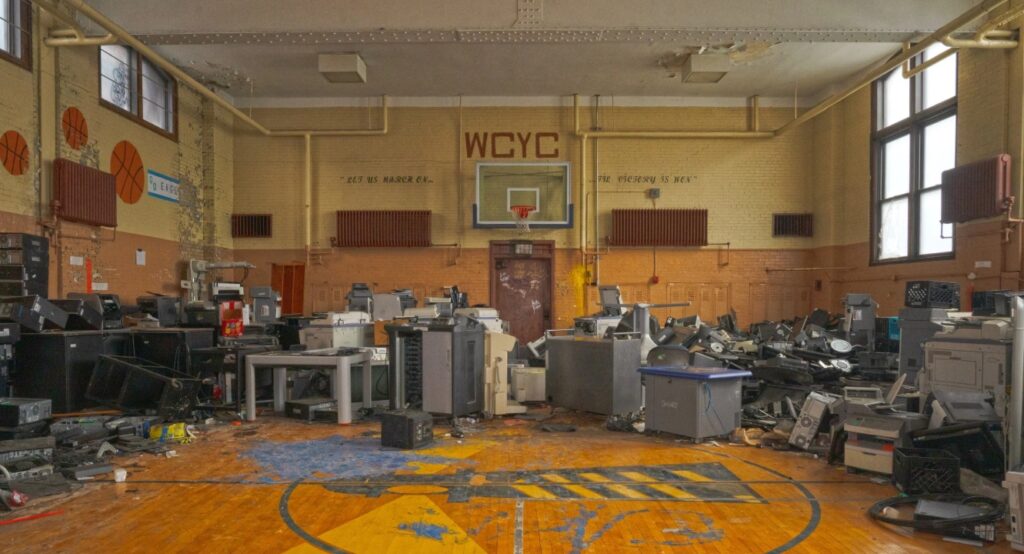
Between 2000 and 2015, just under 200 public schools closed in Detroit alone. When they closed, they left physical and emotional scars like blight, declining property values, and a loss of community. But where others see abandonment, Life Remodeled sees potential. And now, with the opening of Anchor Detroit on the city’s east side, Life Remodeled is proving that vacant schools can become catalysts for comprehensive community transformation.
Life Remodeled’s approach is built on the E3M model, Economic, Educational, and Environmental Mobility, which is a holistic approach to tackling neighborhood decline. The idea is simple but powerful. We identify vacant infrastructure, work with community stakeholders to understand gaps, and as a result, bring all the resources that a family needs to thrive under one roof. We call these Opportunity Hubs.
The Durfee Innovation Society, Life Remodeled’s first Opportunity Hub that opened in 2017 on the west side, demonstrates what’s possible. The neighborhood has seen a significant decline in crime alongside a dramatic increase in community engagement. In 2025 alone, the hub has produced more than 850 job placements for Detroiters and stimulated over $16 million in new local wages. Home values in the surrounding area have increased by 36%, and the neighborhood now has one of the highest perceptions of thriving according to Gallup polling data.
Now, Life Remodeled is bringing this proven model to the east side. Anchor Detroit, located in the former Dominican High School and Winans Performing Arts Academy, is a nearly 72,000-square-foot hub that will connect residents to workforce development, after-school youth services, health and wellness support, and community activities.
Anchor Detroit is projected to serve 20,000 residents, and once both Opportunity Hubs are activated, Life Remodeled will serve 43,000 unique Detroiters annually. Phase two of Anchor Detroit will add a modernized 700-seat theater, outdoor recreation spaces, and a 26,000-square-foot technology wing focused on youth education in artificial intelligence, gaming, and emerging tech fields. This is about preparing the next generation for the jobs of tomorrow, right in their own neighborhood.
Across the city, other projects are taking shape. The former Higginbotham School is being converted into 40 affordable housing units. The St. Mary of Redford School will be converted into 61 units of permanent supportive housing for people experiencing chronic homelessness. In Corktown, the former St. Vincent de Paul Middle School has been reimagined as Kintsugi Village, an early childhood education center and artist incubator. Each project is different. But the common thread is that vacant schools are opportunities.
If Detroit’s model can work here, it can work anywhere. The city’s experience proves that repurposing vacant schools isn’t just about saving historic architecture; it’s about restoring hope, rebuilding trust, and creating pathways to economic mobility for Detroit families. A quote from Kimberly Dowdell, former president of the American Institute of Architects, captures our mission perfectly: “The most sustainable buildings are the ones that already exist.”
Detroit is showing that these buildings can become the anchors of a new kind of neighborhood revitalization. It’s a blueprint for how cities can reinvest in their communities.
Diallo Smith is the President & CEO of Life Remodeled, which is headquartered in Detroit.