
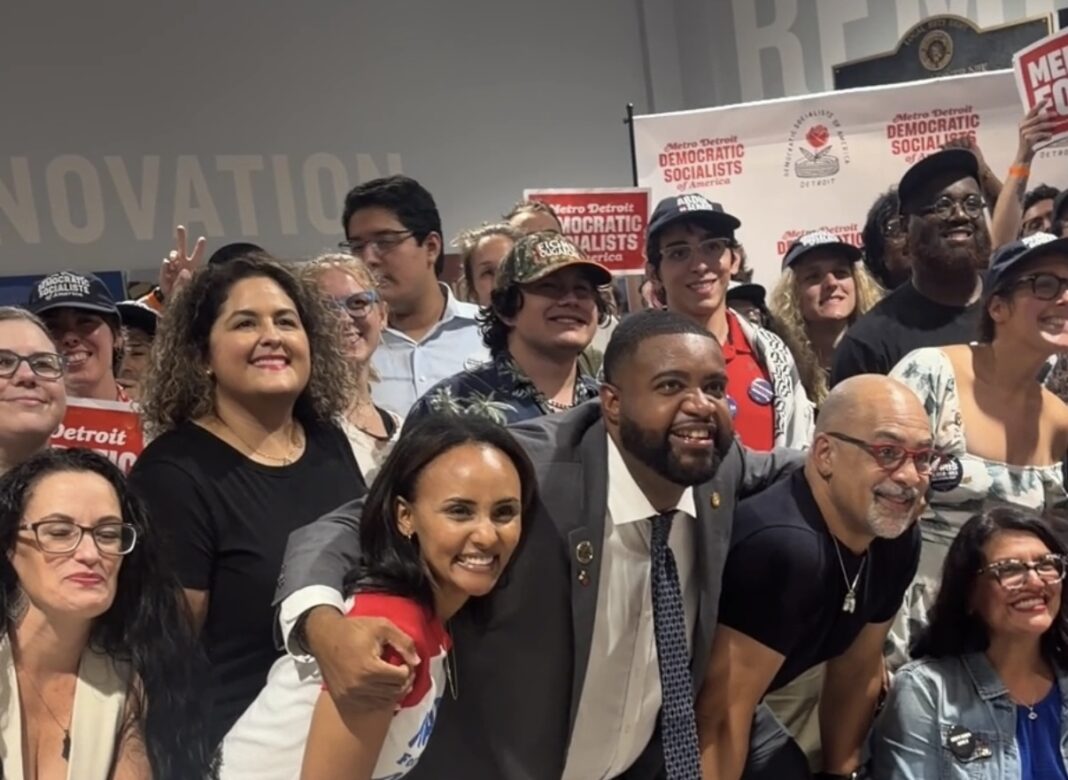

U.S. Rep.-elect Donavan McKinney, D-Detroit, was among 11 progressive Democrats who voted against the majority of their caucus to oppose House Minority Leader Hakeem Jeffries for House Speaker.
The vote on Wednesday was for the Democratic caucus’ nomination for House Speaker, not the formal House election which takes place after new members are sworn-in Jan. 1. Democrats voted 251-11 to nominate Jeffries, the current leader.
Jeffries would become the first Black House Speaker if elected in January.
In a joint statement, members-elect pointed to the lack of sufficient commitments from Jeffries on progressive causes they ran on, like universal healthcare, abolishing ICE and cutting off support for Israel.
“The people of Michigan’s Mighty 13th Congressional District elected me to advance bold, transformative policies to deliver real results,” McKinney said in a statement to Michigan Chronicle. “The working families in my District deserve livable wages, universal child care, clean air and water, Medicare for All, reparations, and so much more. Although I voted no during today’s caucus meeting, I am encouraged by the direction of ongoing conversations I am having conversations with Leader Jeffries and hope to support him during the Speaker vote in January.”
McKinney’s vote signals the Detroit’s Congressman’s allegiance to the progressive groups that helped get him elected, defeating U.S. Rep. Shri Thanedar in the 13th Congressional District Democratic primary election by 52% of the vote.
Jeffries supported Thanedar, McKinney’s opponent in the August primary election. McKinney won 76% of the general election vote against a Republican with low name ID in the Democratic stronghold district.
Jeffries has been critical of members of the Democratic Socialists of America (DSA), a progressive group that earned significant statewide electoral victories after door knocking for candidates across Metro Detroit and mid-Michigan.
The 11 members-elect who voted against Jeffries are mostly aligned with priorities supported by DSA, though not all are members.
“Whether on Medicare for All, stopping ICE terror, getting money out of politics, or ending the genocide in Gaza, our constituents sent us to Congress with a mandate on these issues. We have worked to secure commitments from Leader Jeffries in good-faith conversations,” the statement said. “While we have seen meaningful progress, there is still work to be done to ensure that the direction our party takes this coming Congress reflects what our constituents are demanding of leadership. Those conversations are ongoing. As such, our vote in caucus today was no.”
The nomination vote was conducted by secret ballot, which means a full list of Democrats who voted for or against is not available.
Democrats are set to hold an 80-seat advantage with more than 250 House seats when the Congress turns over on Jan. 1. Jeffries is expected to easily secure the speakership, needing 218 votes to become the first Black House Speaker in U.S. history.